
Sand Overview
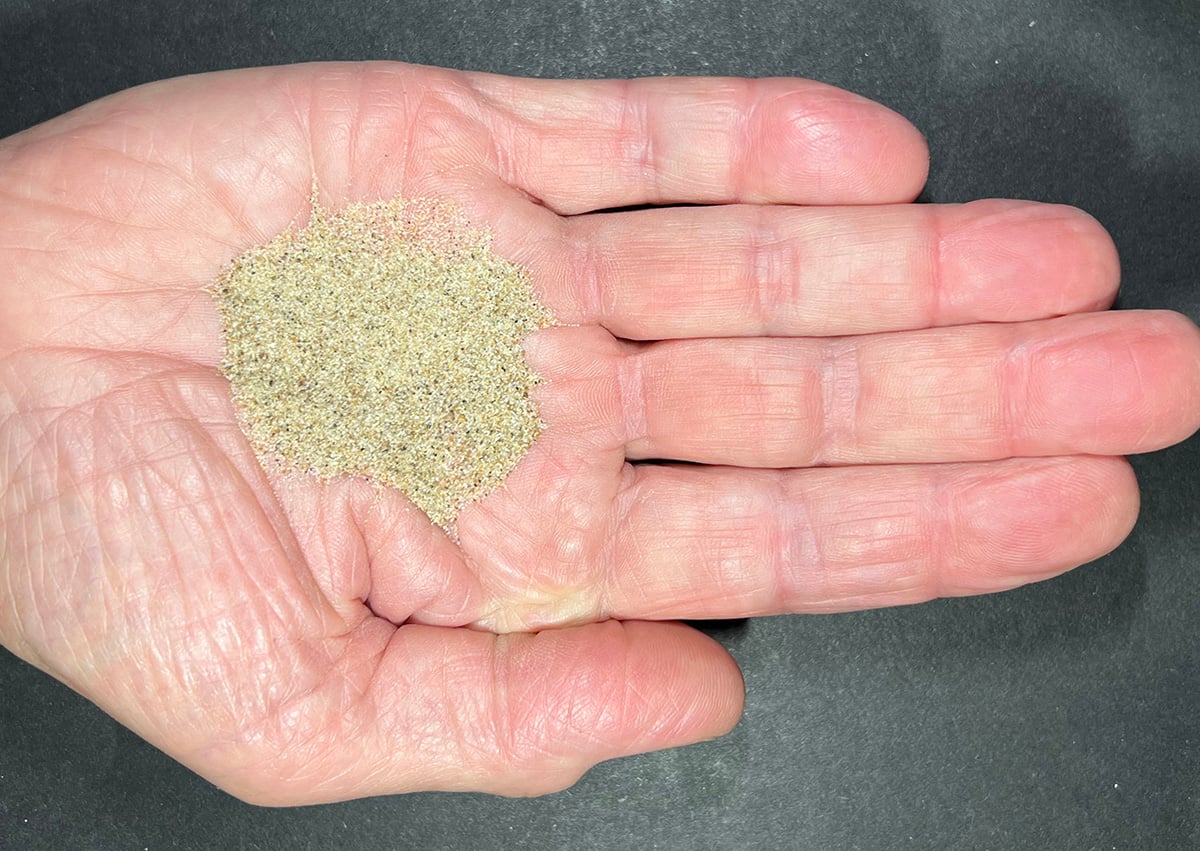
At Valaste Beach, the sand is dominated by smoothly worn quartz grains, with smaller amounts of feldspar, dark mineral or rock fragments, and possible marine shell fragments. Most of the quartz grains have rounded or smoothly worn edges, reflecting prolonged exposure to wave and wind activity.
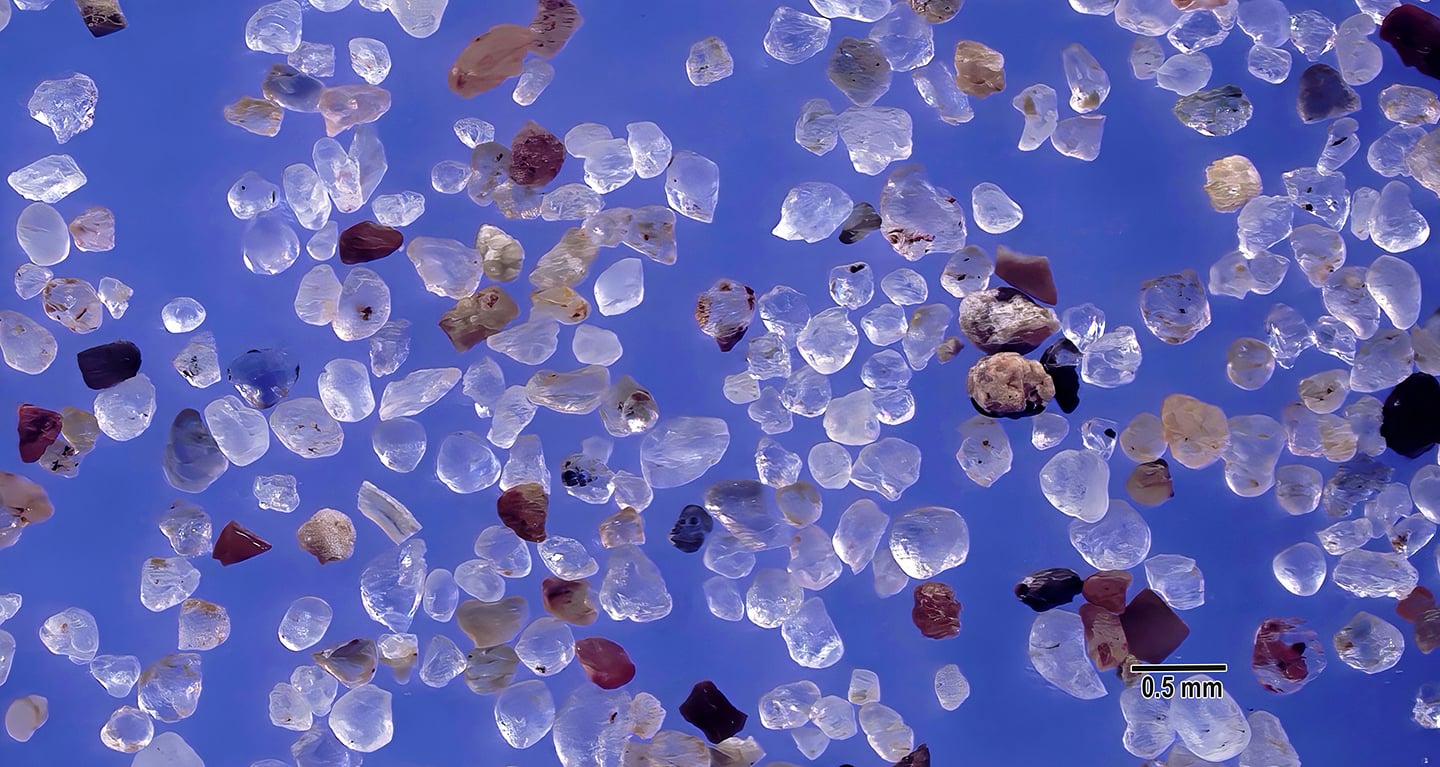
The majority of sand grains in this view are smoothly worn quartz grains, some with reddish brown inclusions that are most likely iron. Two prominent rough-edged tan and black grains just right of center are probably fragments of metamorphic rock
Geographic Overview
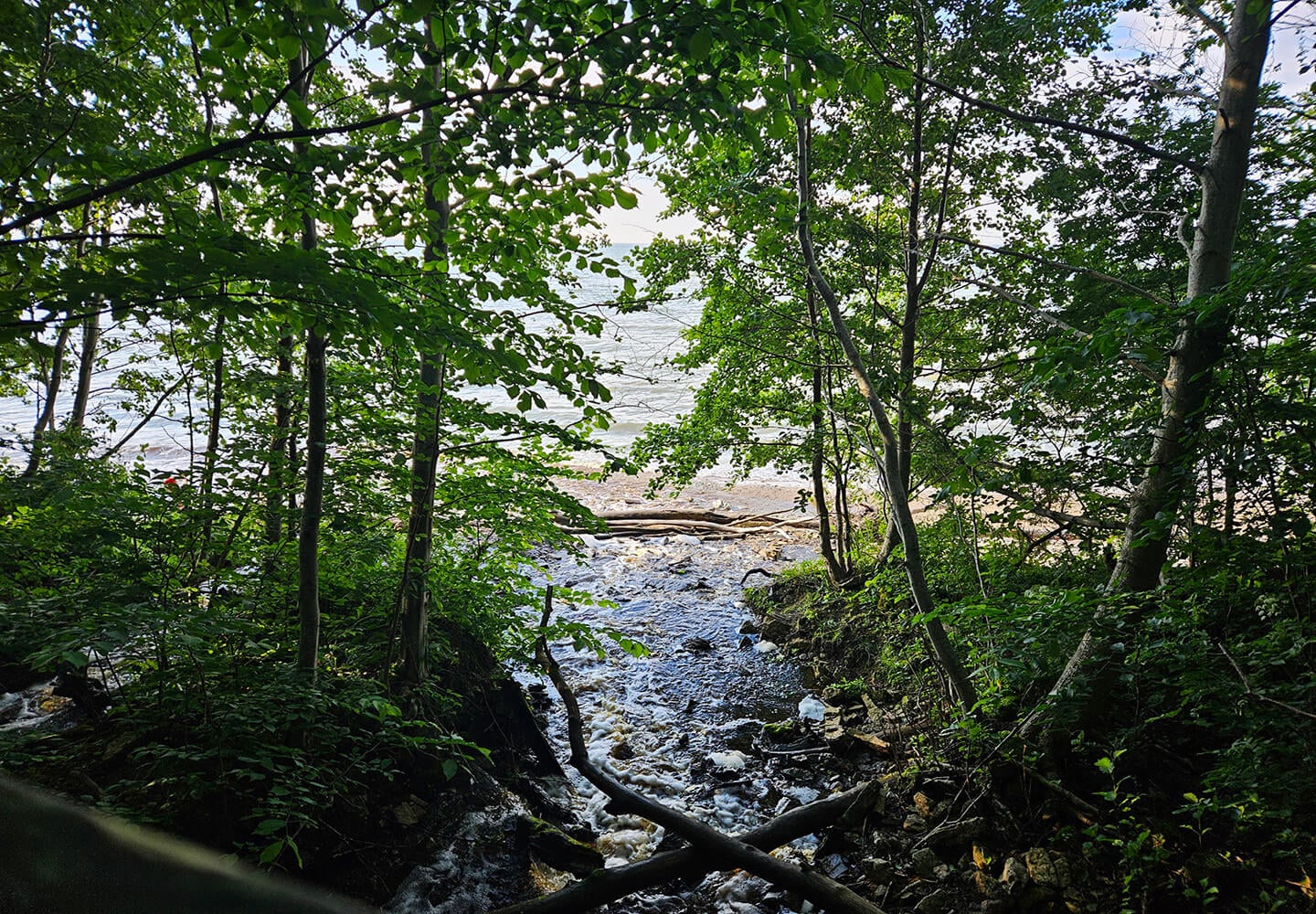
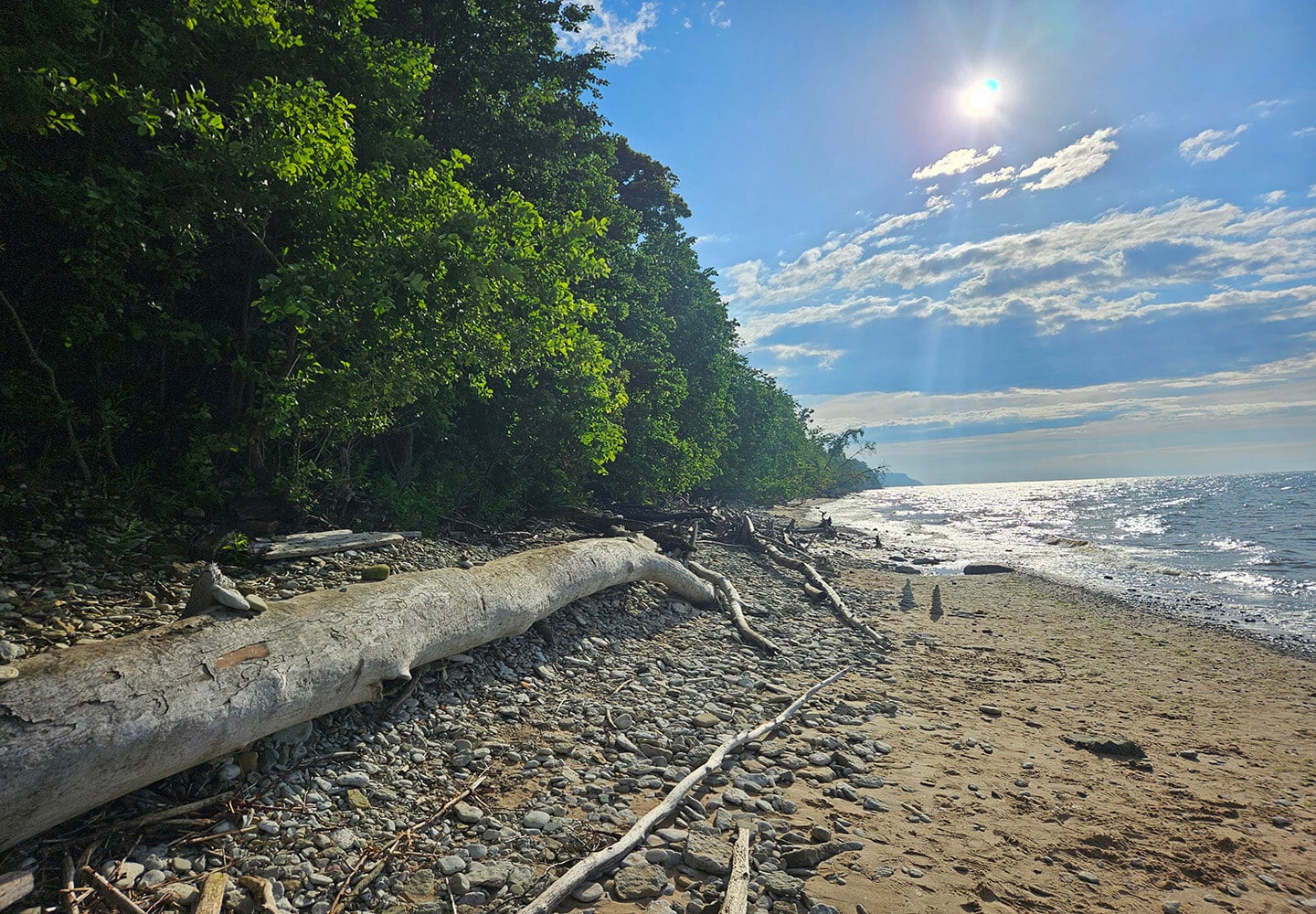
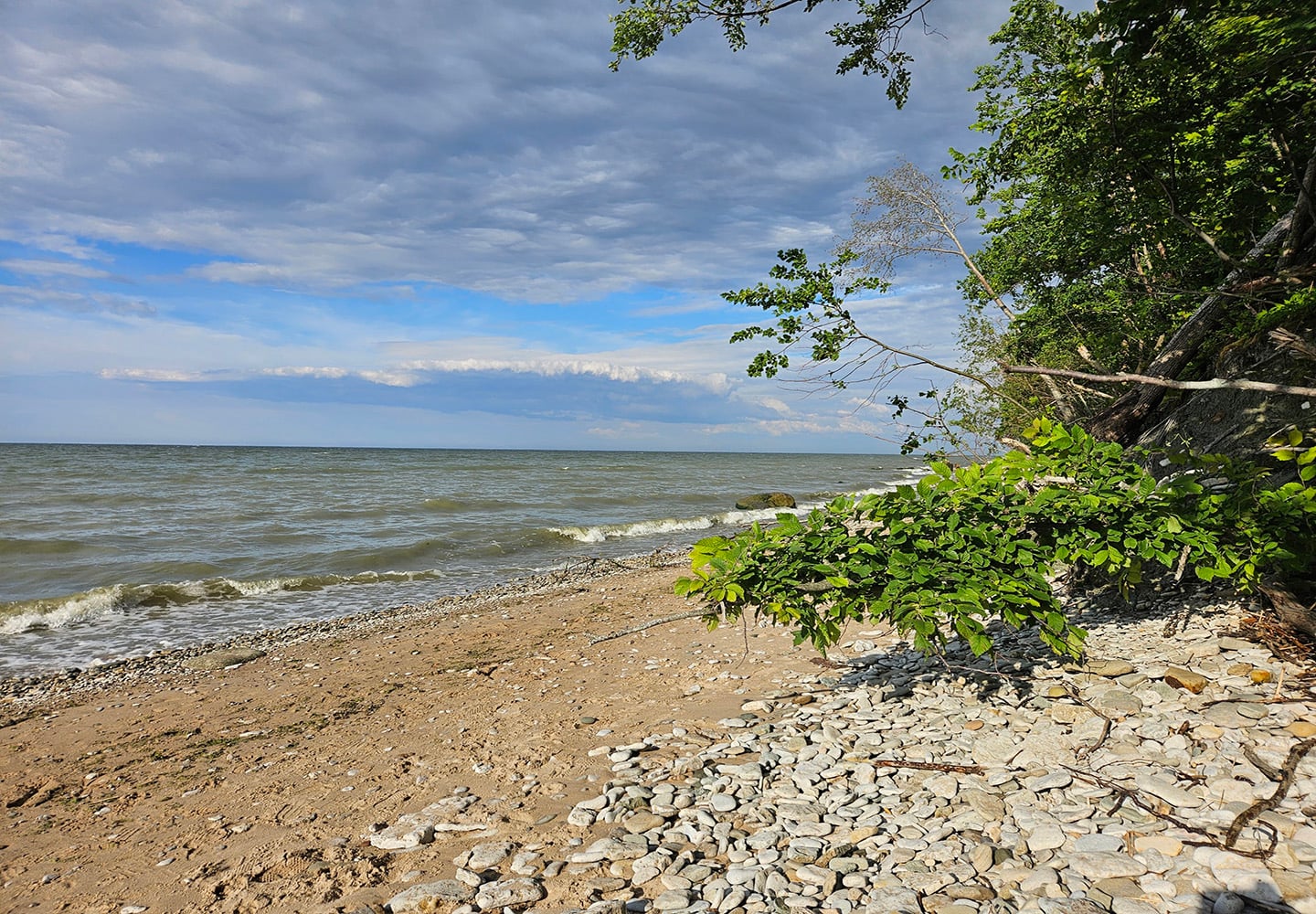
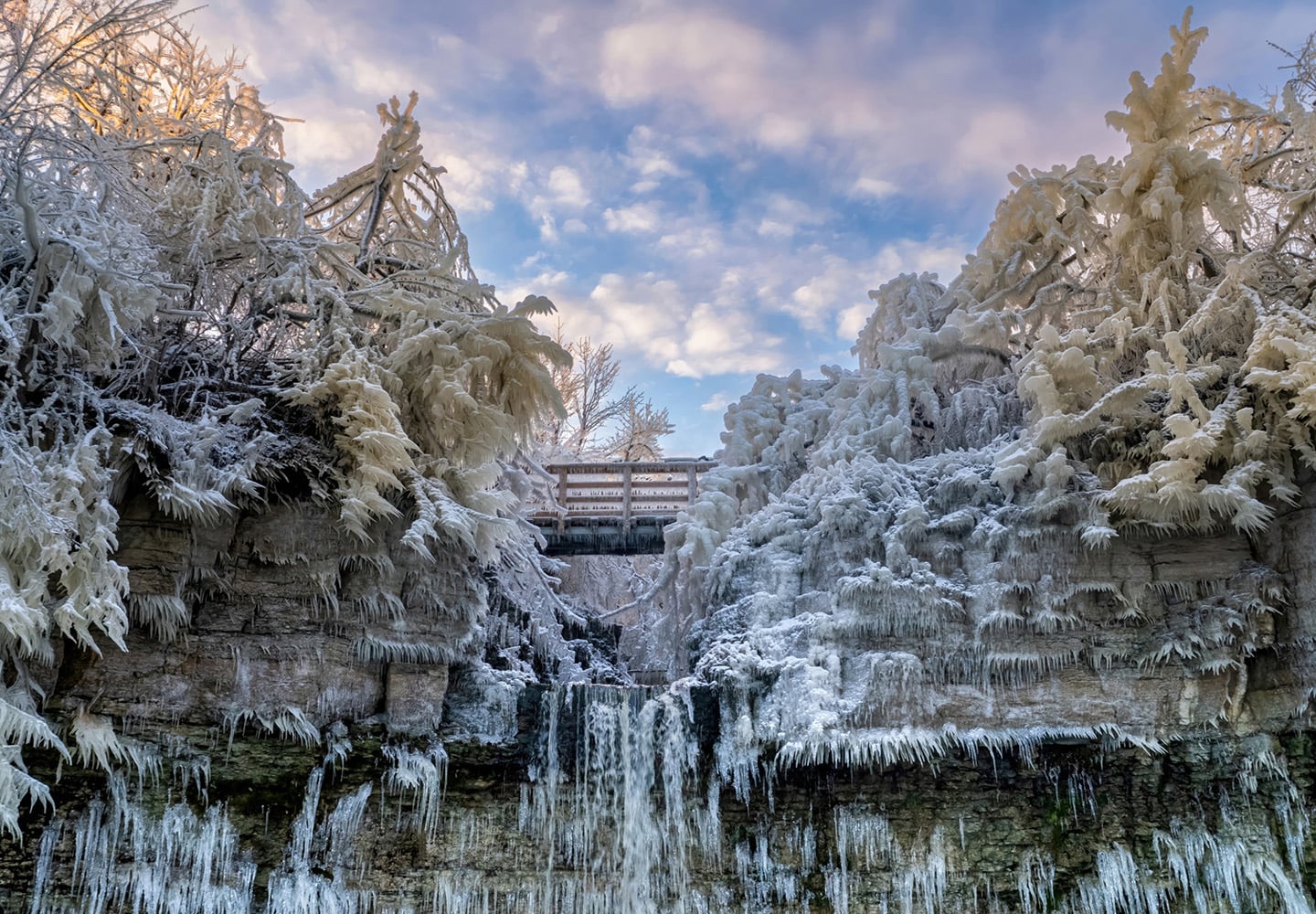
Valaste is a village in northeastern Estonia, a low-lying country in Northern Europe and has a long, shallow coastline along the Baltic Sea boarding on the Gulf of Finland. Estonia achieved independence from Russia in 1991, joined the European Union in 2004, and today is known for its advance digital society. Valaste has a shallow coastline along the Baltic Sea and is famous for freezing spray driven by sea winds, creating large ice formations and sculptures on nearby trees.
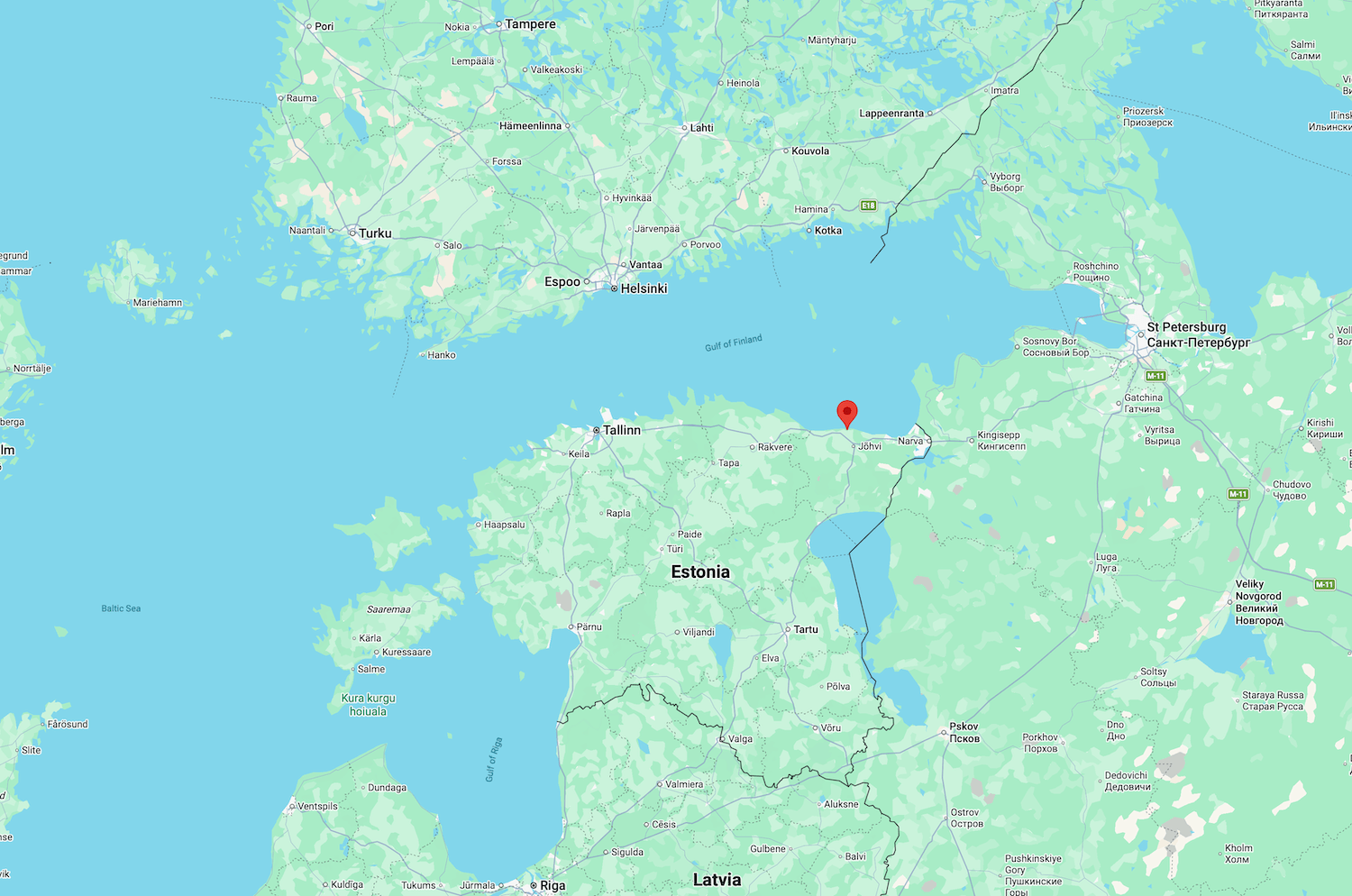
Sand Location
See where this sand sample was collected on Google Maps.
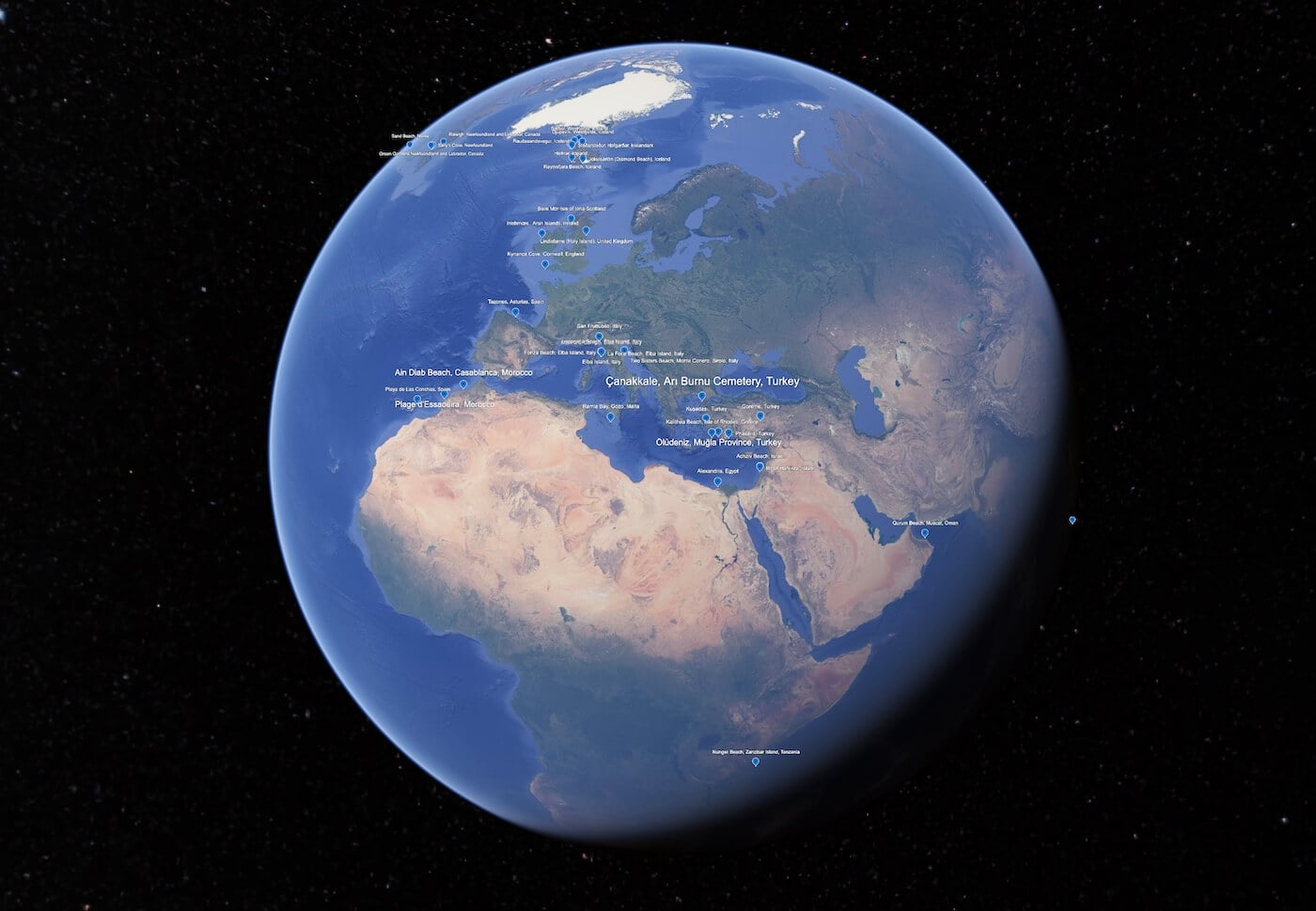
Virtual Sand Tour
Explore an interactive map of Valaste Beach on Google Earth.
Sand Gallery
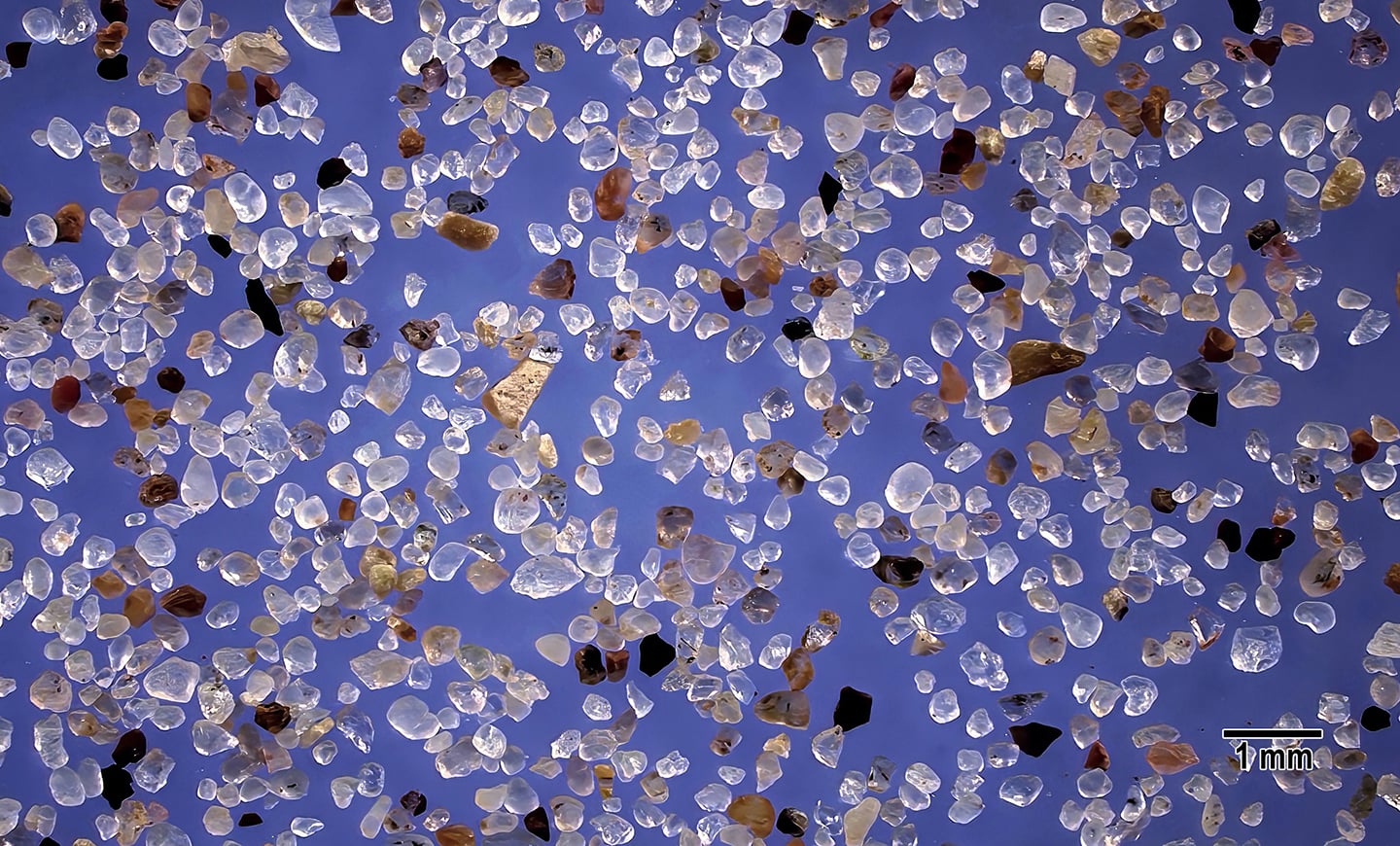
In this low magnification view there are numerous partially translucent and refractile smooth edged grains mostly less than 1 mm in size along with fewer brown and black grains with angular edges. The translucent grains are quartz. Some of the light brown grains are feldspar. A larger tan and a larger brown grain with sharper edges may be marine shell fragments.
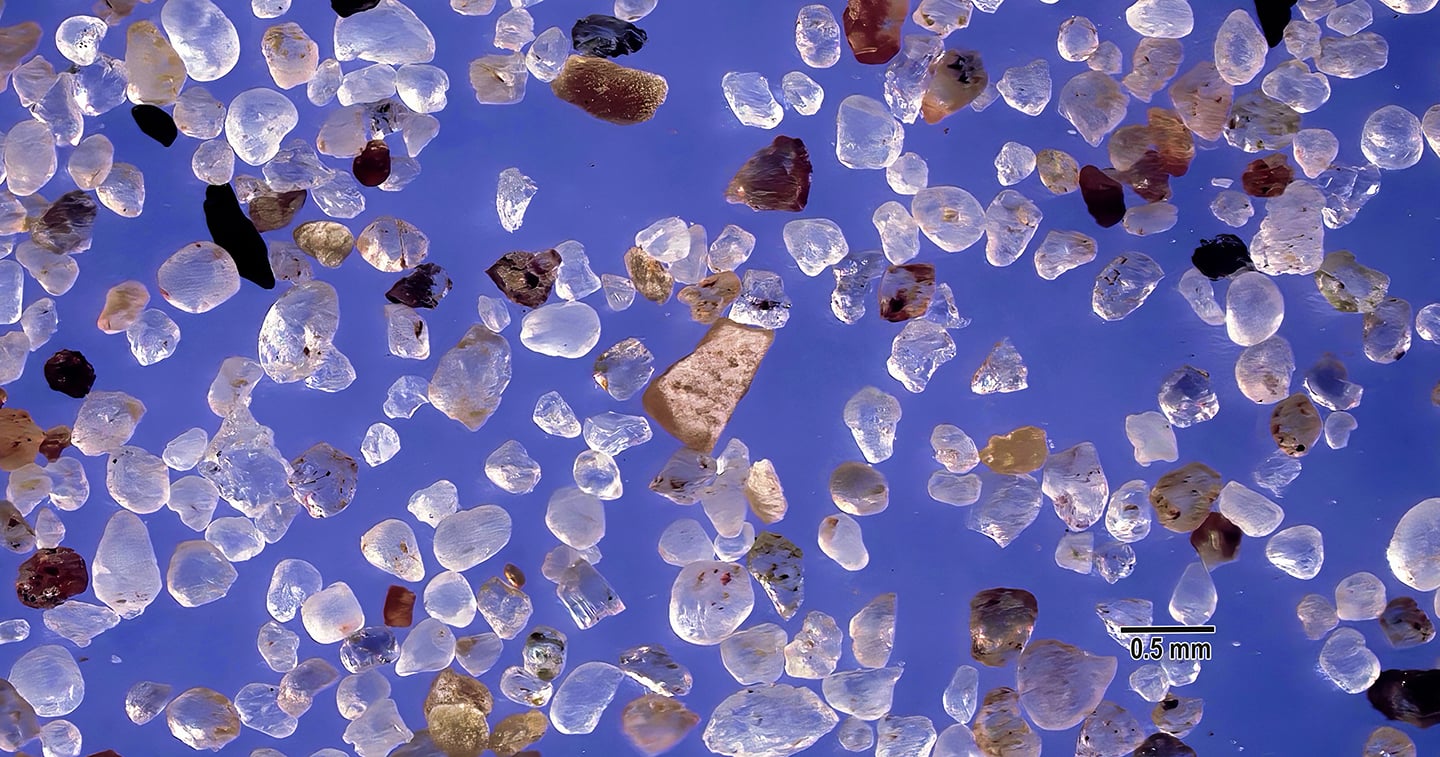
In this higher magnification, punctate brown and black inclusions can be seen in smooth edged translucent, off-white and light tan quartz grains. Most quartz grains have smoothly rounded edges indicating years of exposure to wave and wind activity. A large brown grain with angular edges is in the center may be a marine shell fragment.
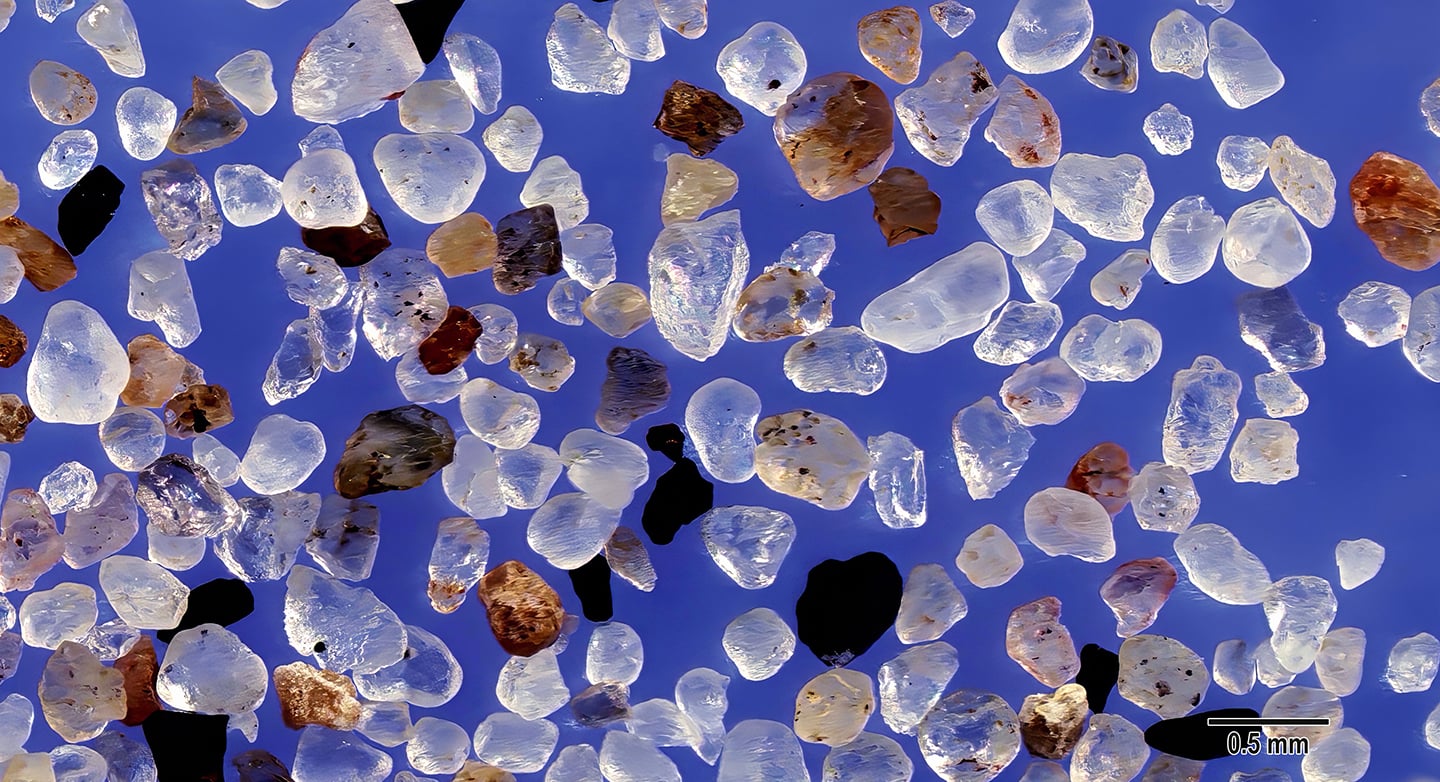
Smooth edged and rounded quartz, some with brown discoloration that are probably iron inclusions, are accompanied by black sand grains that may be basalt.
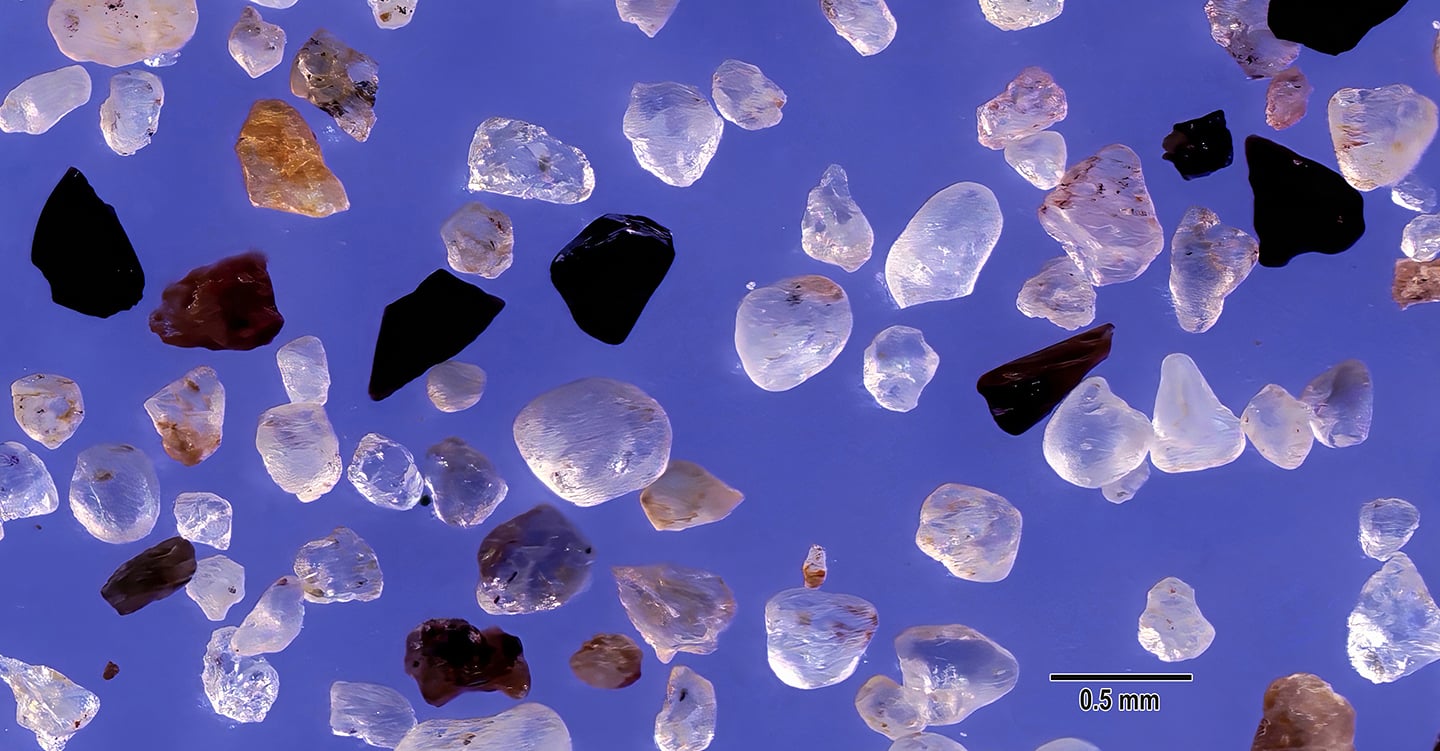
In this high magnification view sharp-edged black grains as well as some with reddish coloration are likely basalt. Most of the translucent quartz grains, some with reddish brown are most likely iron inclusions, represent grains worn smoothly by long periods of wave and wind exposure. A few quartz grains with sharp edges represent more recent components of this sand sample.