
Sand Overview
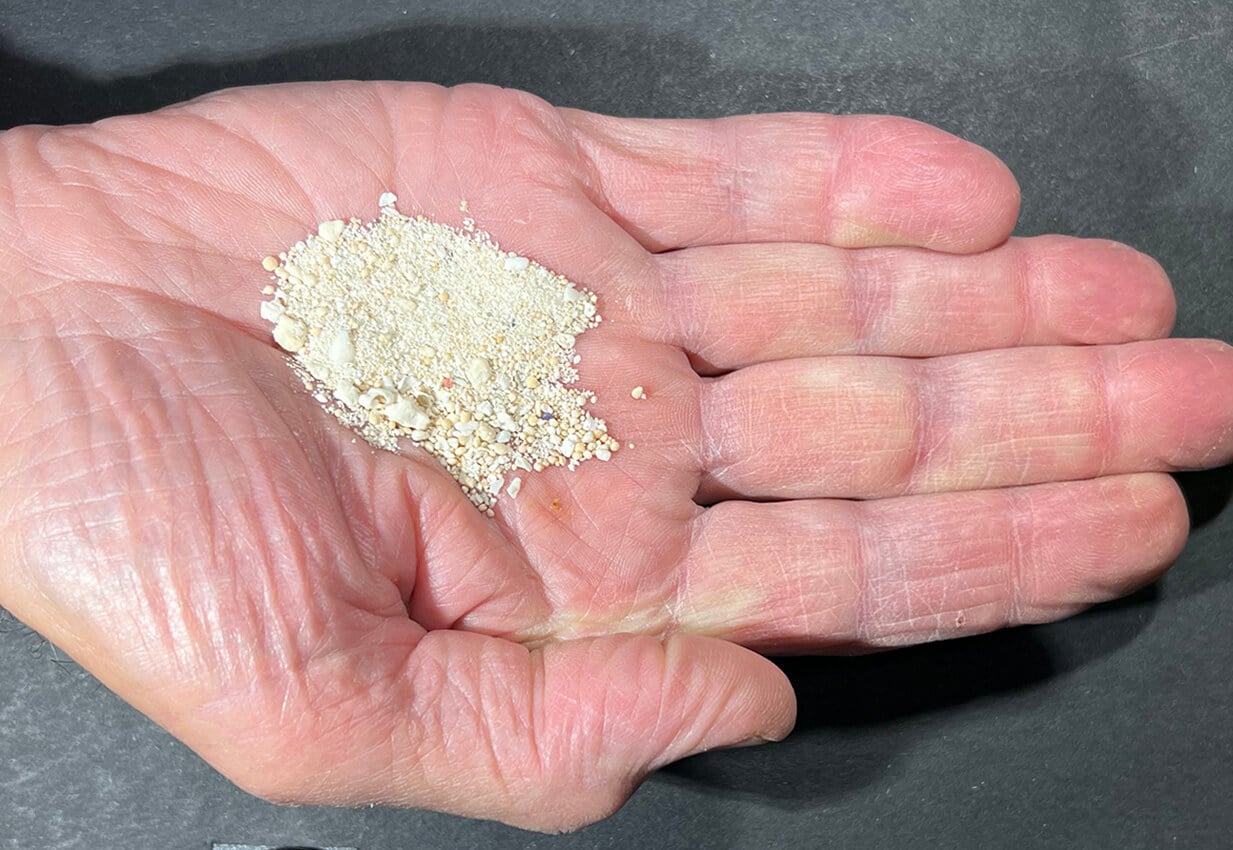
The powdery white sand at Pe Beach consists of coral fragments, foraminifera and calcareous algae and often contains the famous “star sand” foraminifera exoskeletons.
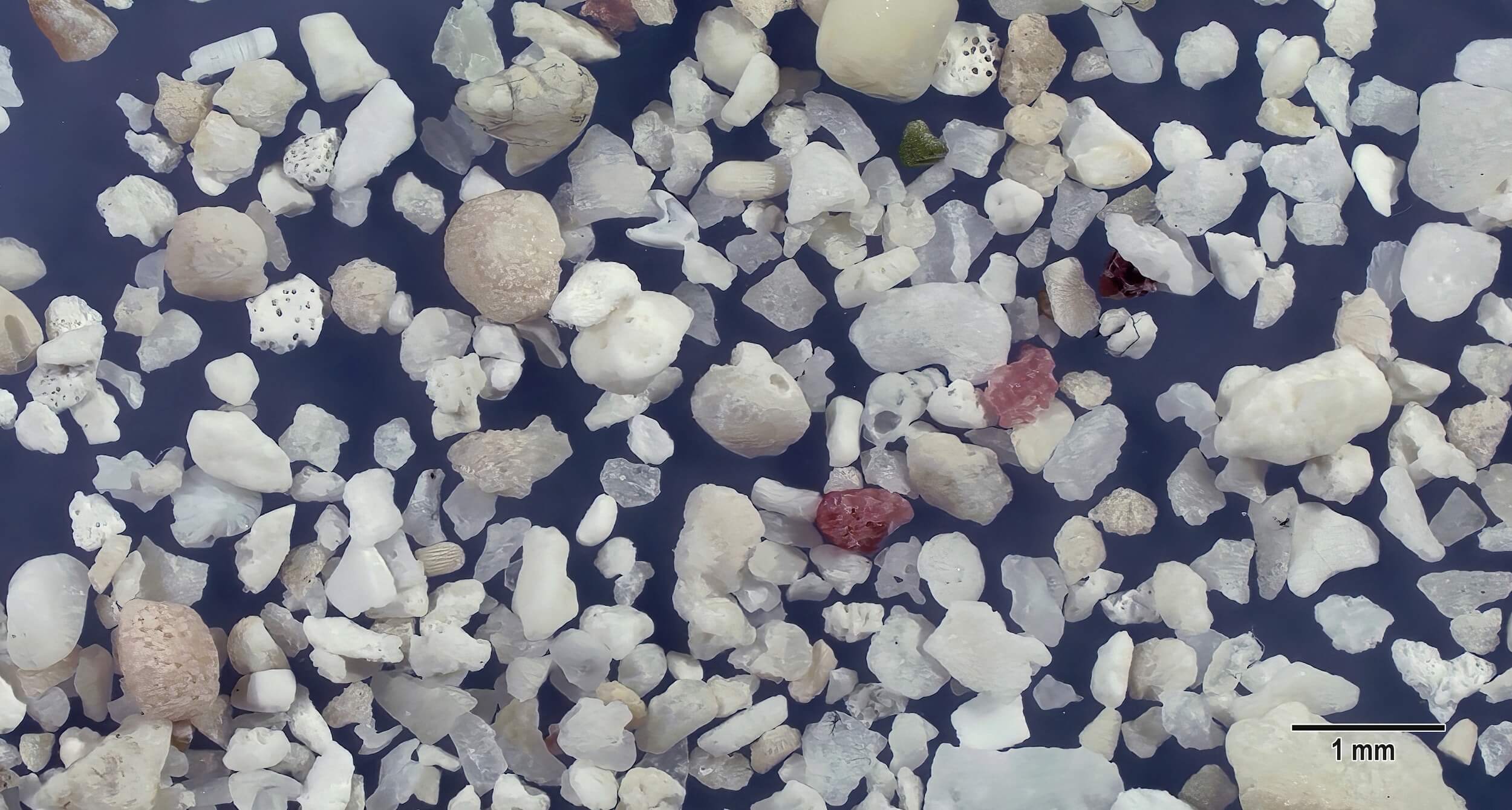
This low magnification nicely shows a variable size spectrum of primarily white and light tan marine fragments including rounded forams and centrally located red forams, a small white snail shell, and a white rod fragment of a sea urchin spine.
Geographic Overview
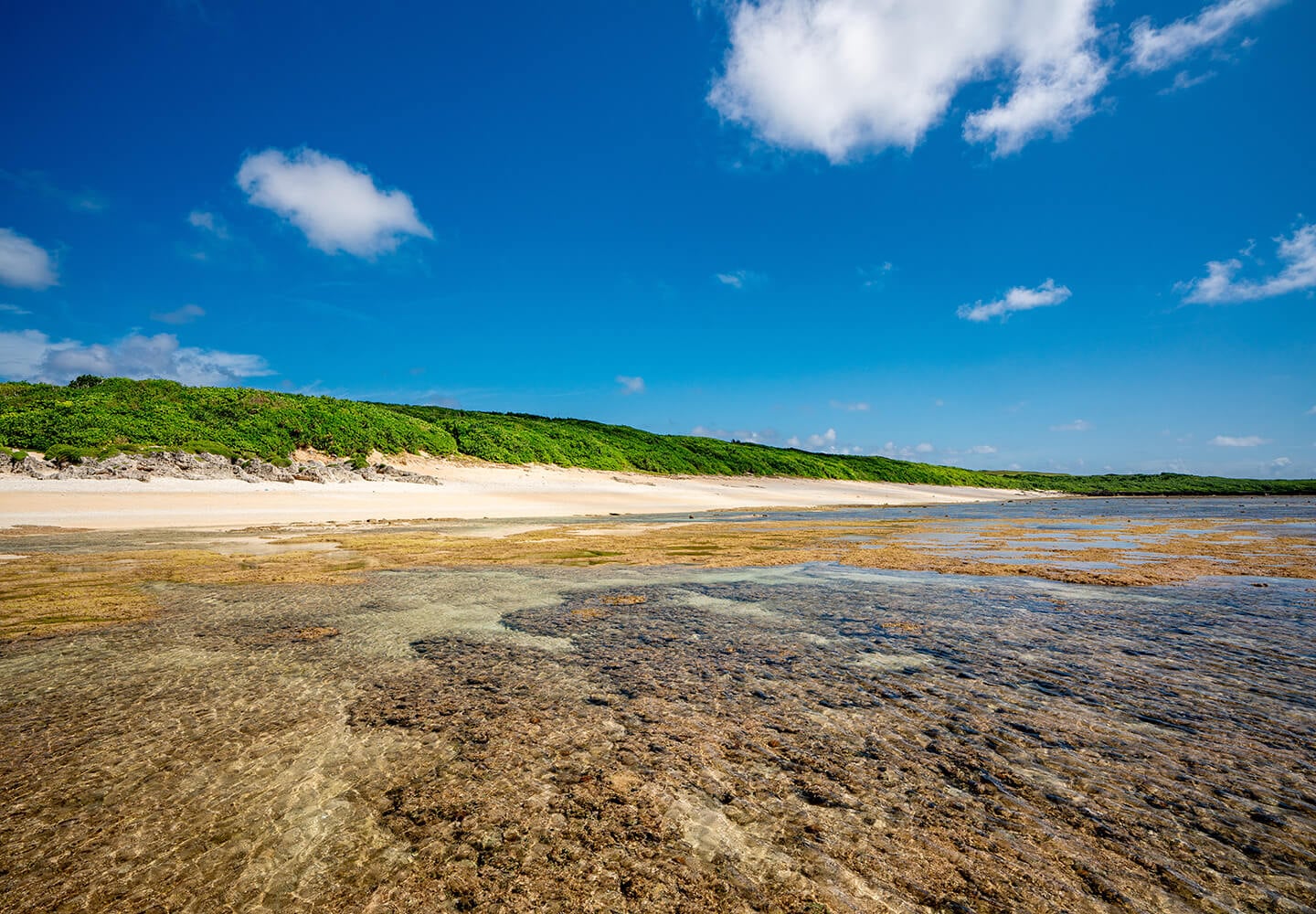
Pe Beach is on the southernmost inhabited island in Japan with beach sand primarily formed from biogenic and coralline carbonates. The powdery white sand consists of coral fragments, foraminifer and calcareous algae and often contains the famous “star sand” foraminifera exoskeletons. The island is subjected to Quaternary tectonic uplift, faulting and localized tsunamis which constantly modify the coastal landscape. Pe beach is famous for is untouched white sand and striking “Hateruma Blue” waters.
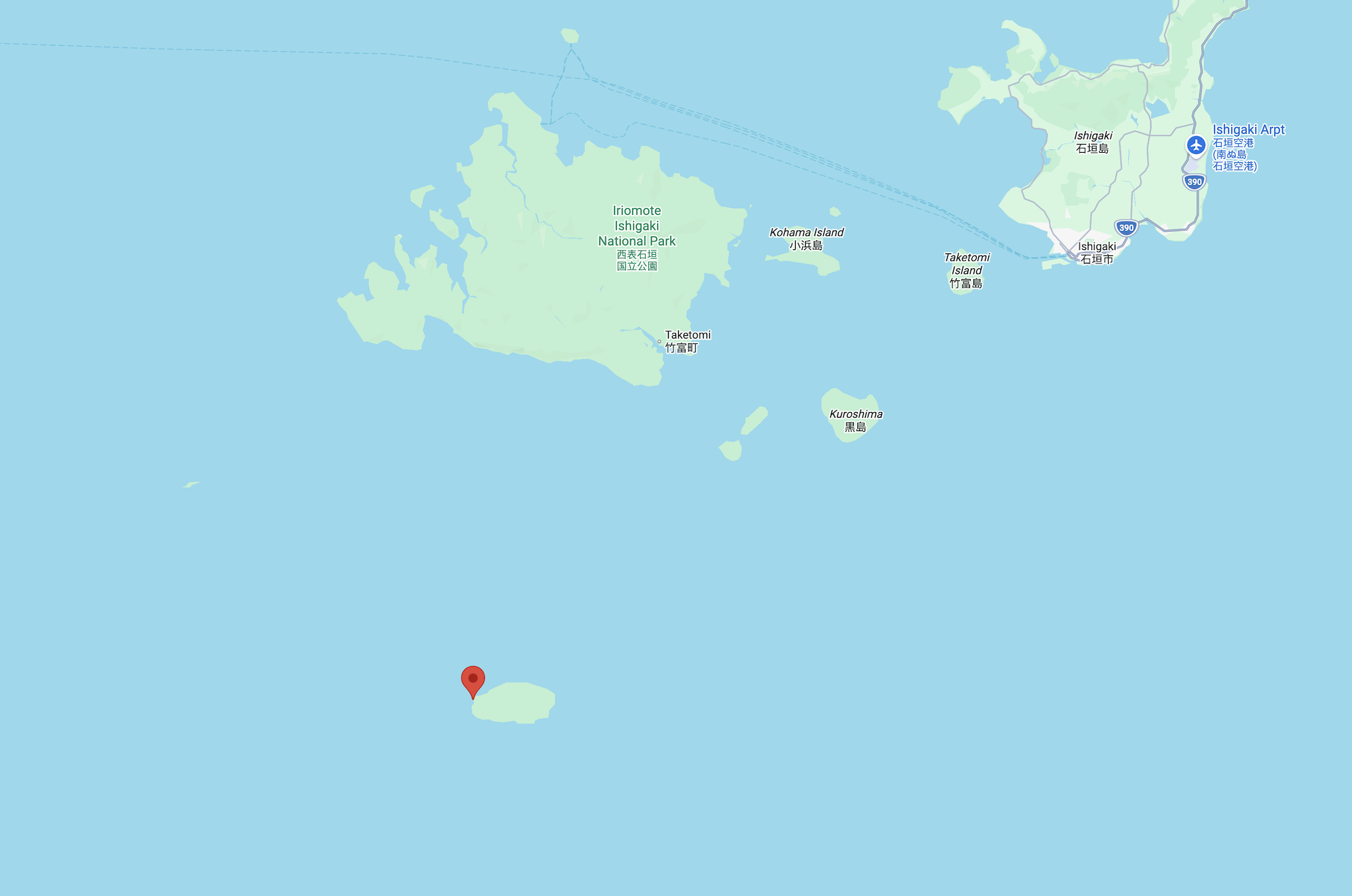
Sand Location
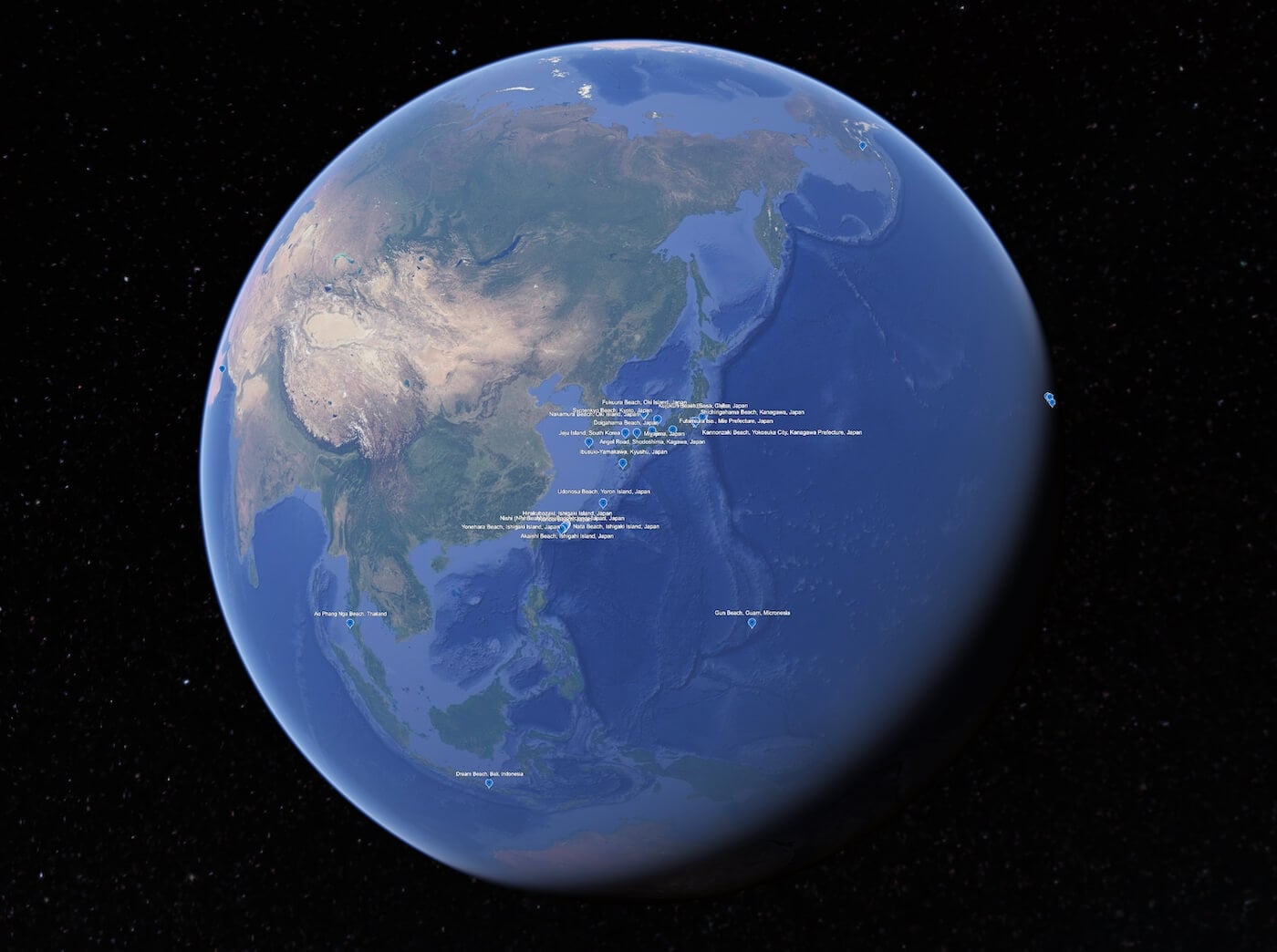
See where this sand sample was collected on Google Maps.
Virtual Sand Tour
Explore an interactive map of Pe Beach on Google Earth.
Sand Gallery
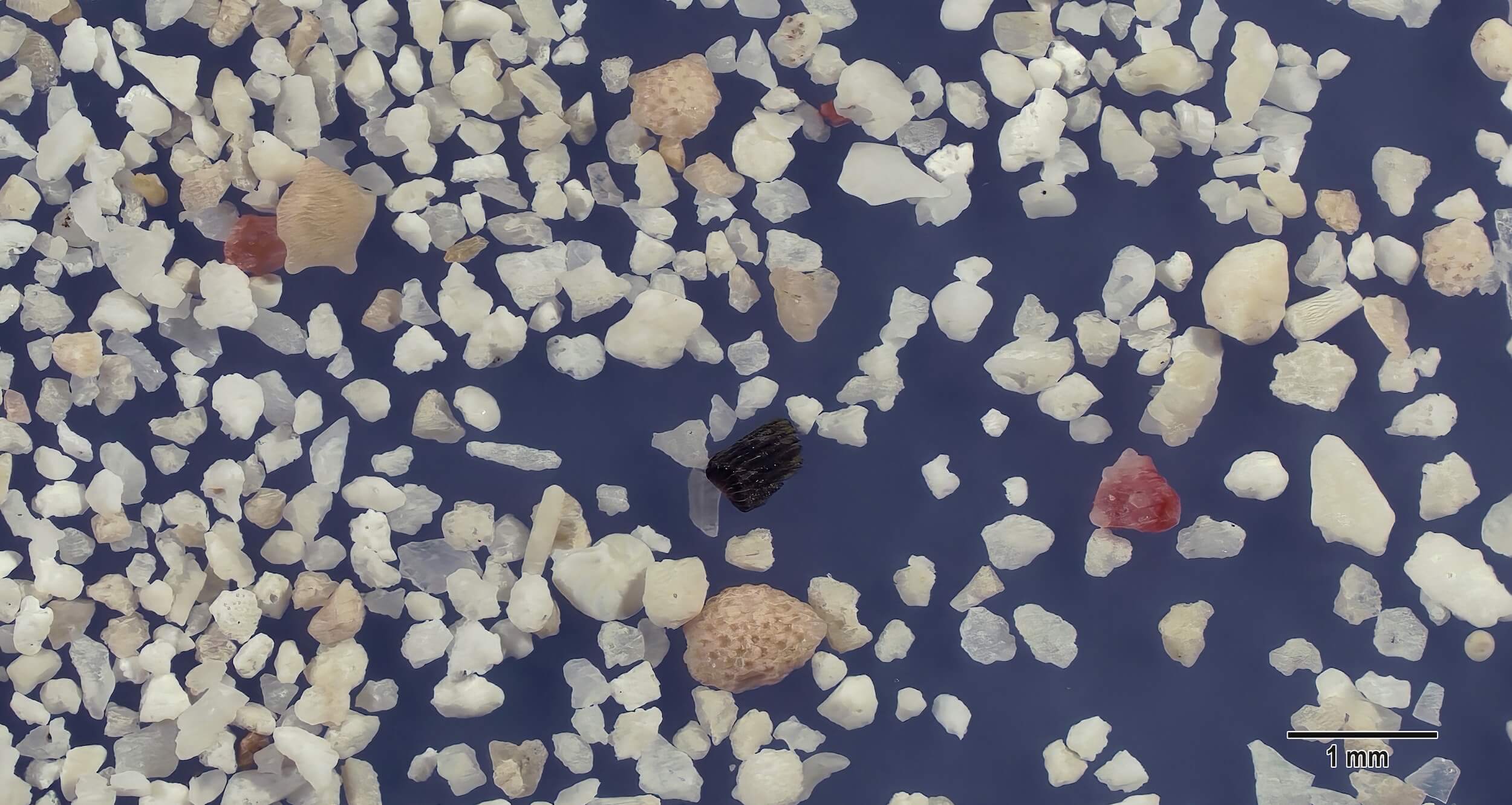
This low magnification features a spectrum of different sand grains. Many are too small to identify but red grains are likely Homotrema sp. Tan grains with punctate light brown spots (upper and lower center) and a tan grain with small, rounded protrusions (upper left of view) are different foraminifera organisms. The dark grain in the center with subtly visible grooves is a sea urchin spine fragment.
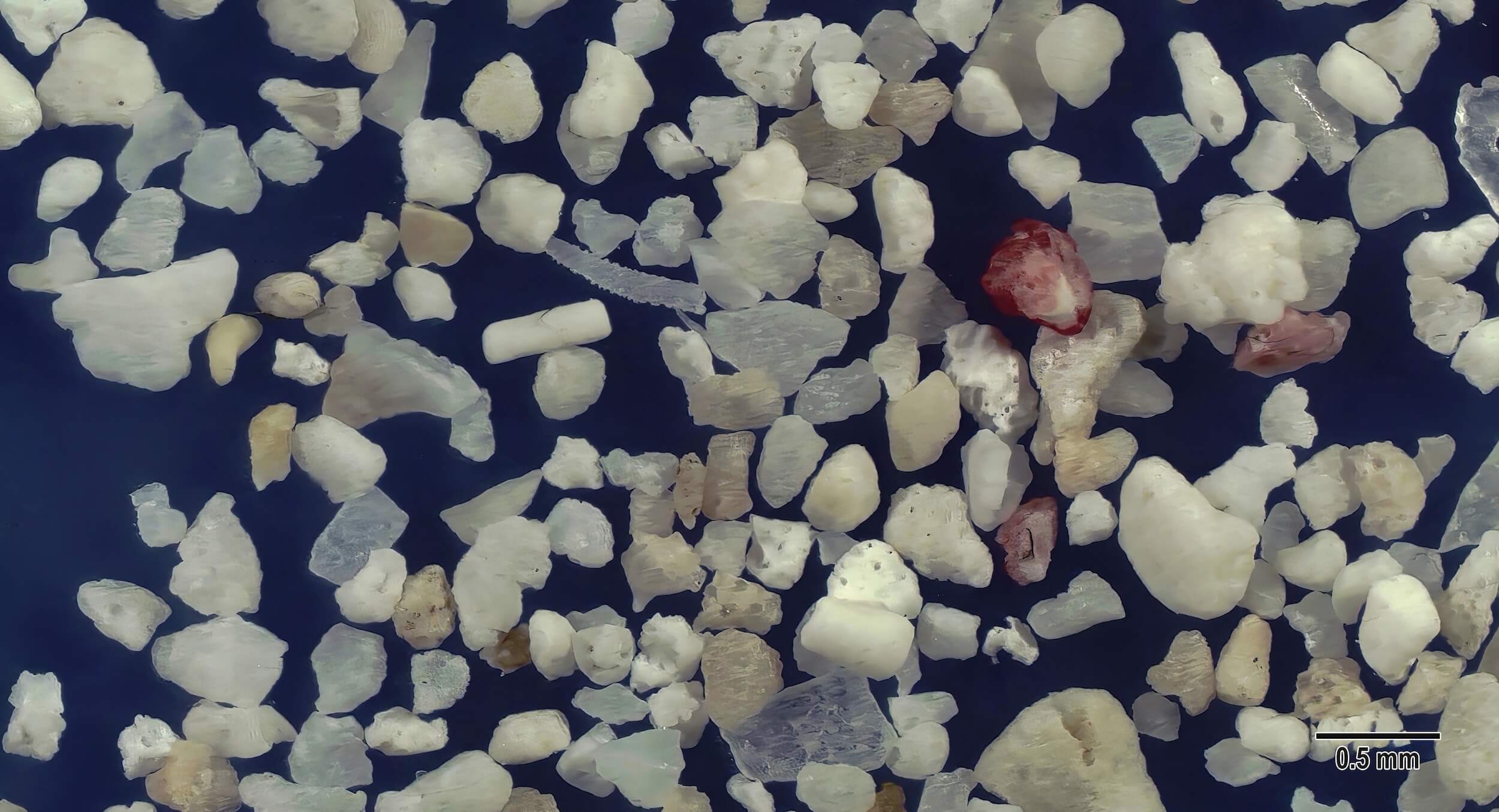
Red fragments of Homotrema sp. stand out in this mixture of white, off-white and partially translucent marine sand grains. An elongated translucent elongated sponge spicule is just above a small white coralline algae rod in the center of this view.
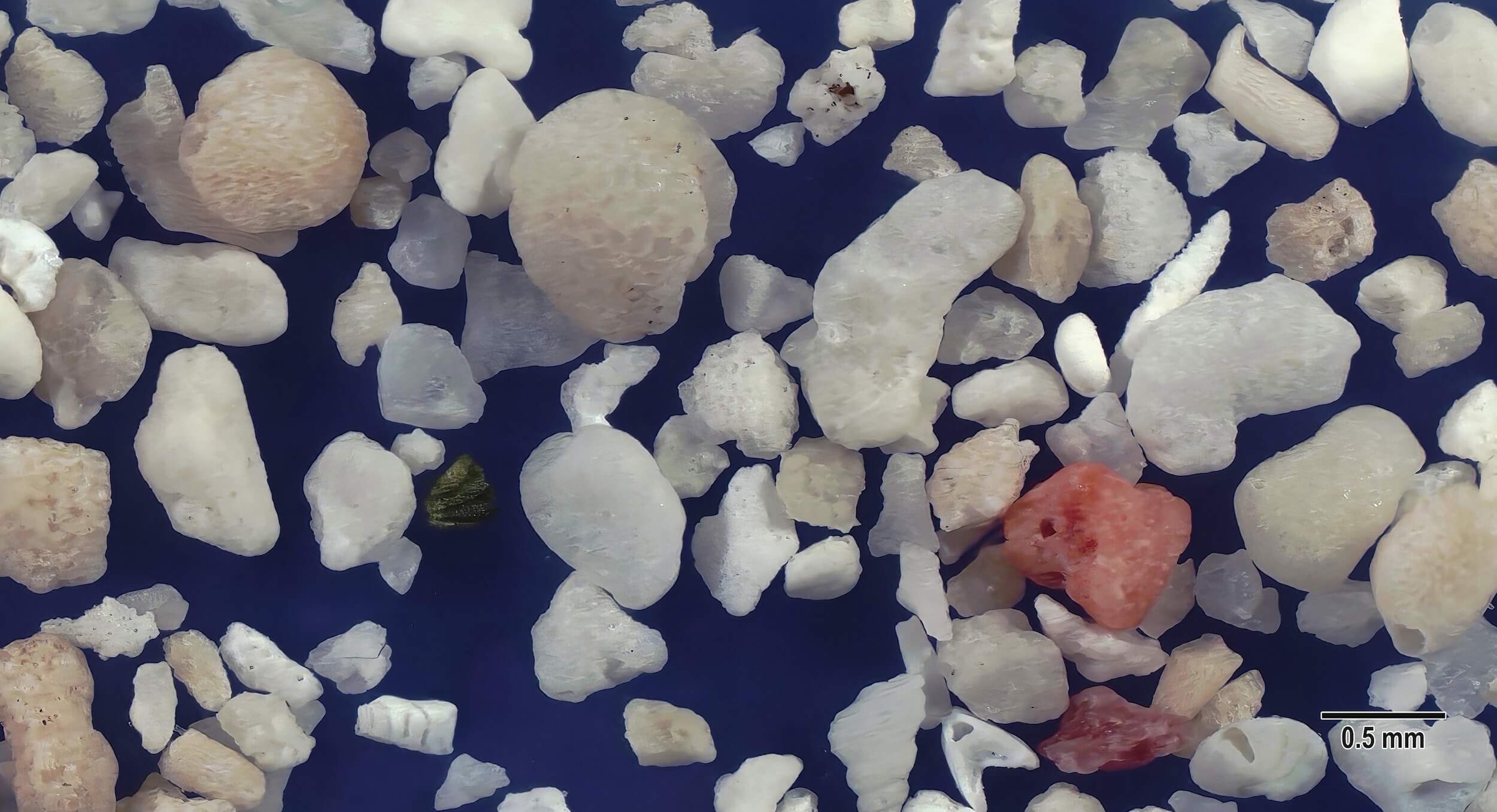
This mixture of large and small marine fragments includes light tan, round forams with subtle underlying punctate structure, an off-white coil shaped foram in the center immediately below a large off-white rectangular coral fragment. Fragments of red forams are present at the lower right and a white spiral piece of a micromollusk gastropod is touching the bottom center of this view.
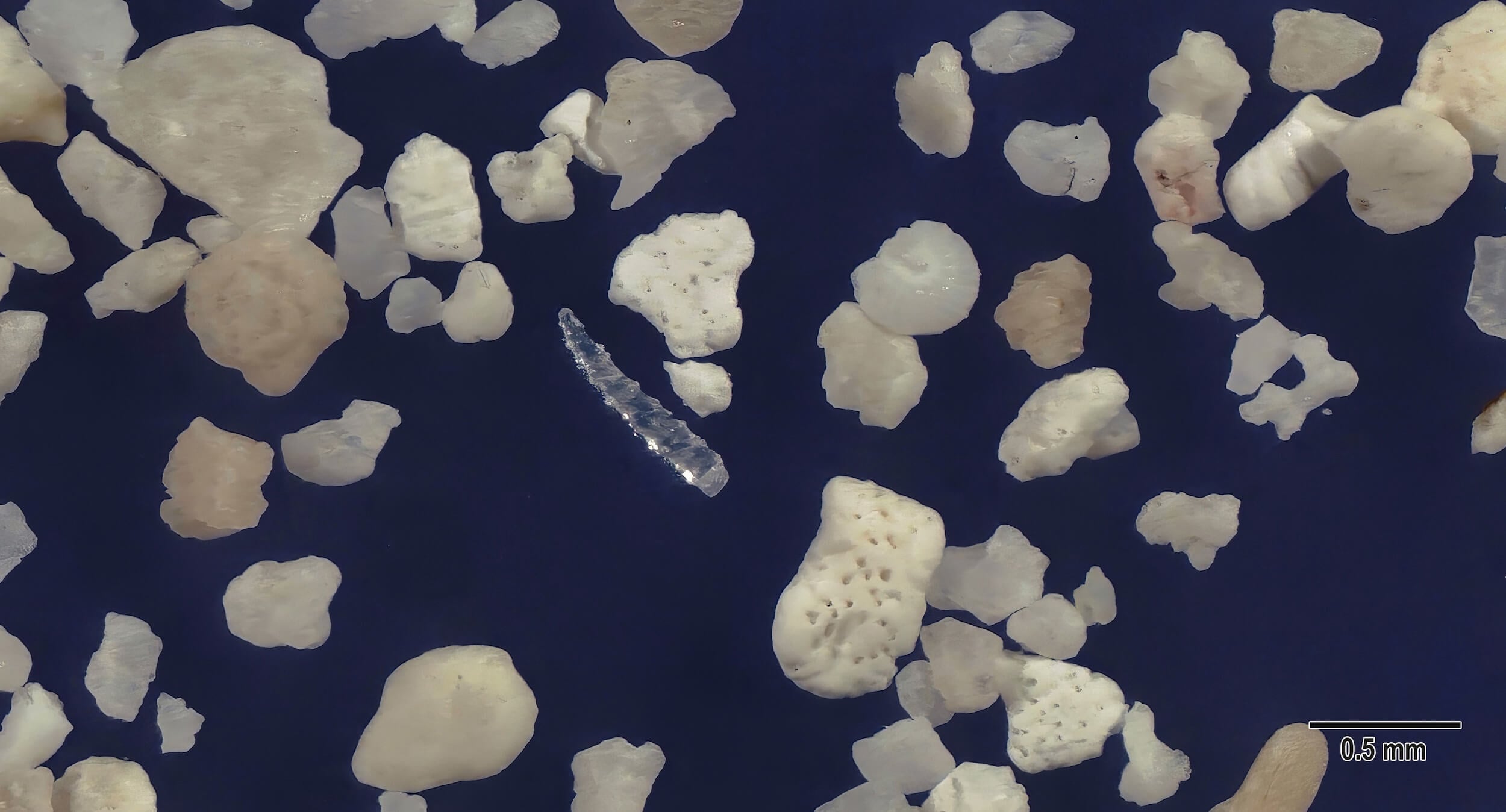
While most of this mixture of small and medium white, off-white and tan marine sand grains are difficult to identify, three gains (one to left middle, one in middle, and one to right middle) have faint segmented structures suggestive of degenerating forams. A couple of white grains with evidence of bioerosion are close to the linear transparent isolated sponge spicule in the center.
This low magnification nicely shows a variable size spectrum of primarily white and light tan marine fragments including rounded forams and centrally located red forams, a small white snail shell, and a white rod fragment of a sea urchin spine.
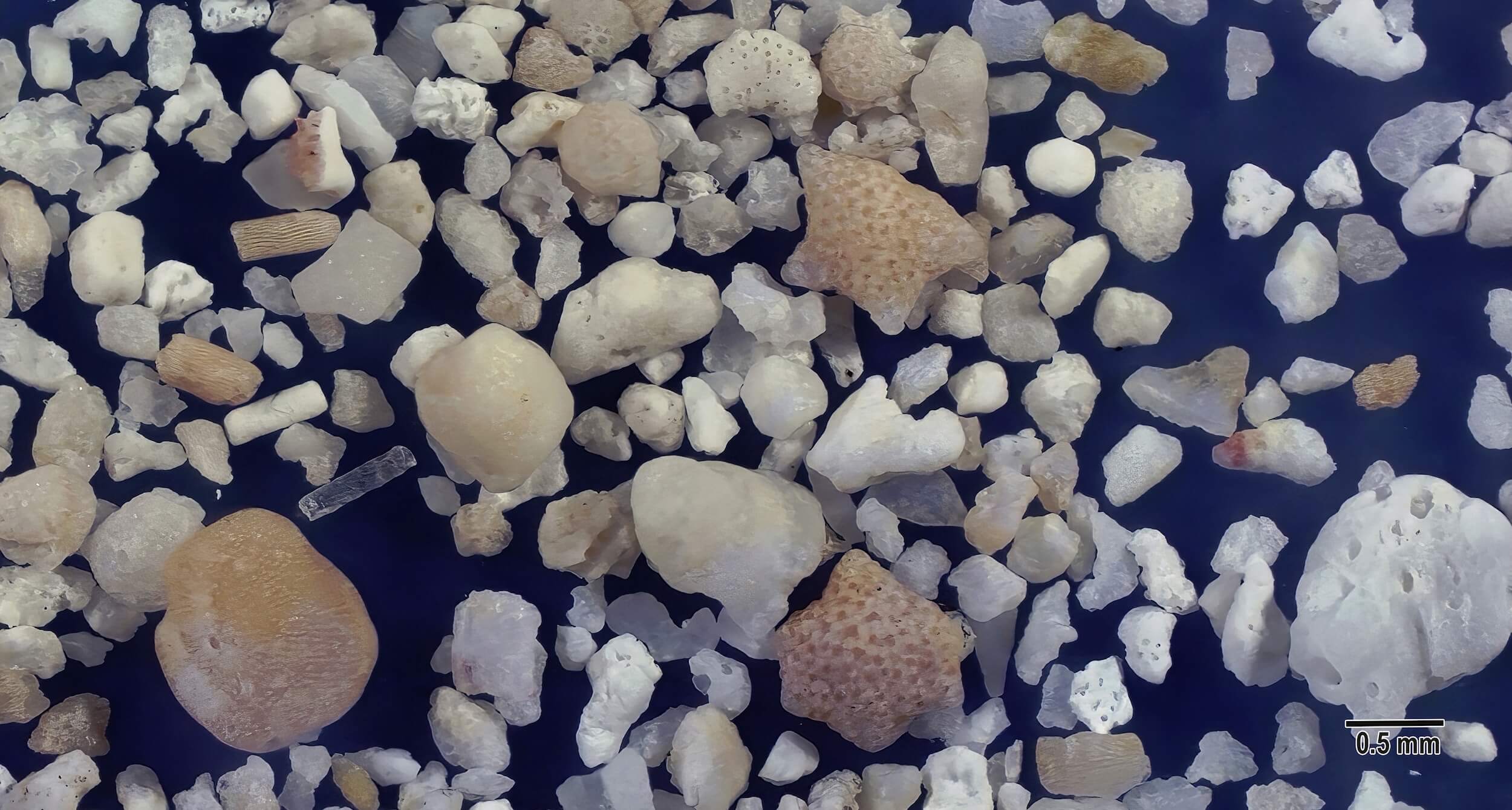
Large marine sand grains include tan freckled forams in the center and a large tan foram at the low left below different marine rod fragments. A large, rounded fragment of coral at the bottom right shows irregular holes from bioerosion.