Sand Overview
Geographic Overview
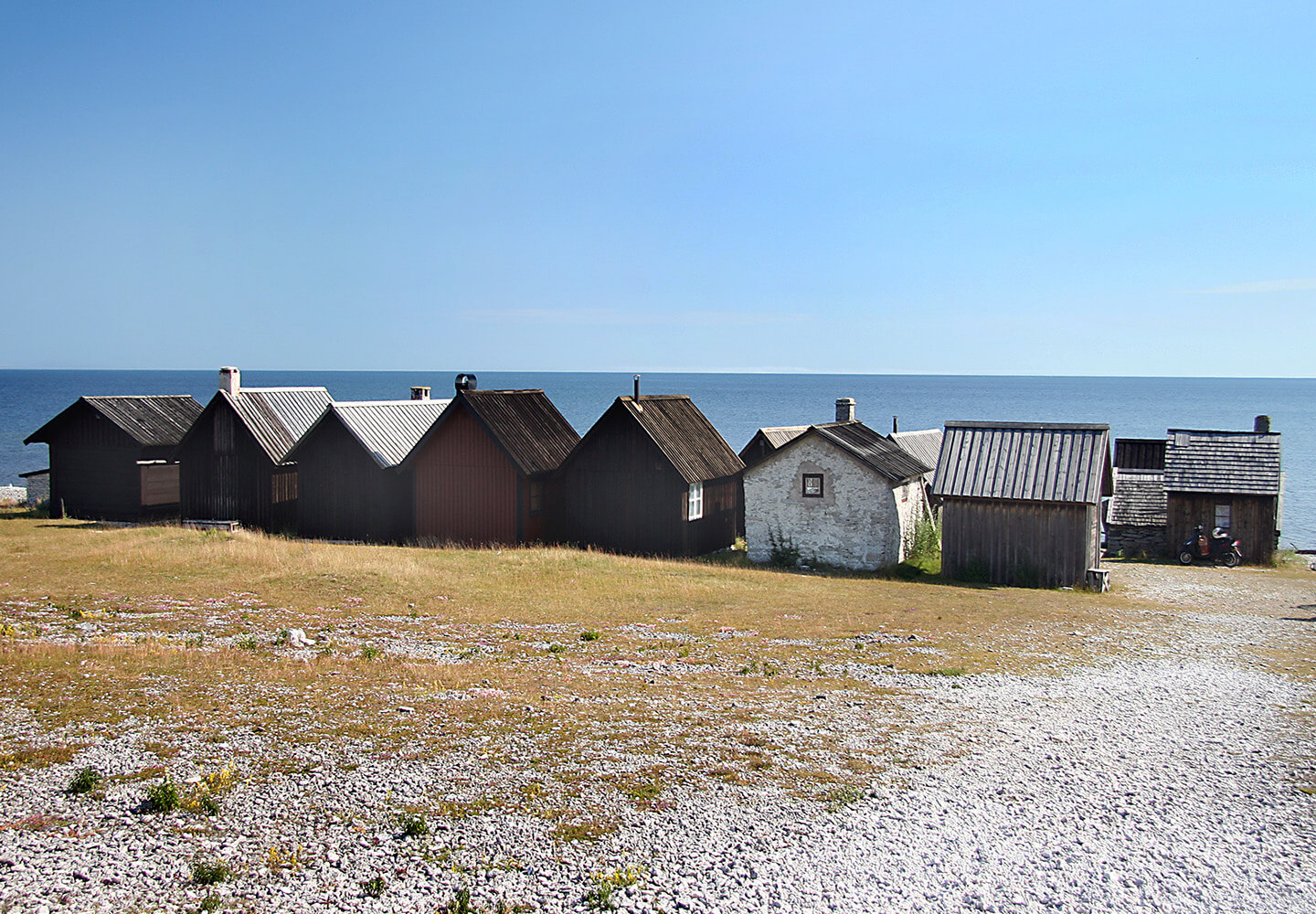
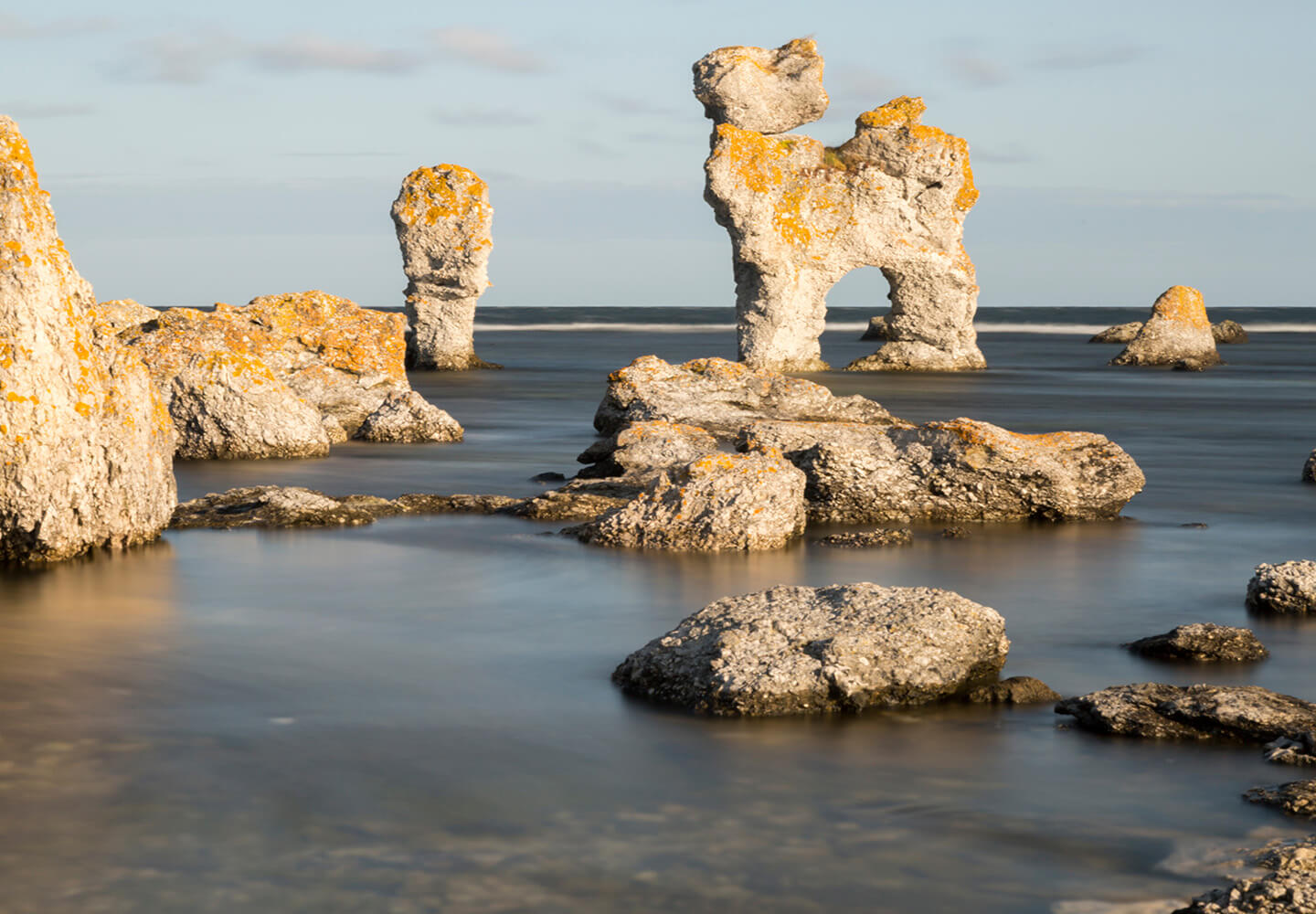
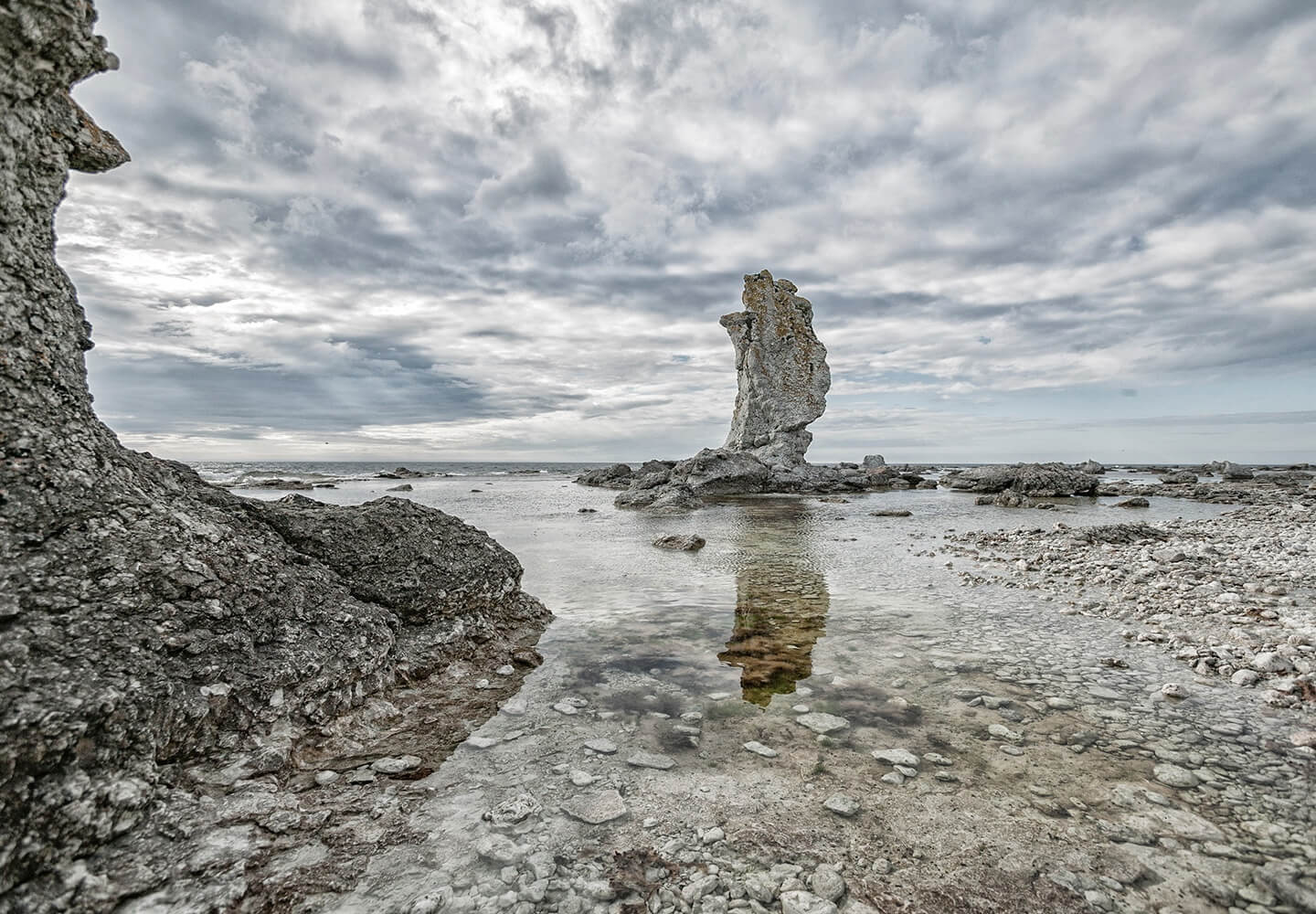
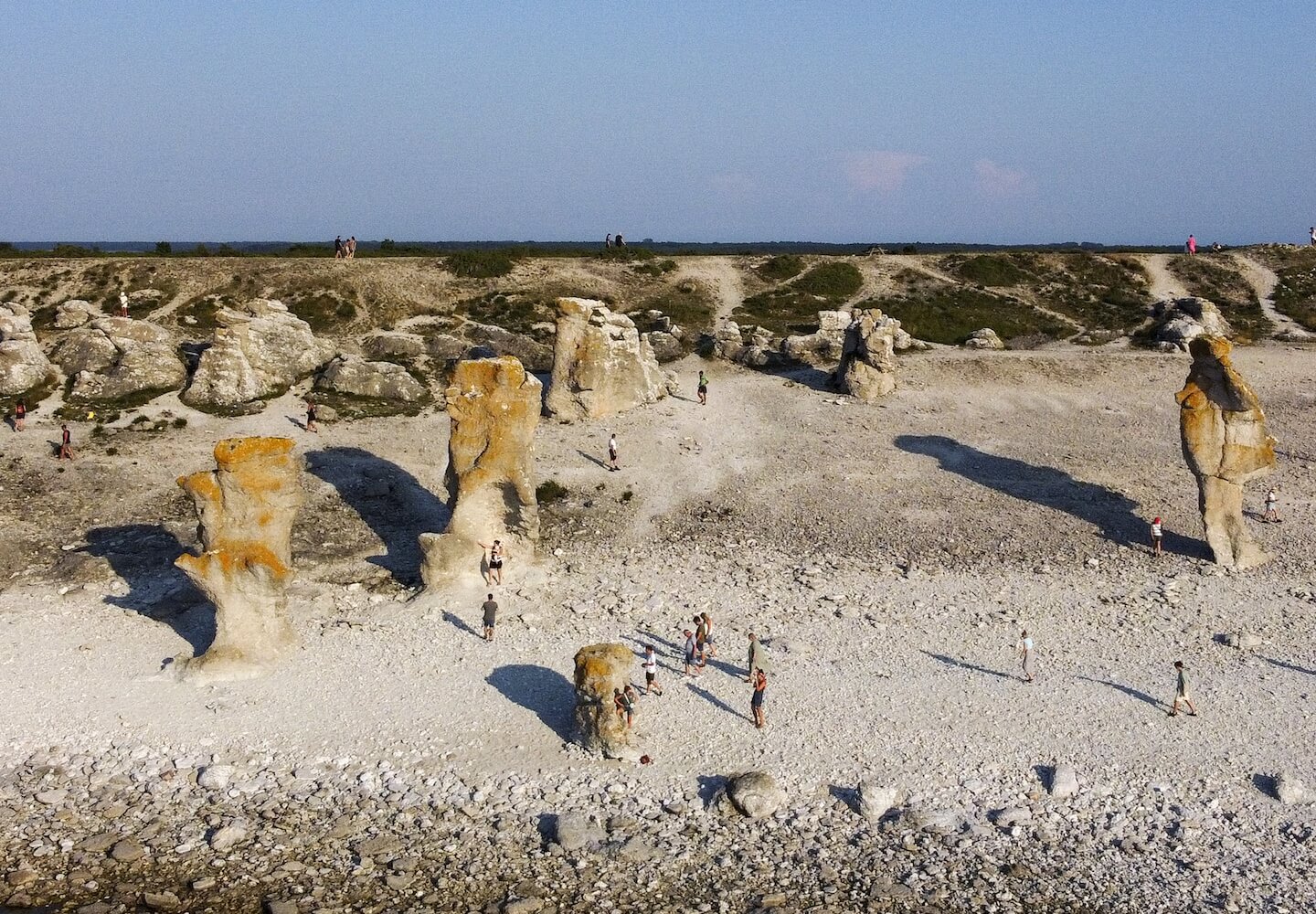
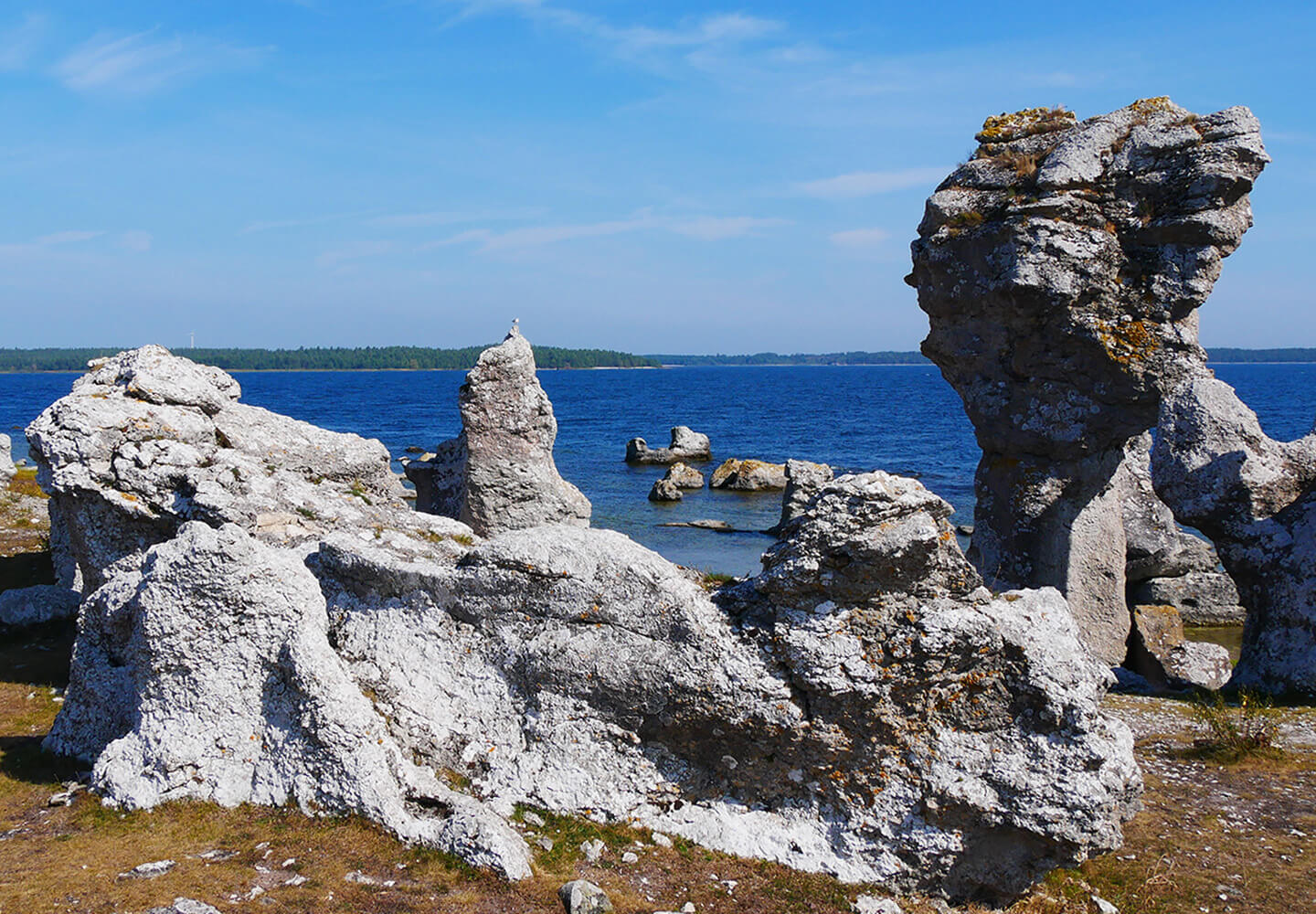
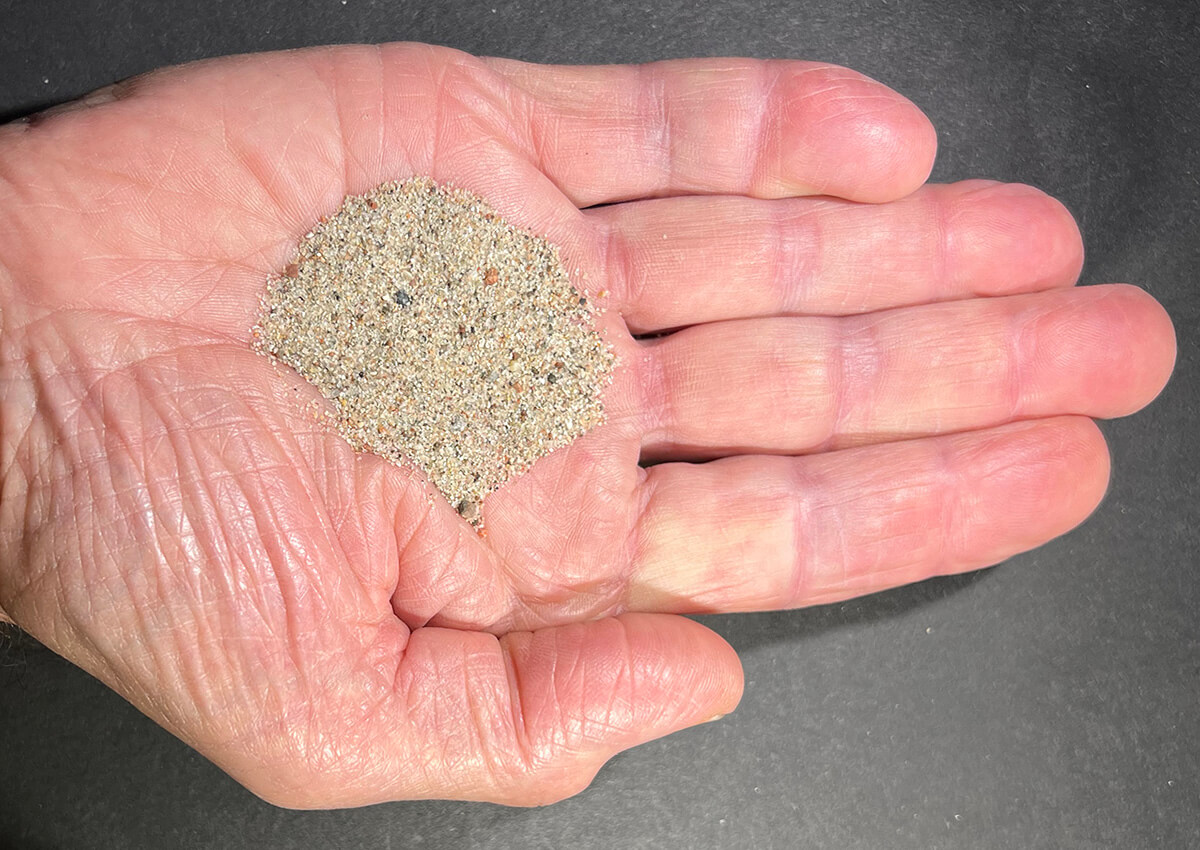
Gotland, Sweden’s largest island located in the Baltic Sea 90 km east of the Swedish mainland, features wide bays with a low coastline characterized by sandy beaches and sculptural limestone sea stacks known as “rauks” formed by weathering of limestone.

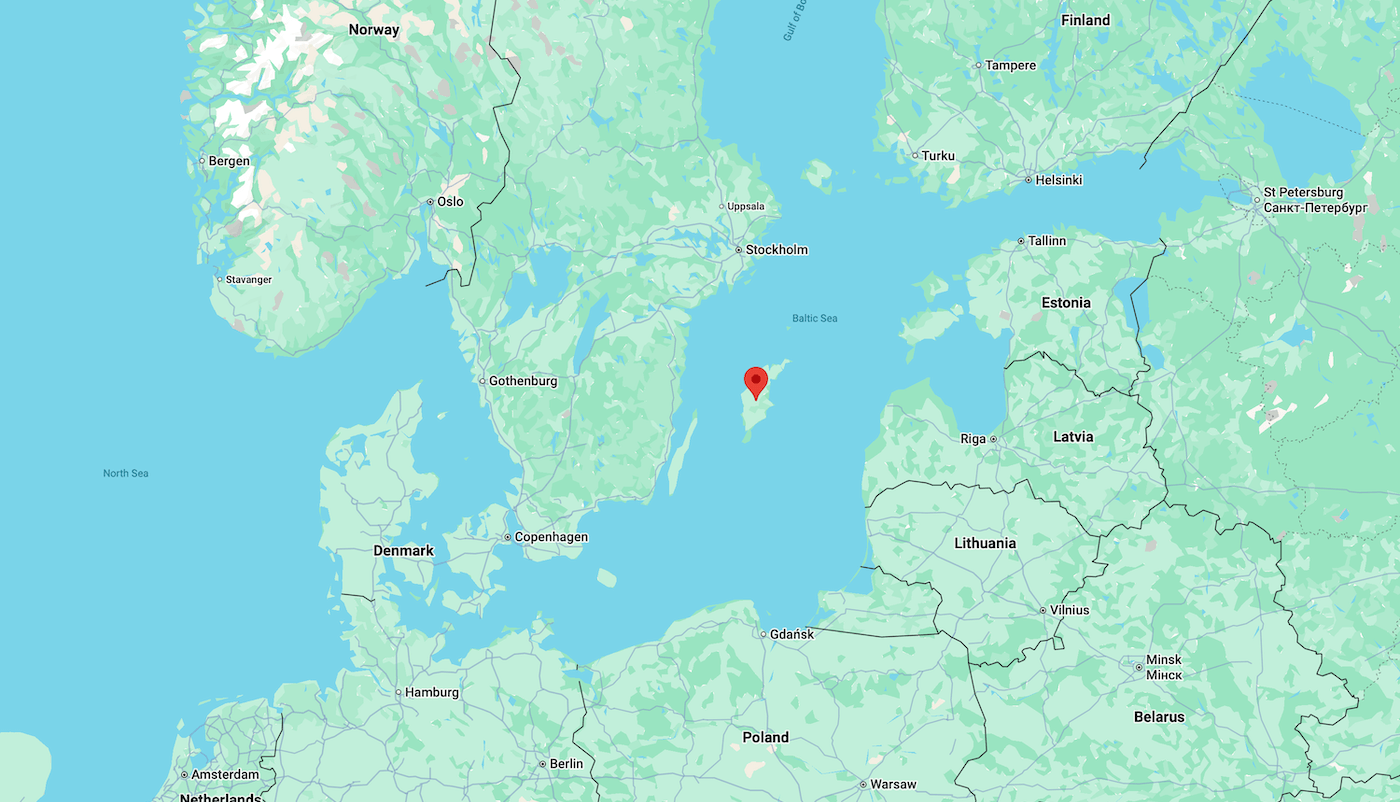
Sand Location
See where this sand sample was collected on Google Maps.
Virtual Sand Tour
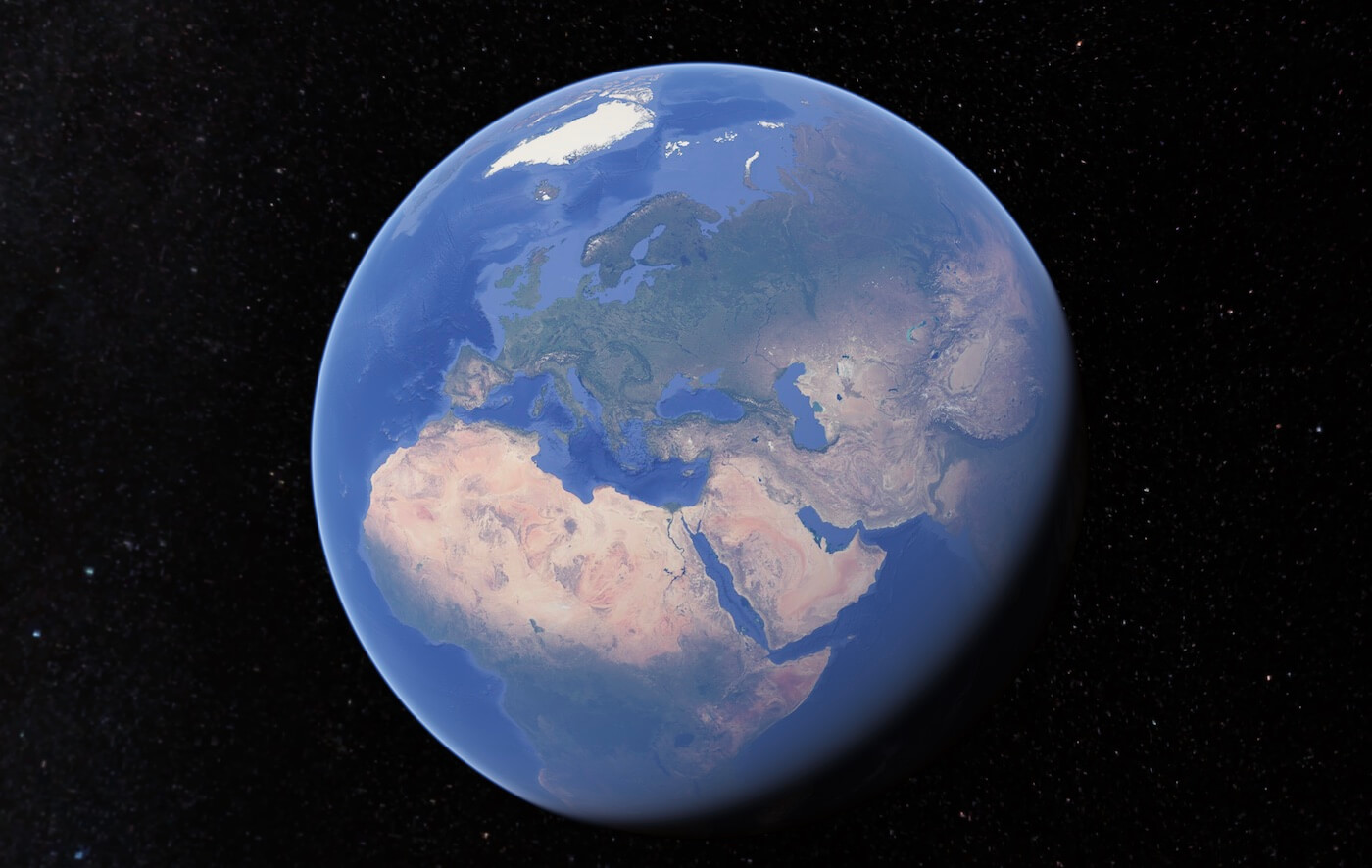
Explore an interactive map of Gotland Island on Google Earth.
Sand Gallery
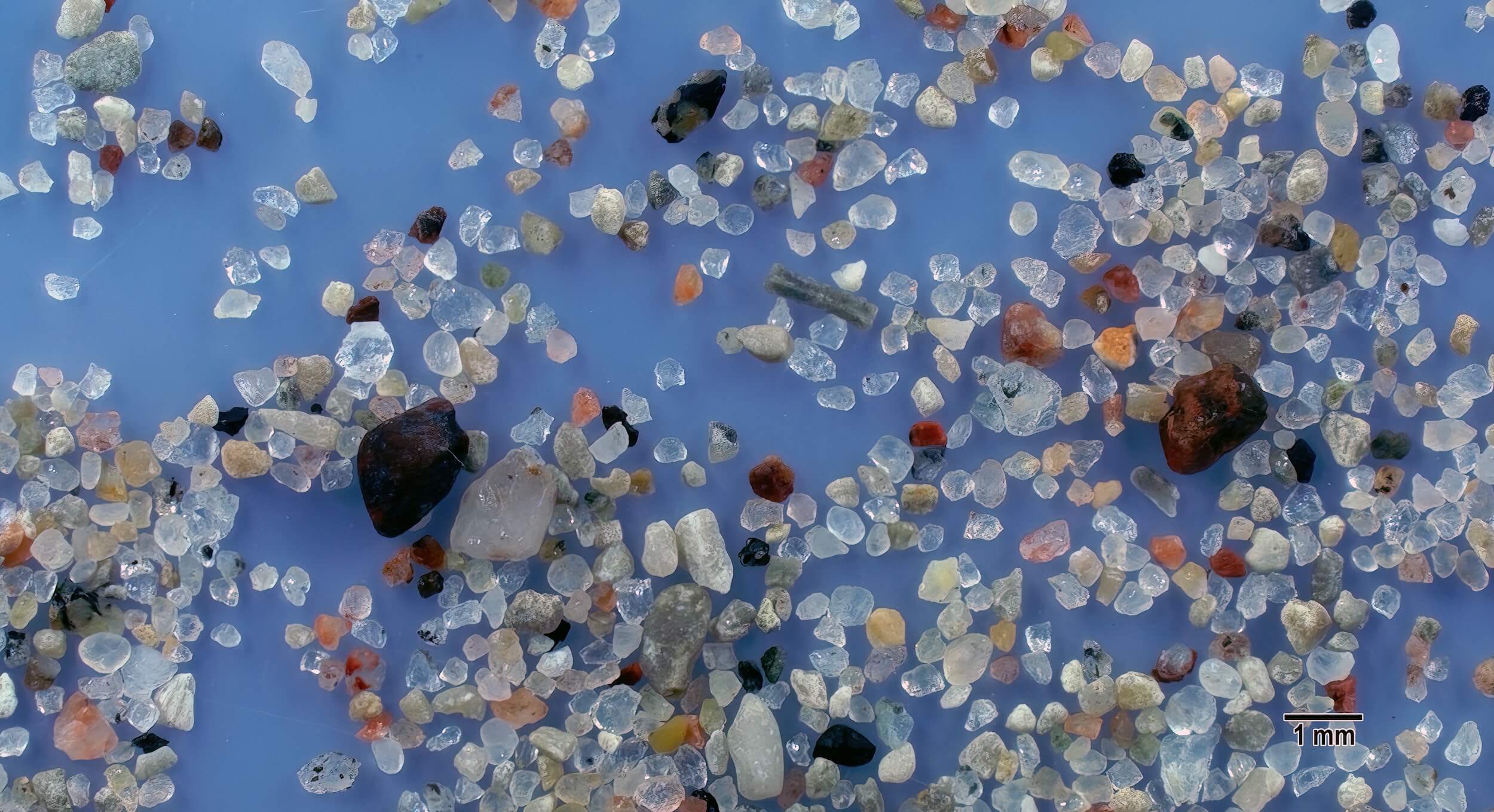
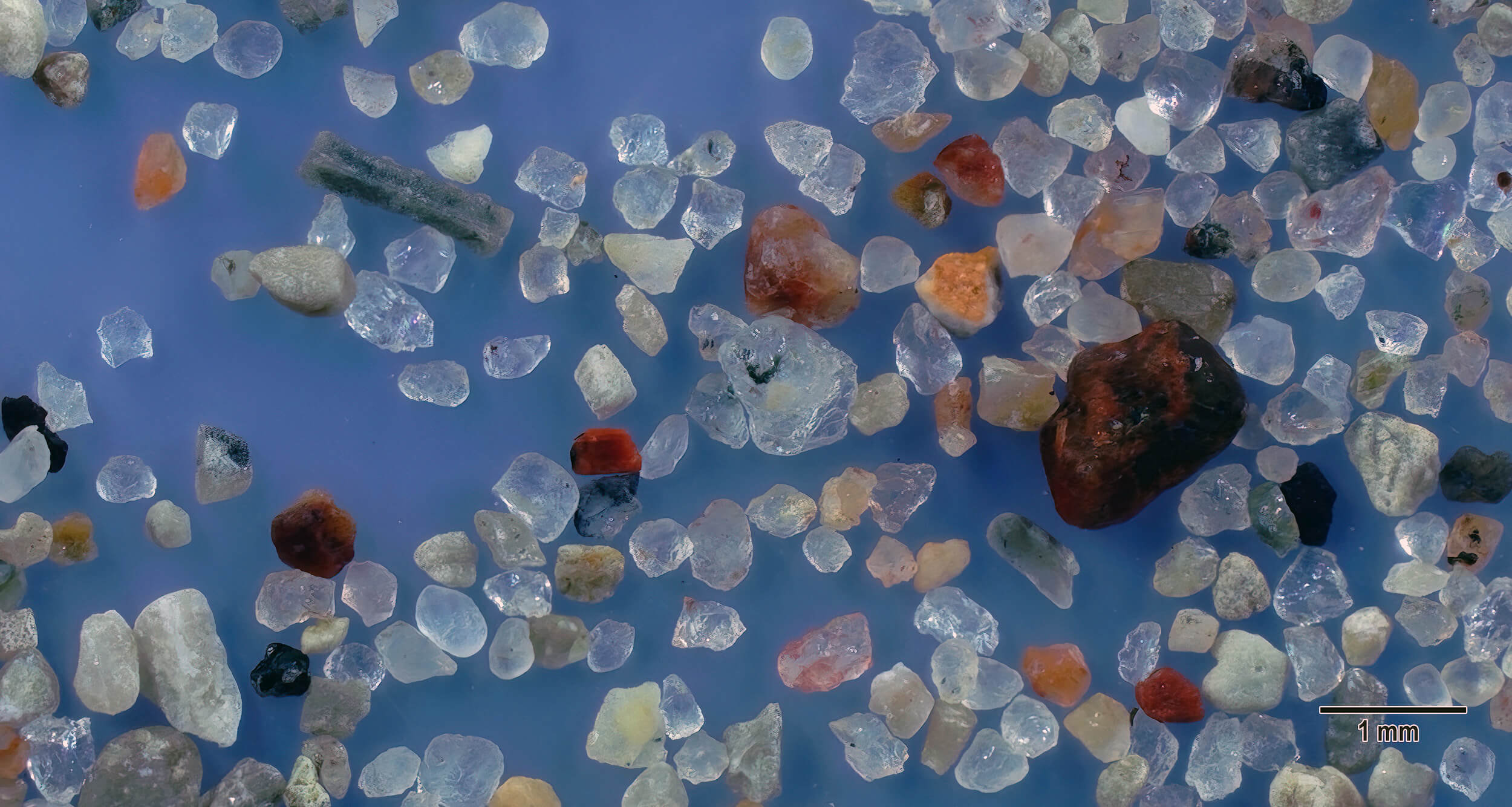
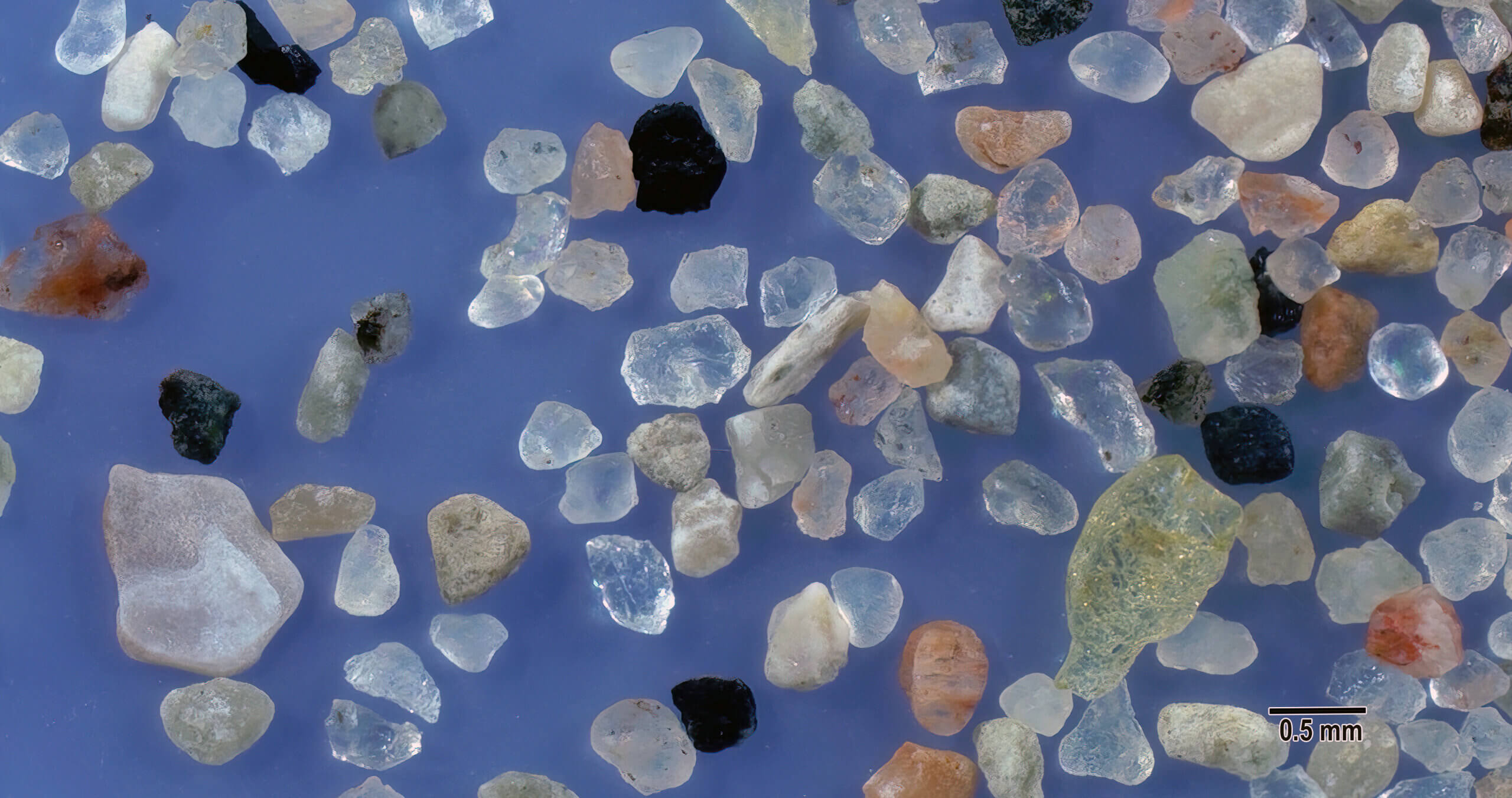
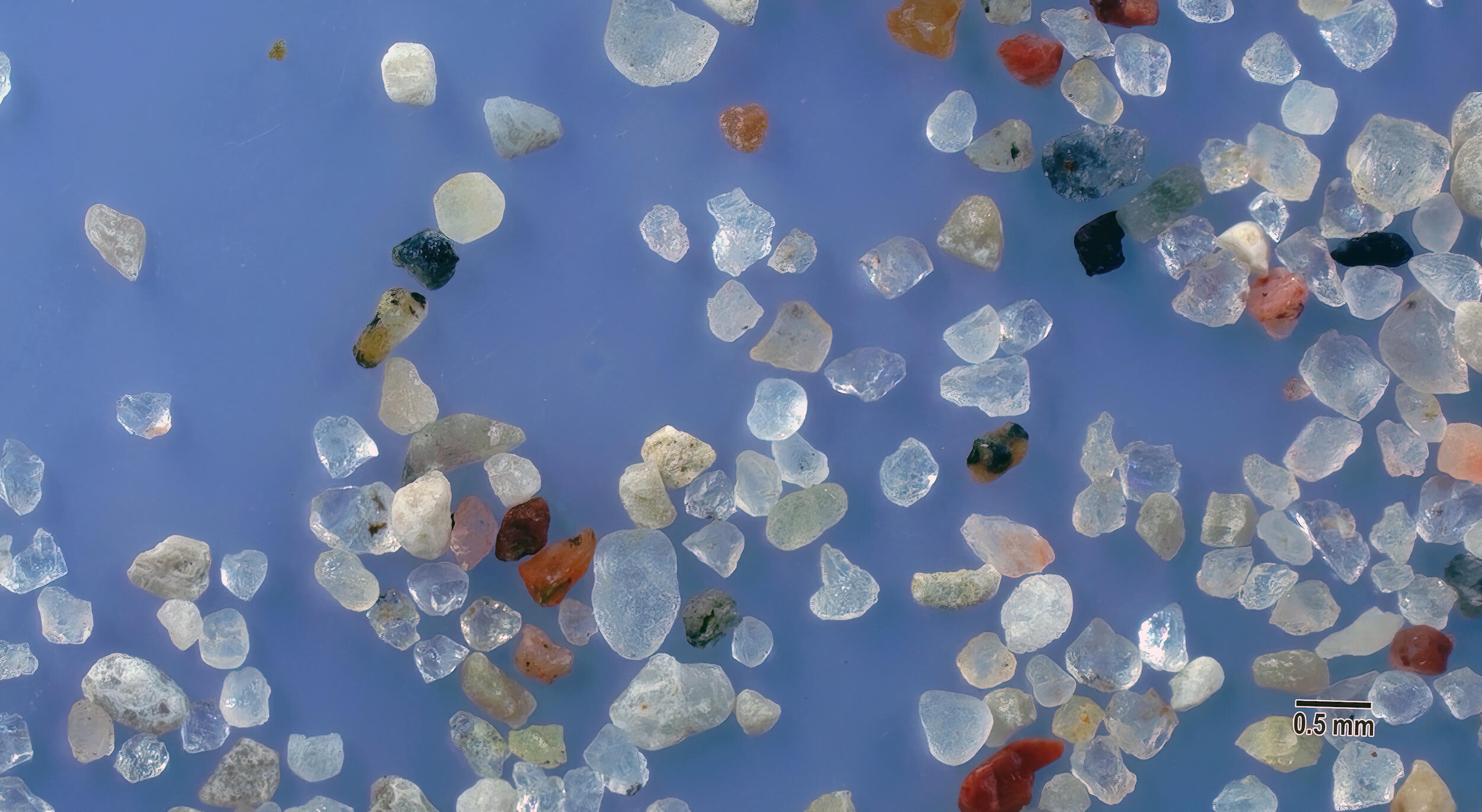
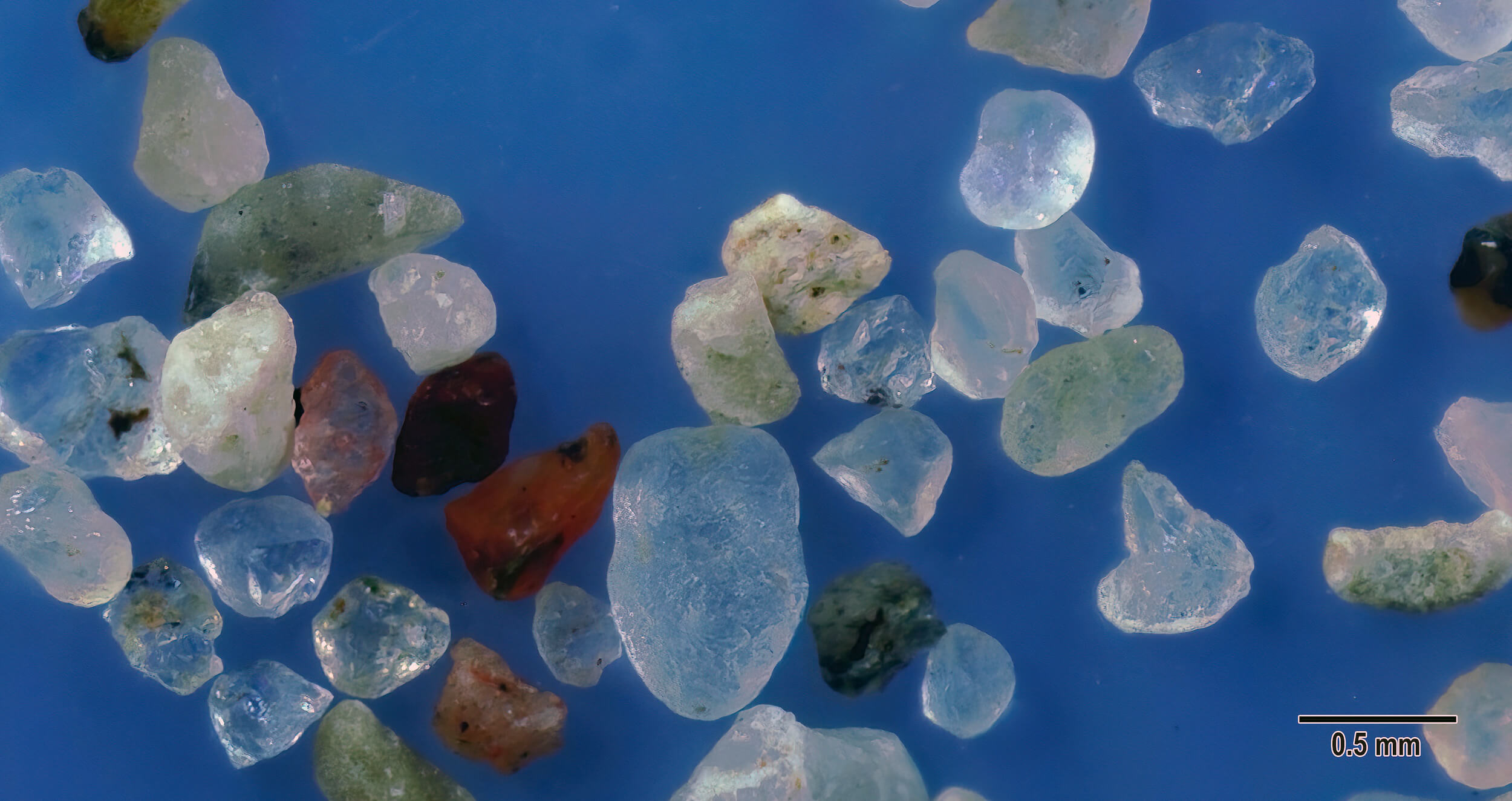
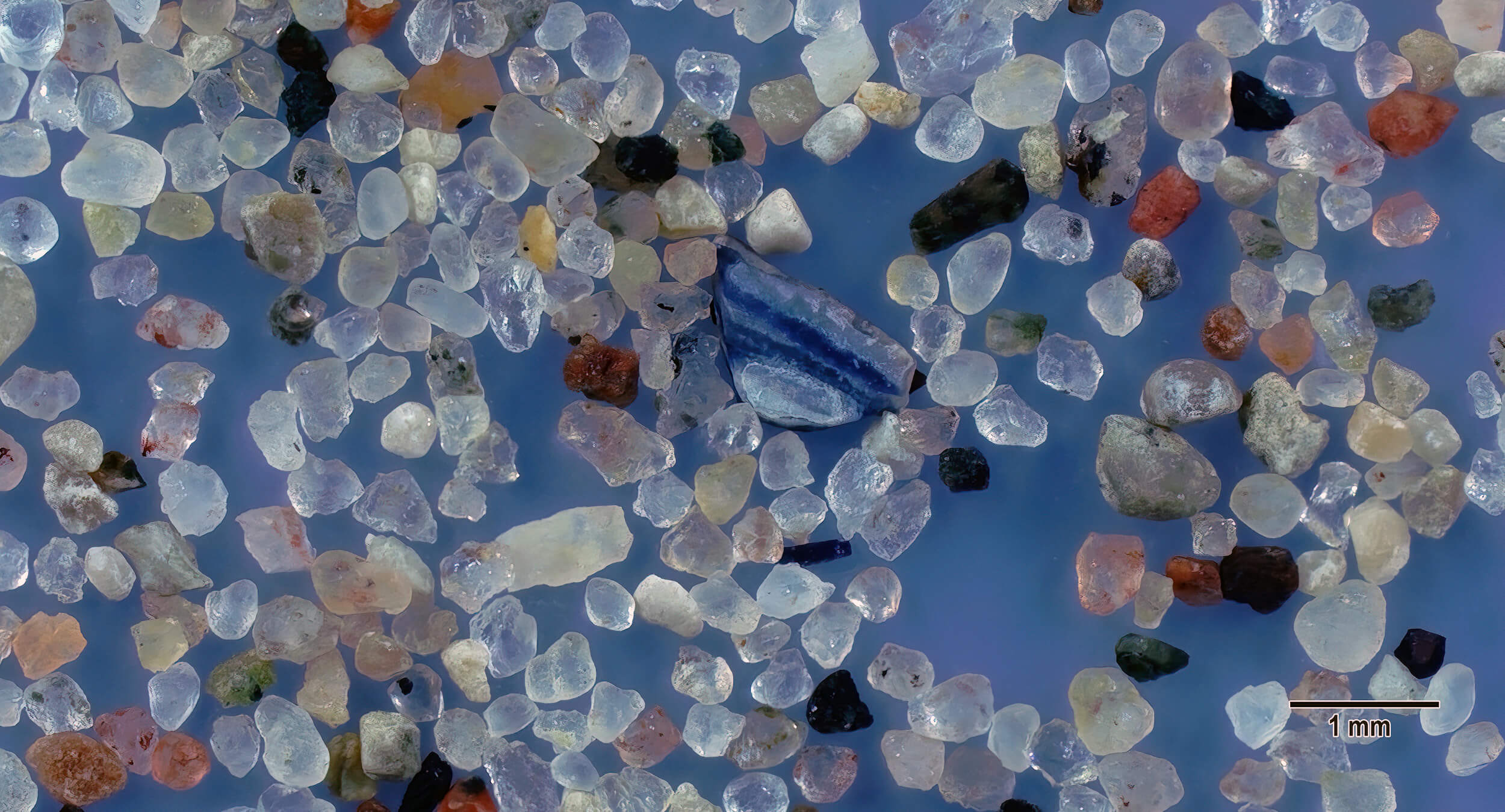
In addition many smooth-edged translucent quartz grains in this low magnification view, some quartz grains have orange, red, and black inclusions. Prominent black grains and the large red grain are likely a form of basalt while small black grains are likely iron oxide (magnetite). The small gray rod in the center resembles a worn sea urchin spine fragment.

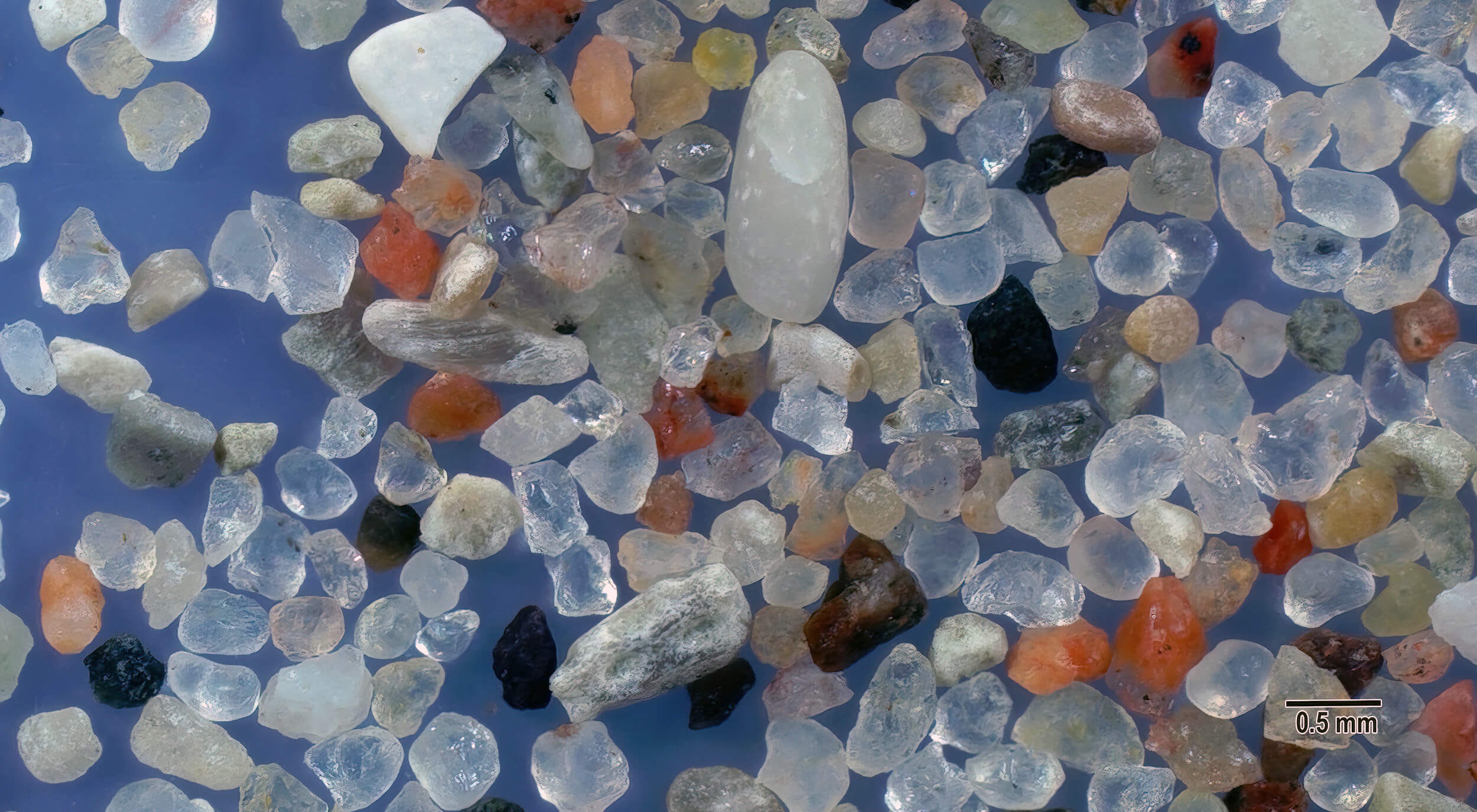
This high magnification of figure 1 shows details of the translucent quartz and colored grains. The majority of sand grains have smooth or rounded edges attesting to long exposure to wave and wind action.

Smooth-edged or rounded translucent quartz make up the majority of sand grains in this view. A few grains have stippled or solid black, tan or red coloration.

This high magnification of figure 3 shows the details of translucent and white quartz grains along with pigmented quartz sand grains.

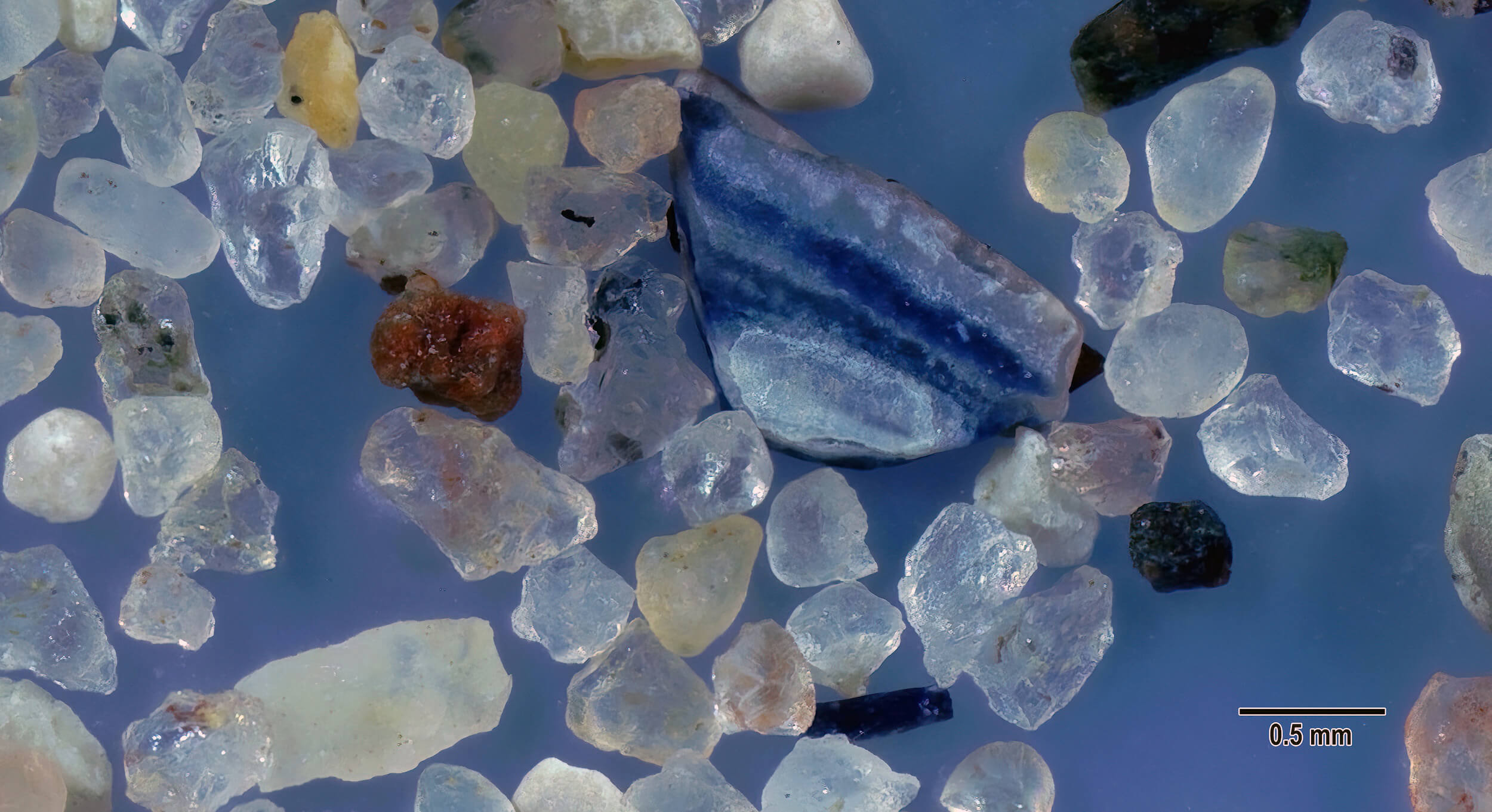
A large blue striped mollusk shell fragment sands out in this view of translucent and pigment quartz grains. Many quartz grains have pink, red and black inclusions.

This high magnification of the image above shows details of the blue striped mollusk shell fragment. Punctate black inclusions are present in some translucent quartz sand grains.

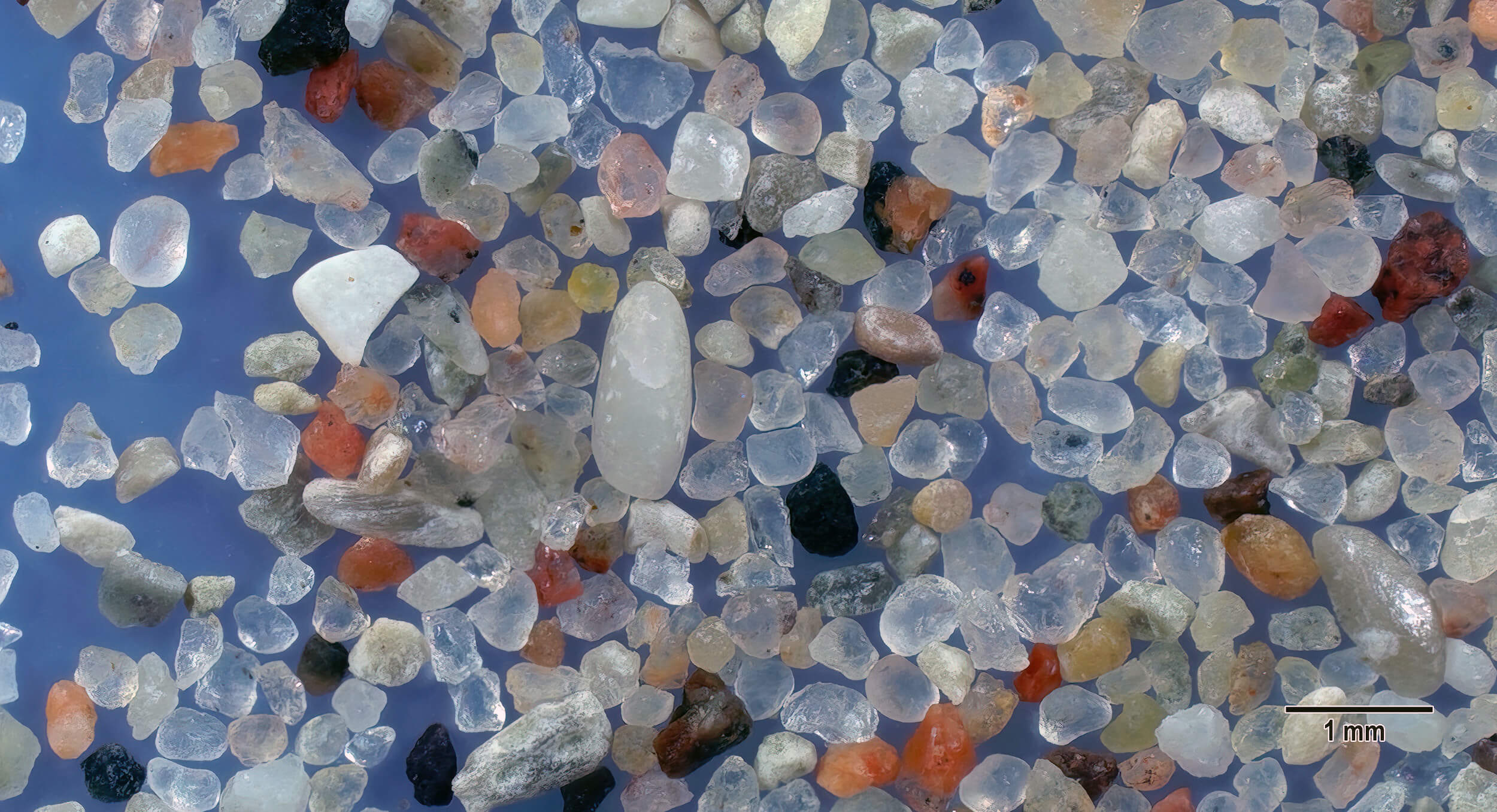
A wide spectrum of primarily smooth-edged sand grains includes translucent and pigment quartz grains. The large elongated off-white grain near the center is probably a smoothly worn quartz grain while the smooth-edged angular white grain at the left center is likely a mollusk shell fragment.

This higher magnification of the sample above shows details of off-white and grayish elongated fragments (one left of center and one near lower edge of center) that may be remnants of marine shell fragments. Most sand grains are smoothly worn translucent and pigmented quartz while occasional solid black grains are possibly fragments of basalt.