
Sand Overview
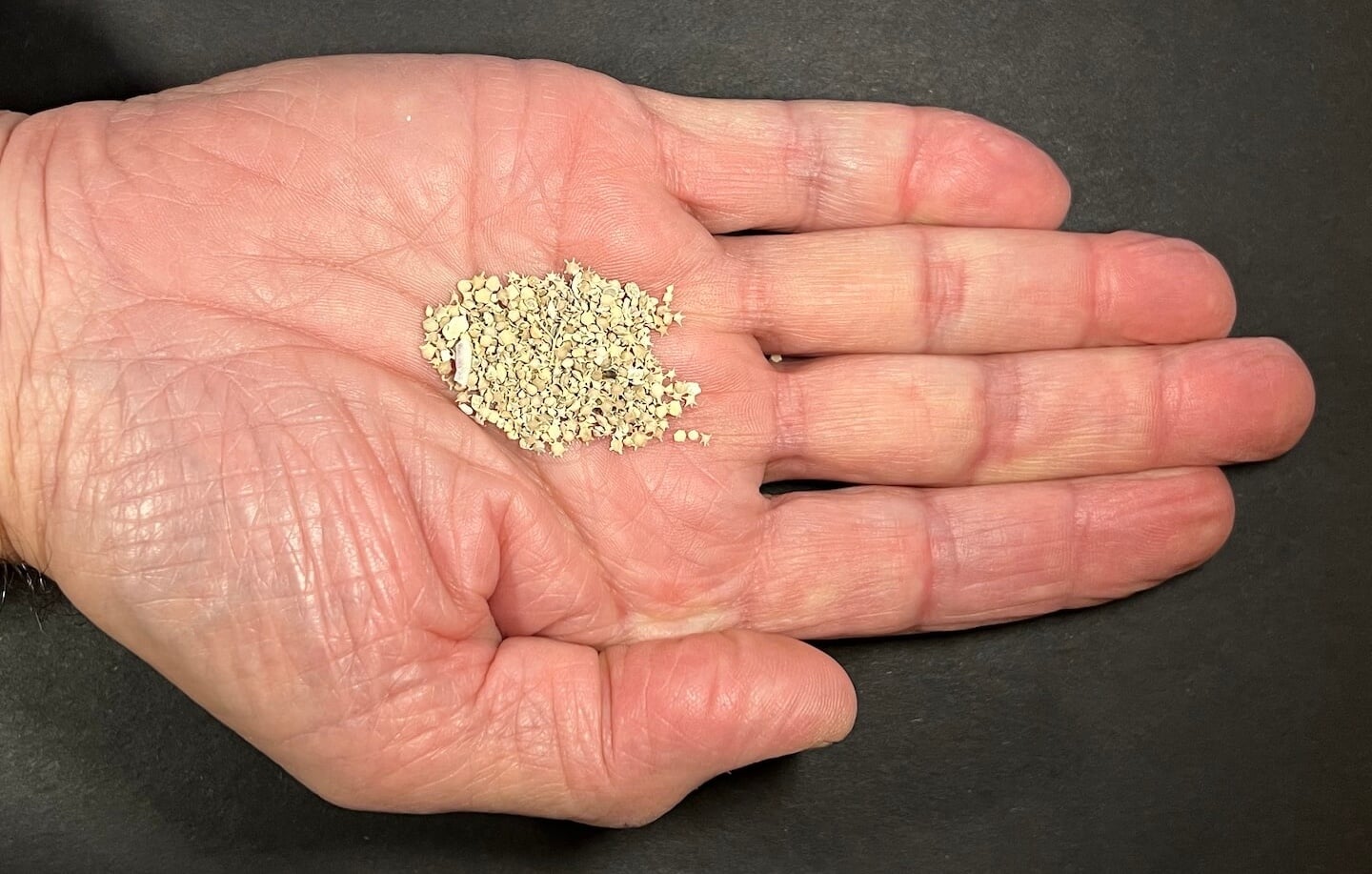
Although known primarily for their star-shaped forams, Taketomi white sand beaches include several foraminifera species.
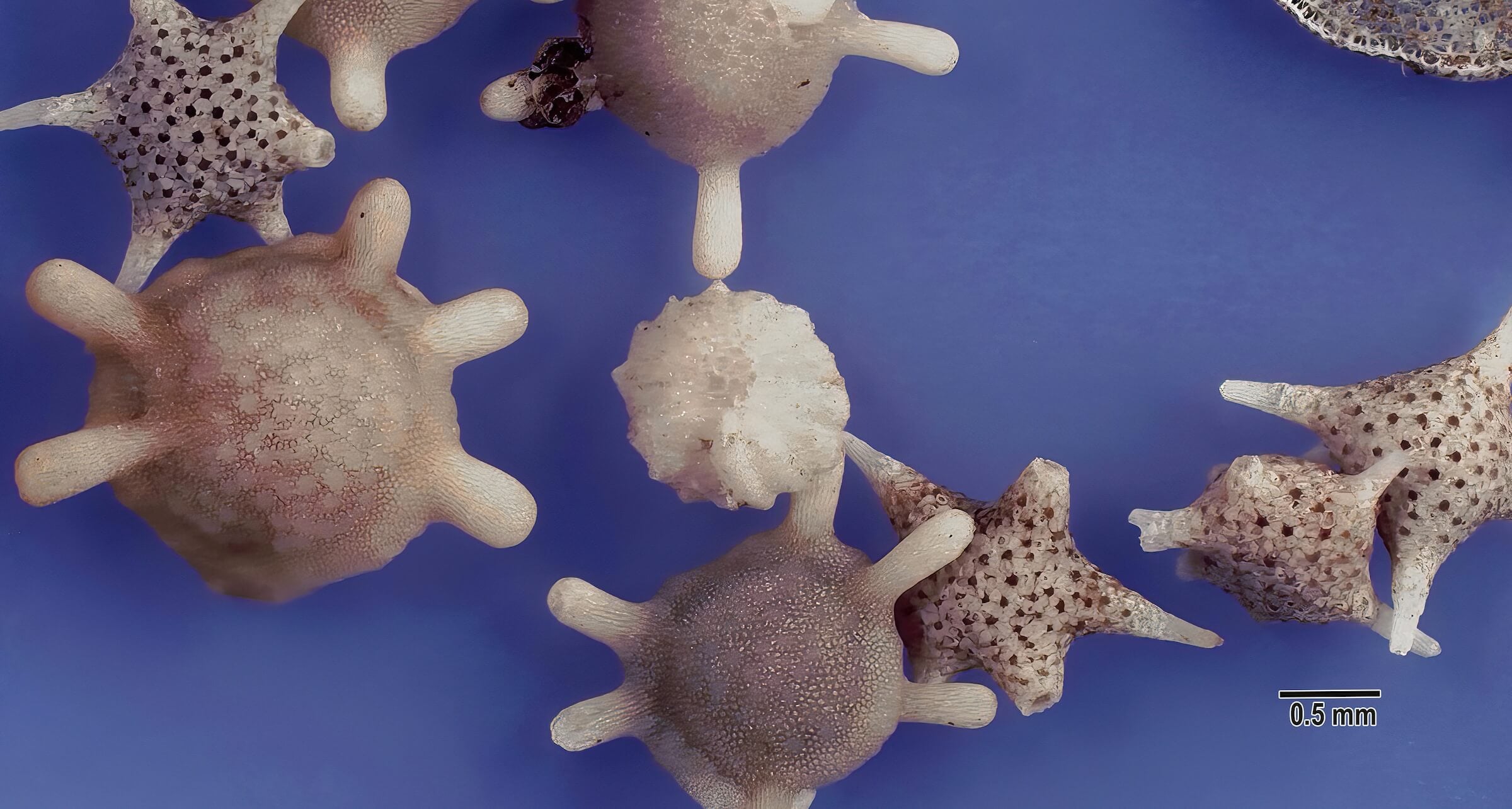
Foraminifera are microscopic, single-celled organisms that live at the bottom of the sea. Some feed on diatoms and some host symbiotic diatoms that provide them with nutrients. After the forams die, their calcium carbonate tests (exoskeletons) are carried to shore by waves and tides to form the shoreline sand.
Geographic Overview
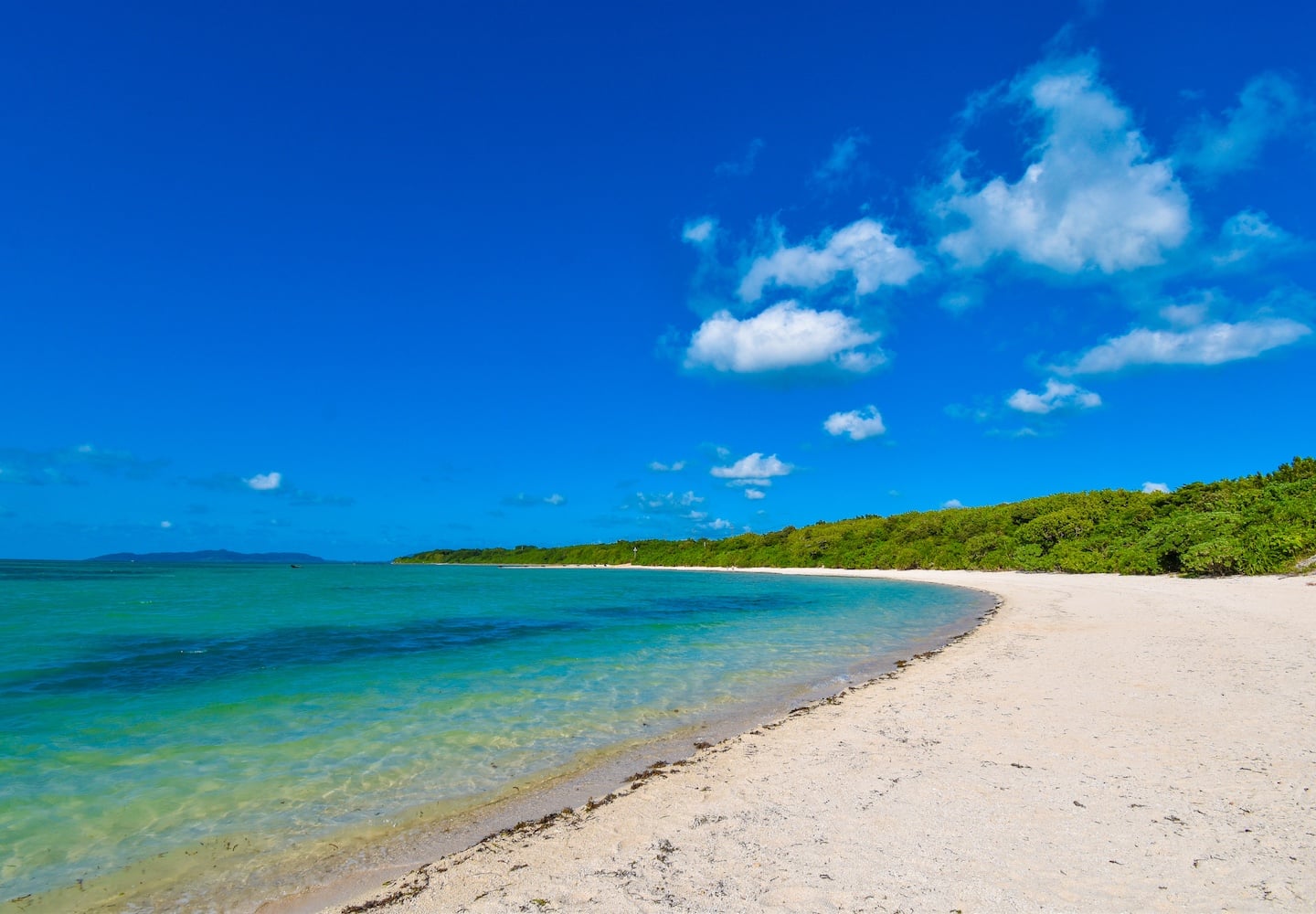
The circular Taketomi Island covers just over 2 square miles, is surrounded by coral reefs, and is known for its star-shaped skeletal remains of marine foraminifera that have existed for approximately 550 million years. Beach sand primarily consists of the tests of Foraminifera sp. including star-shaped Baculogypsina sphaerulata and other species of forams.
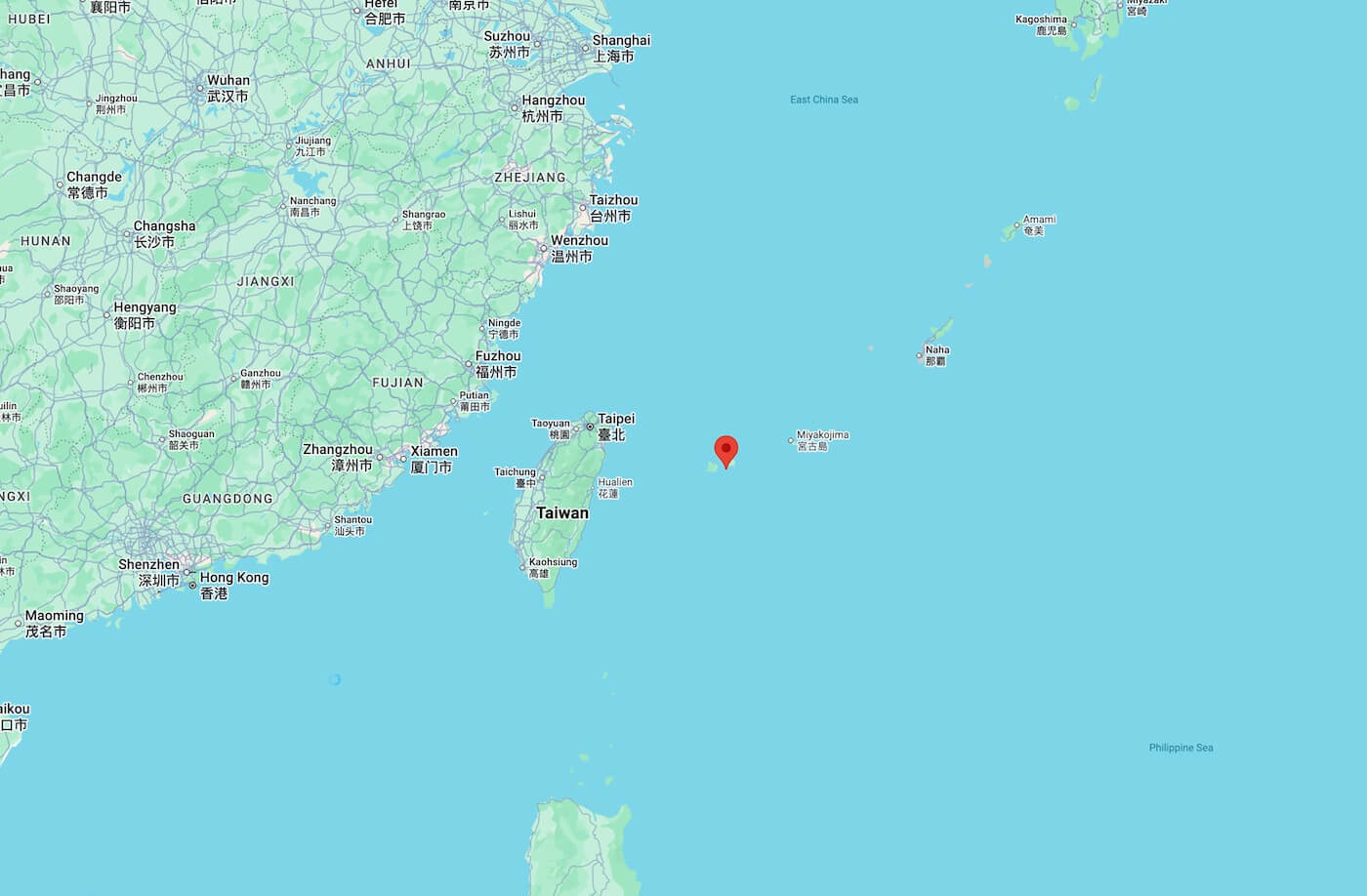
Sand Location
See where this sand was collected.
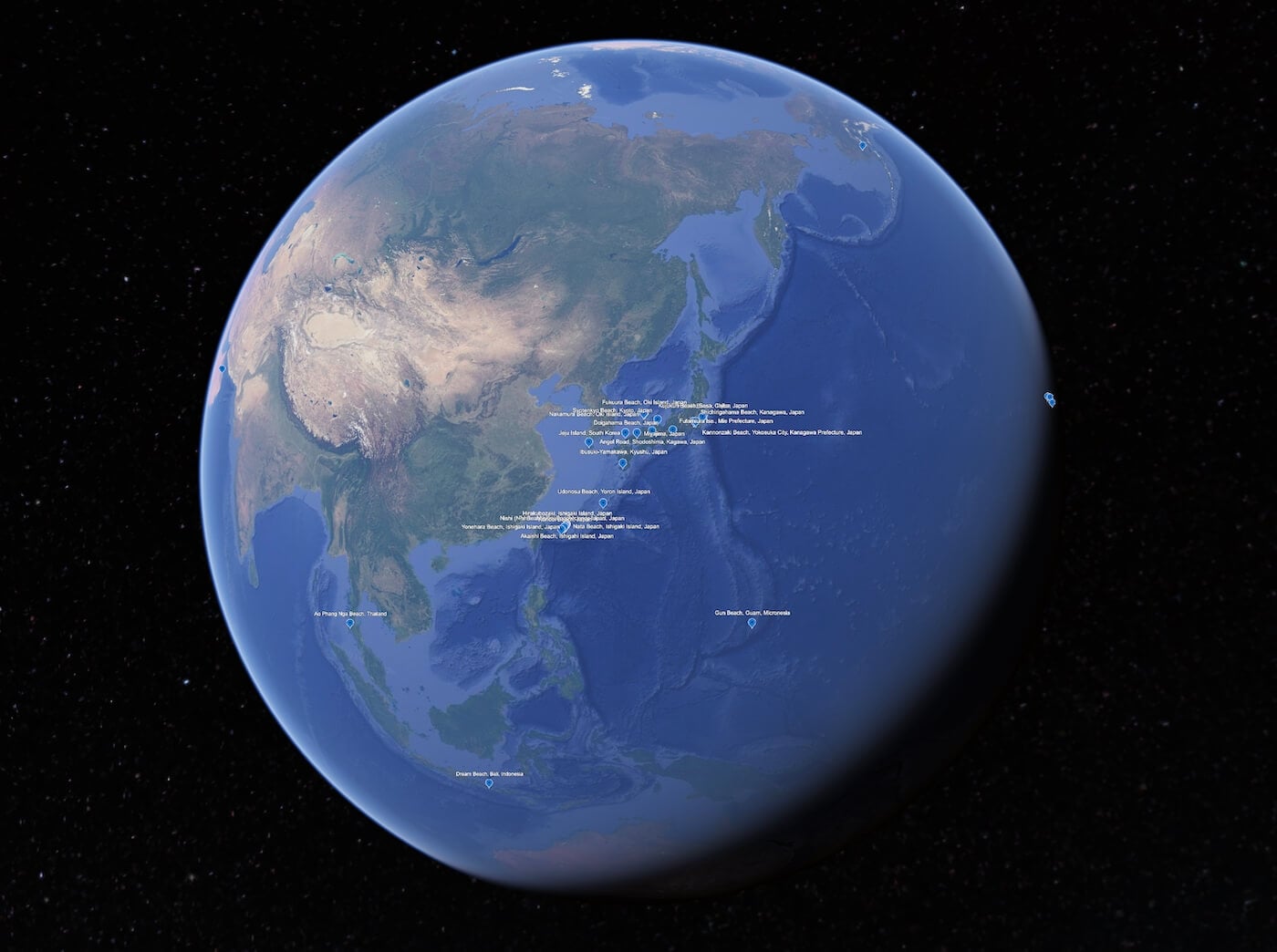
Virtual Sand Tour
Visit Taketomi Island on Google Earth.
Sand Gallery
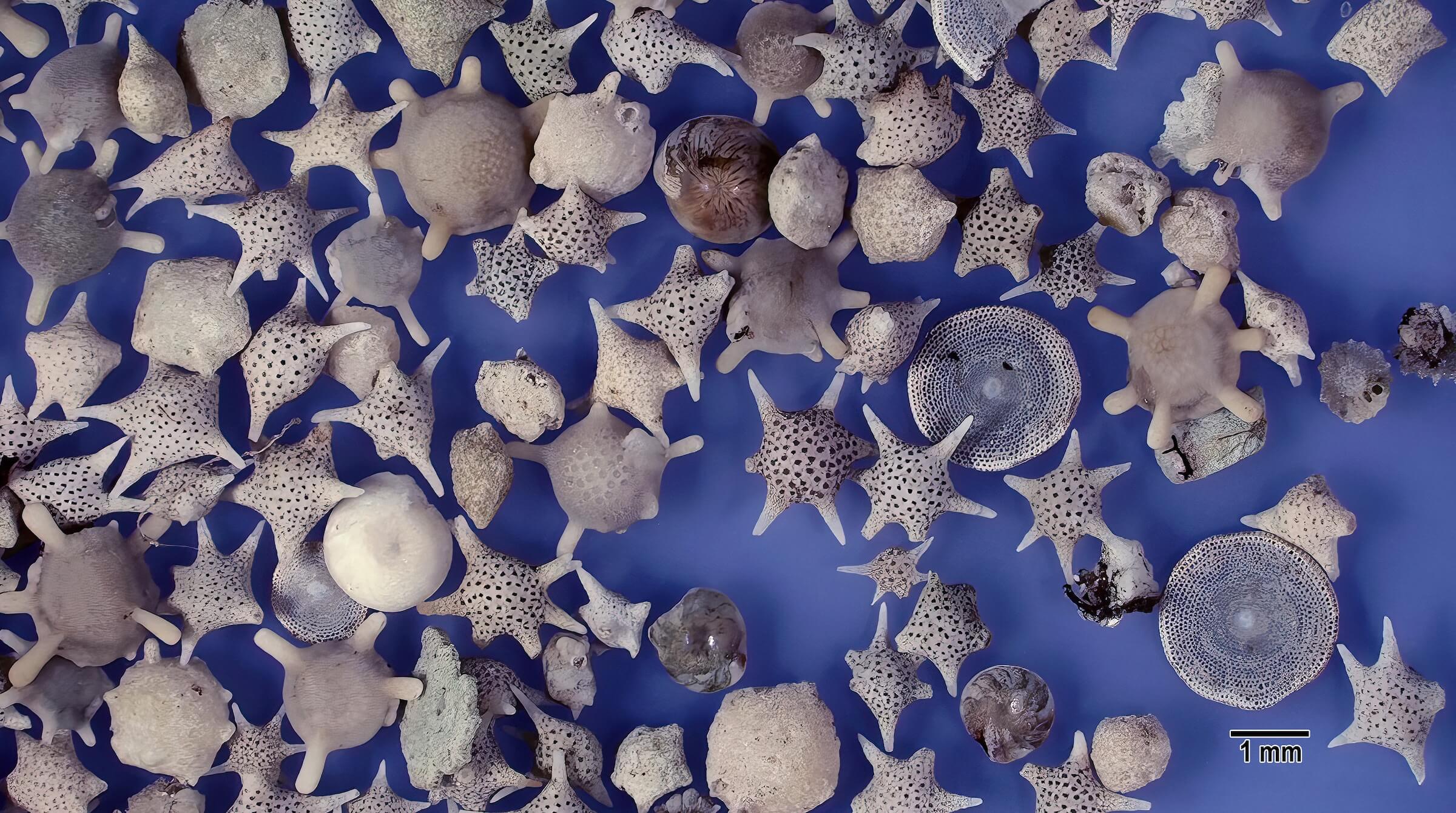
This low magnification features a variety of foraminifera species including round discs of Marginospora sp., Calcarina sp. with plump finger-like extensions, darker colored Amphistegina sp., and star-shaped Baculogypsina sp.
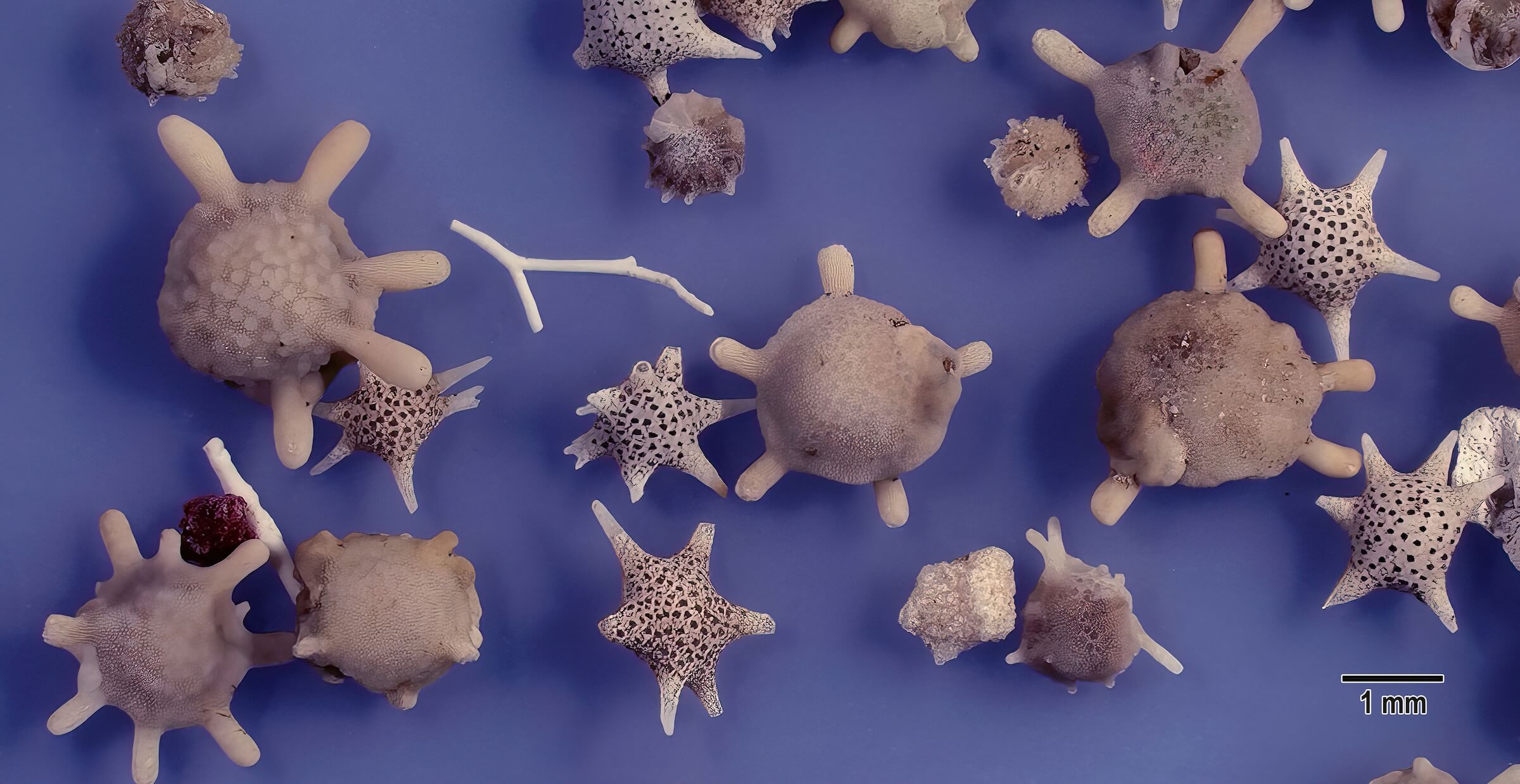
White linear fragments of coralline algae stand out in this view of Calcarina sp., star-shaped Baculogypsina sp., forams and two small round Neorotalia sp. forams at the upper center.
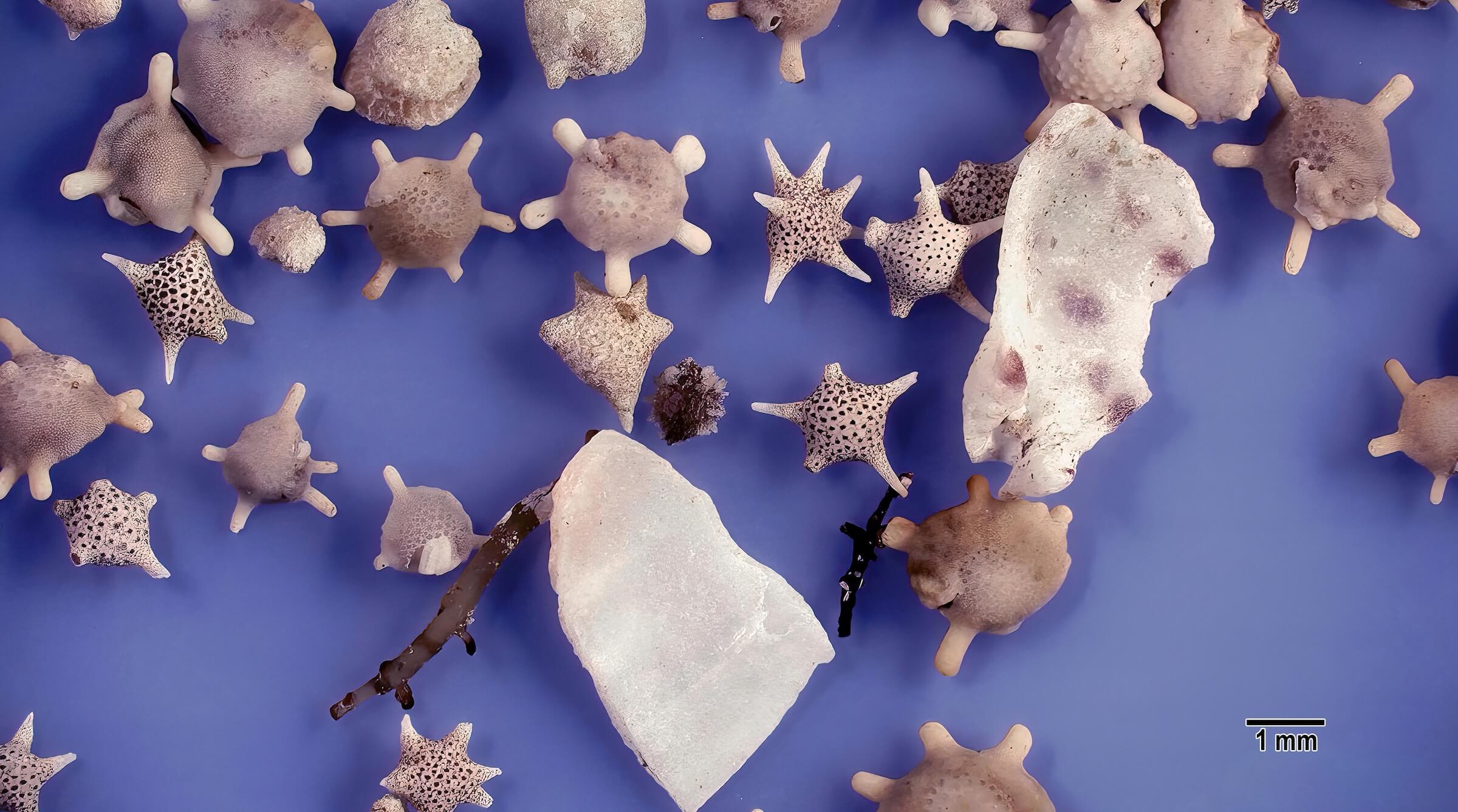
Large mollusk shards, one with punctate tan foci, and tan and black linear fragments of coralline algae accompany multiple Baculogypsina sp. and Calcarina sp. sand grains.
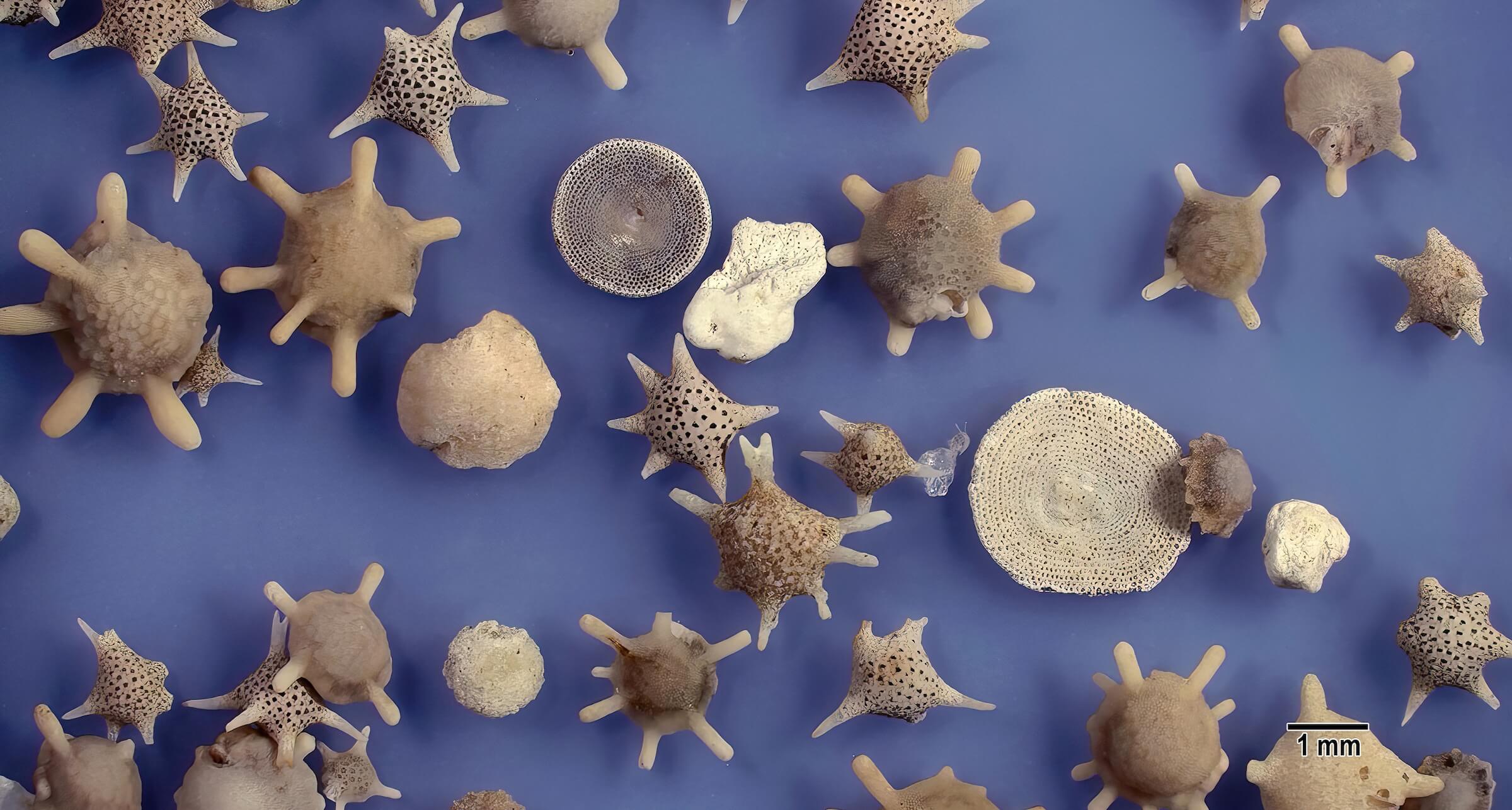
In addition to Calcarina sp. and Baculogypsina sp. tests, the calcareous shells of two Marginospora sp. discs are present in this view and surround a centrally located white coral fragment with punctate and linear evidence of predation.
A white circular foram (probably a Neorotalia sp.) in the center is surrounded by a Calcarina sp., with plump protrusions and a star-shaped Baculogypsina sp. foram.
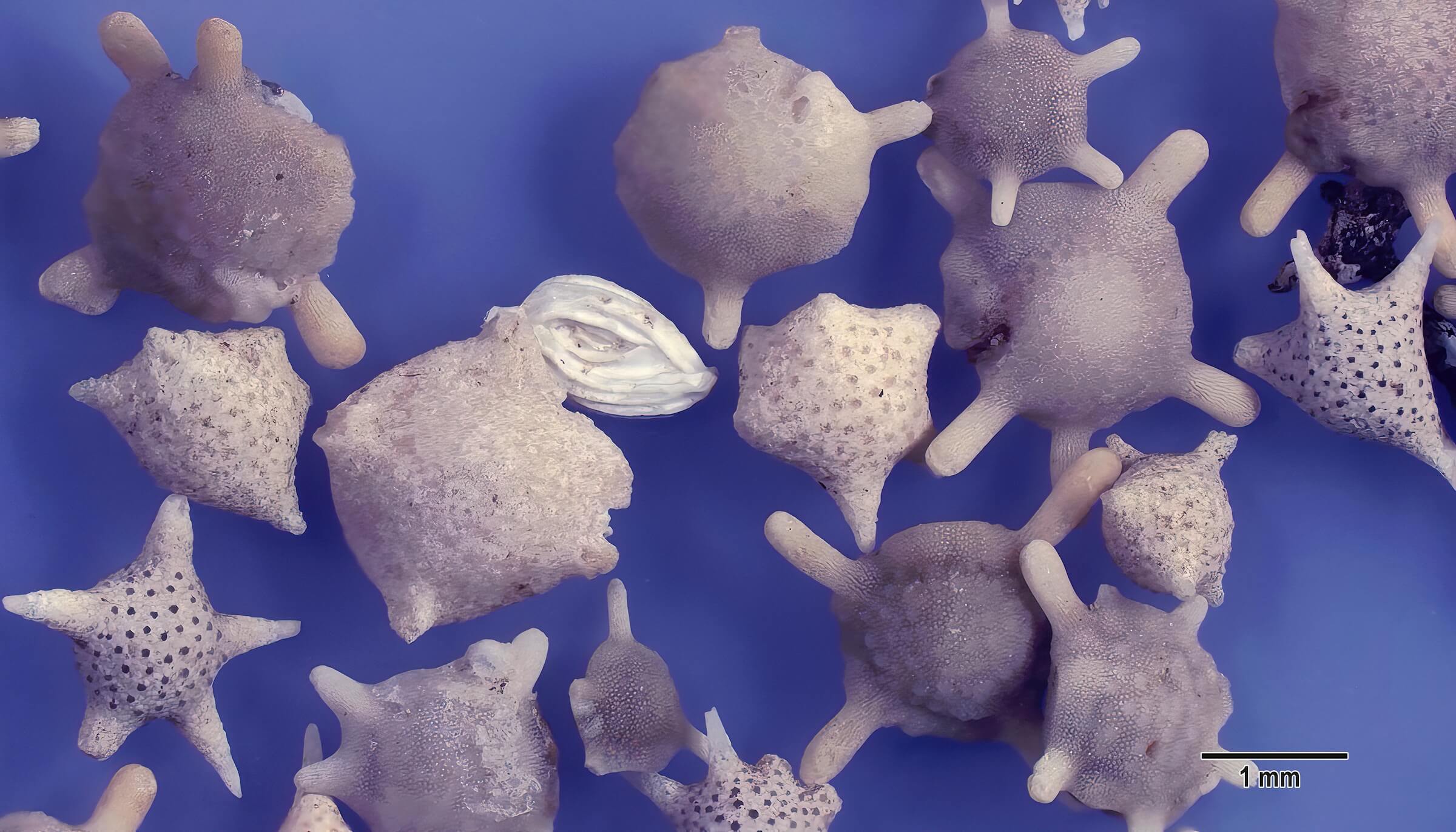
A white eye-shaped Spiroloculina sp. test is accompanied by star-shaped Baculogypsina sp. sand grains with pointed extensions and Calcarina sp. sand grains with plump finger-like extensions.
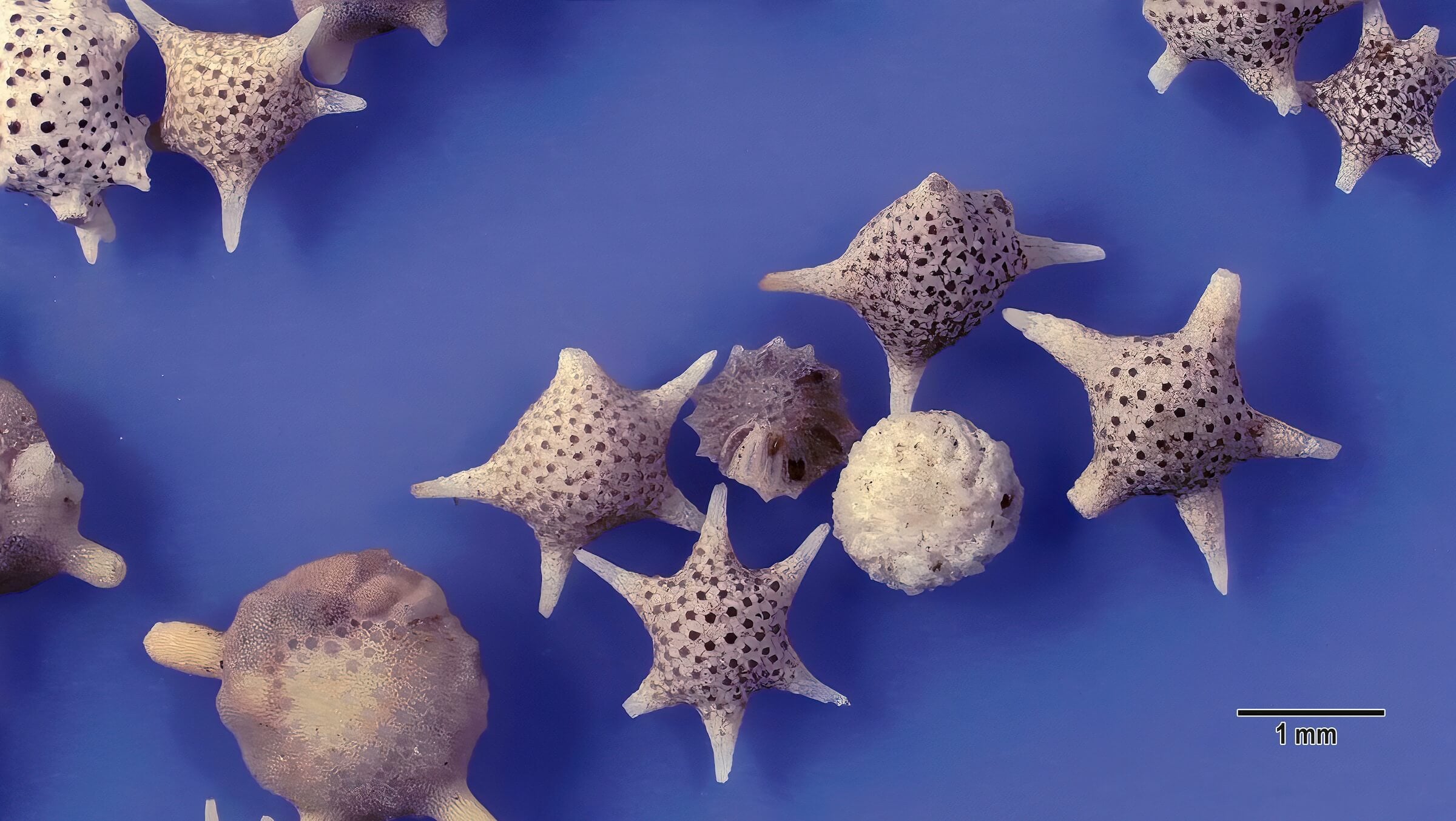
Two circular forams (the one with pointed edges is a Neorotalia sp.) are surrounded by four Baculogypsina sp. forams with a Calcarina sp. foram at the lower left of this image.
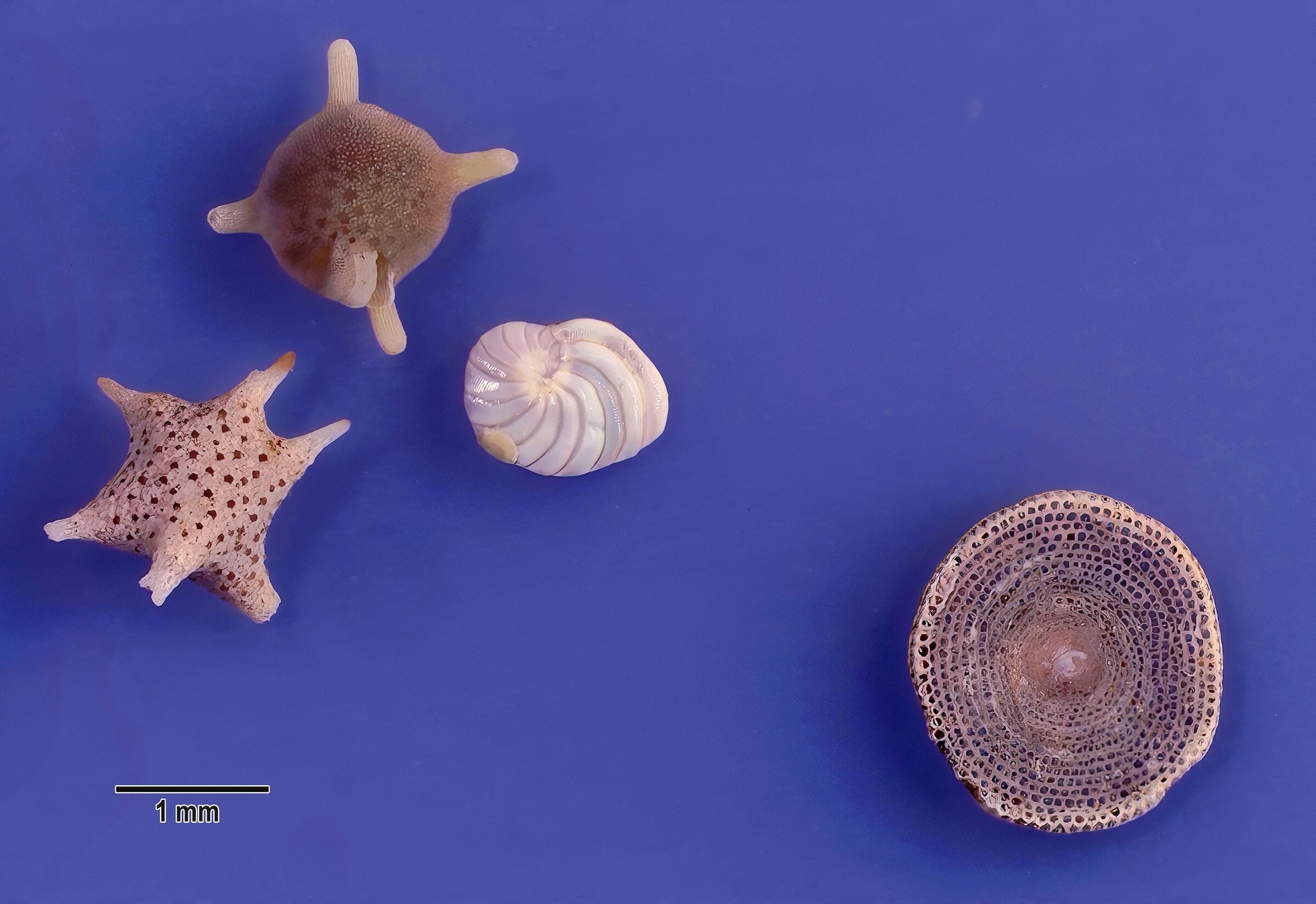
Four well-preserved foraminifera tests from left to right are Baculogypsina sp., Calcarina sp., Amphistegina sp., and Marginospora sp.
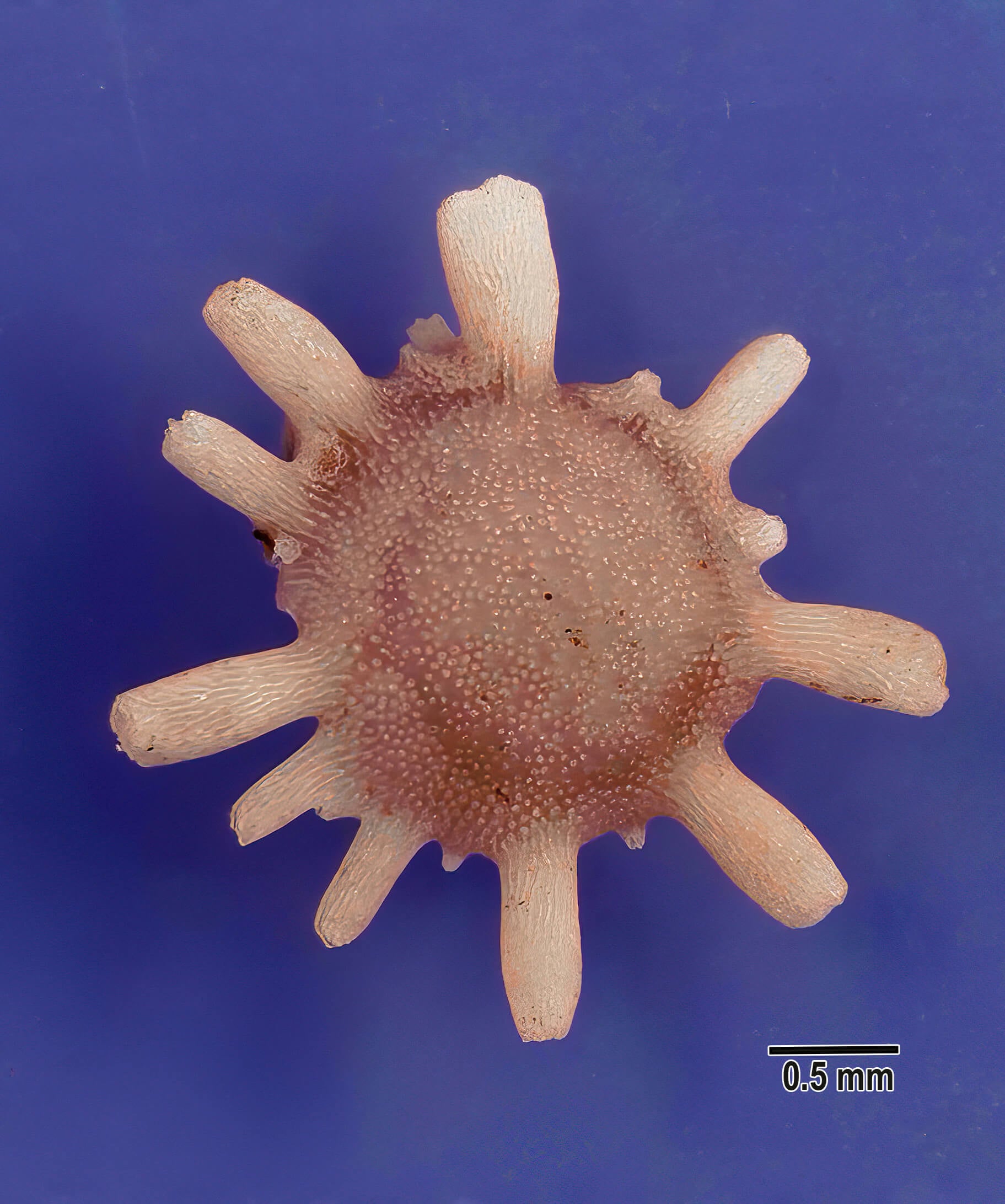
This Calcarina sp. foram with prominent radial spines is typically found in shallow waters.
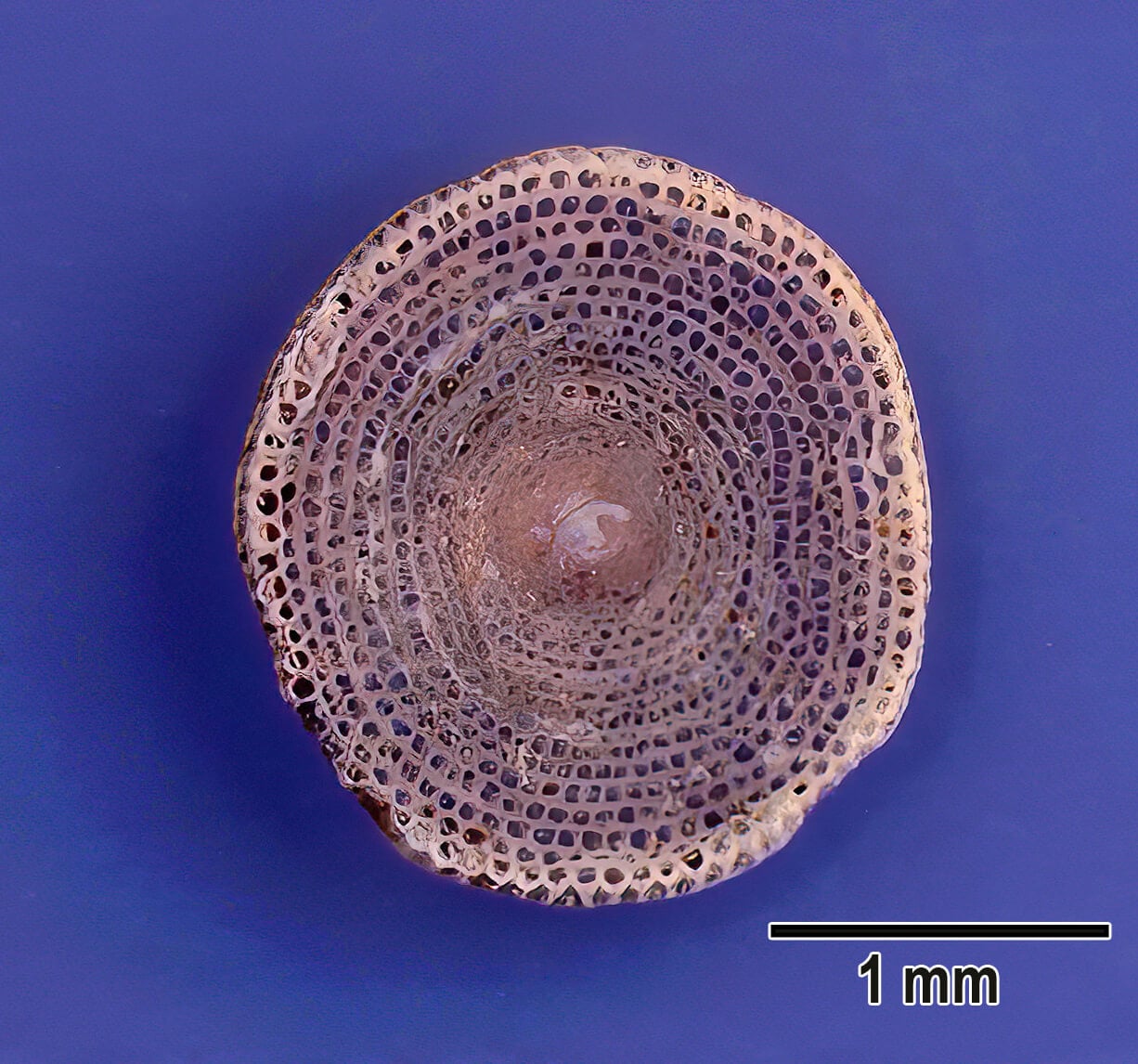
This foraminiferal shell, or test, shows a spiral chamber pattern with a distinct perforated structure. These microscopic marine organisms contribute calcium-rich material to many tropical and subtropical sands. Their preserved tests often remain long after the organism dies, gradually worn by wave action but still retaining intricate internal geometry visible under magnification.