Sand Overview
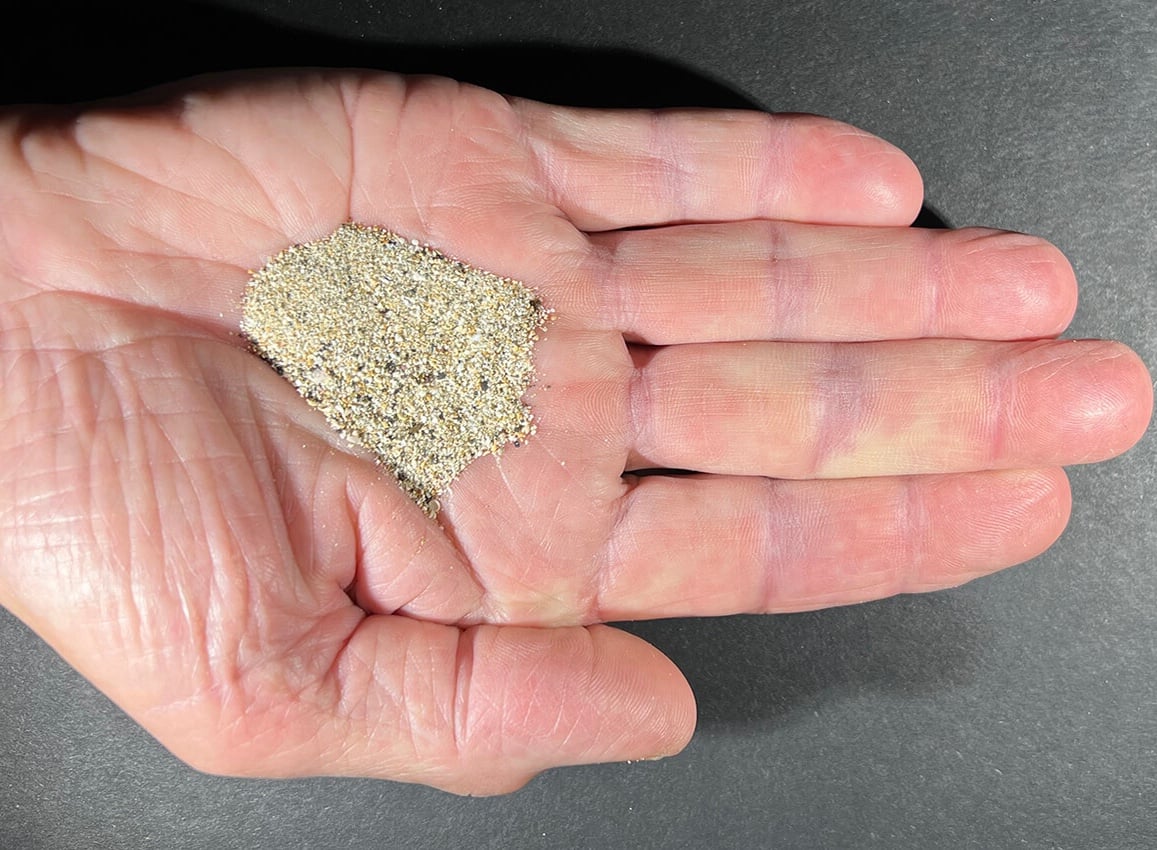
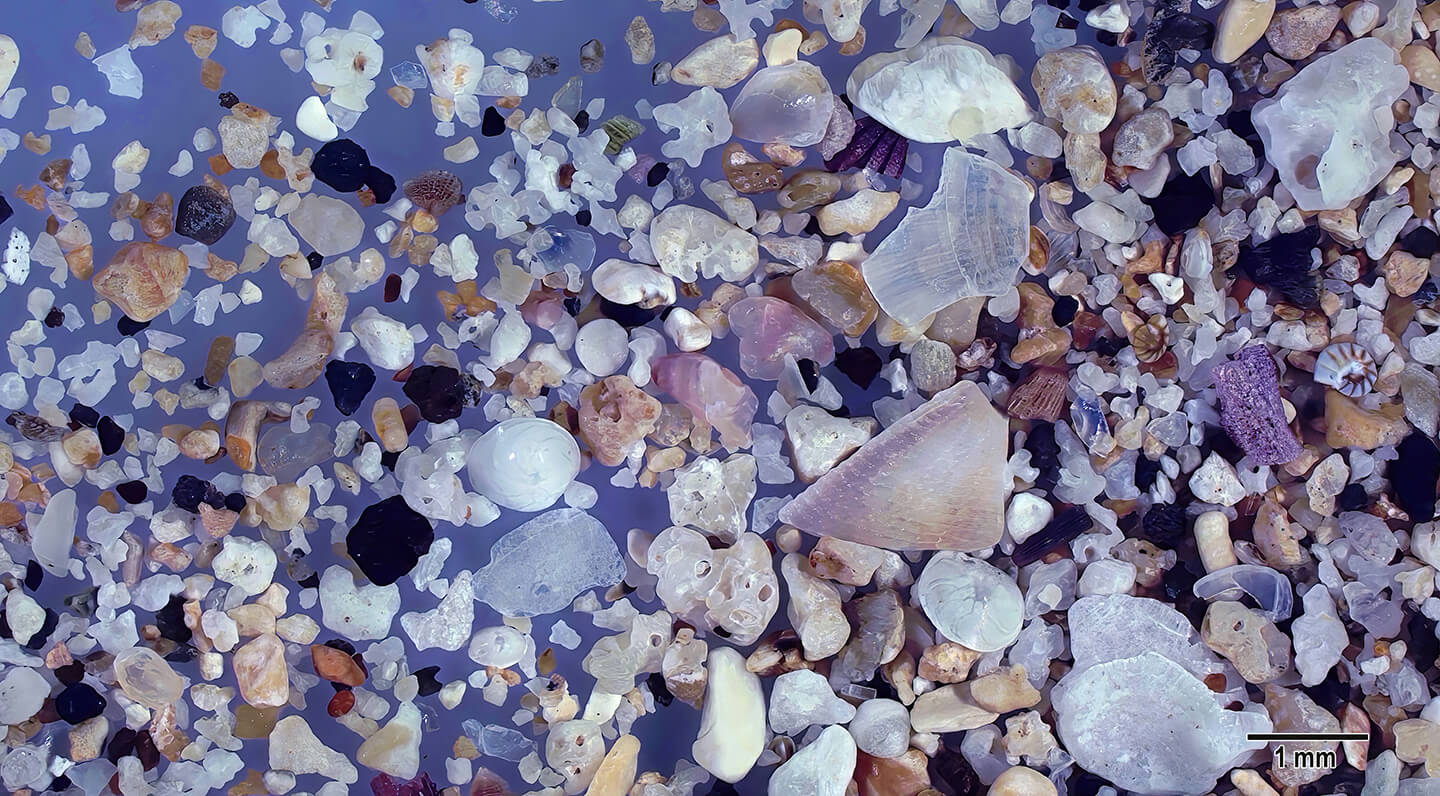
The mixed white, light tan, brown and black Hapuna Beach sand represents a spectrum of biogenic sand grains.
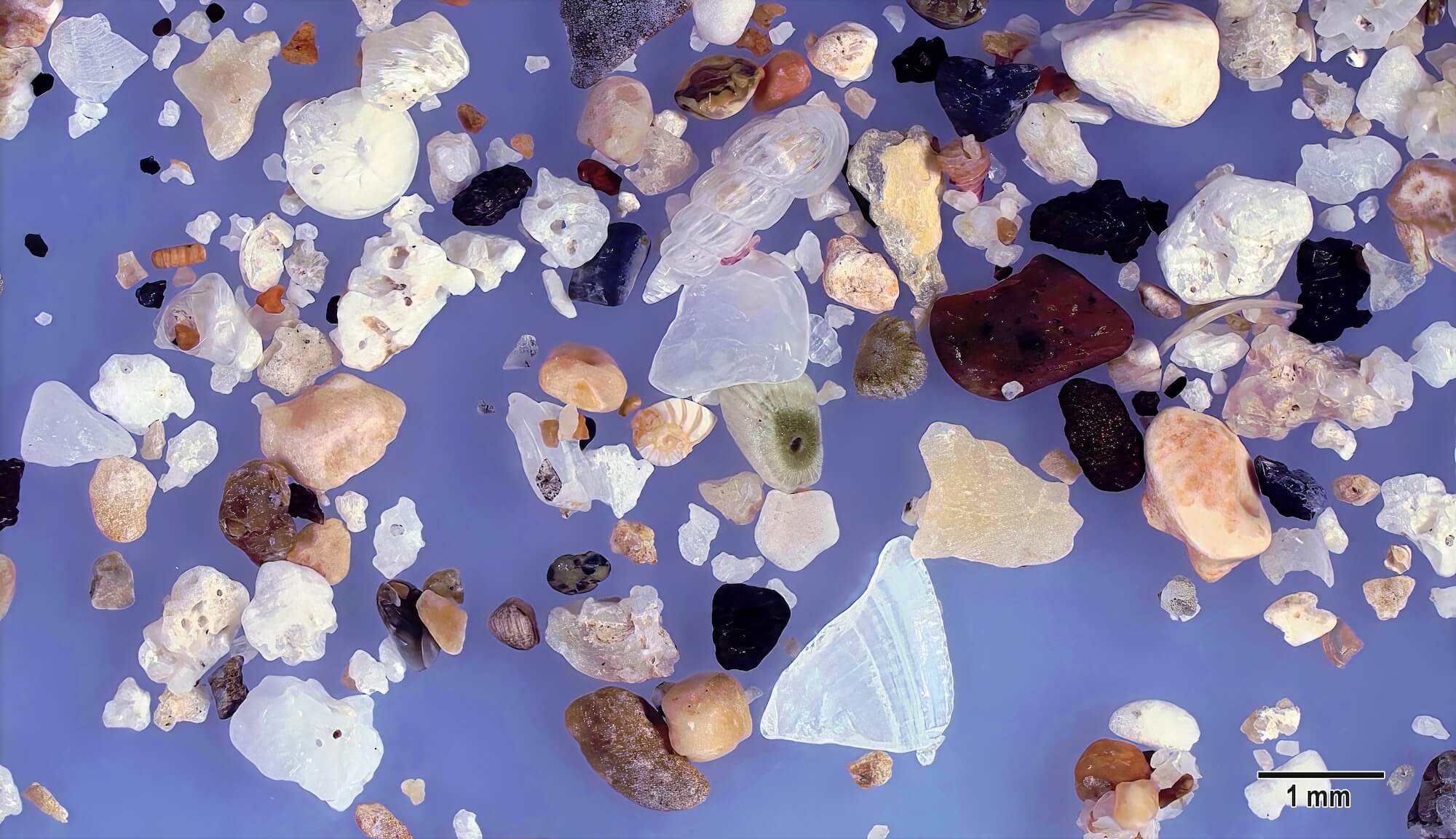
A triangular translucent shell fragment with linear grooves, a greenish sea urchin fragment, a tan and white foram, and an elongated coiled translucent mollusk fragment are present from bottom to top in the center of this view. Other marine sand grains include a round foram with subtle internal structure at upper left along with irregular white coral grains with evidence of bioerosion. A variety of other tan, red and black marine sand grains are present in this sample.
Geographic Overview
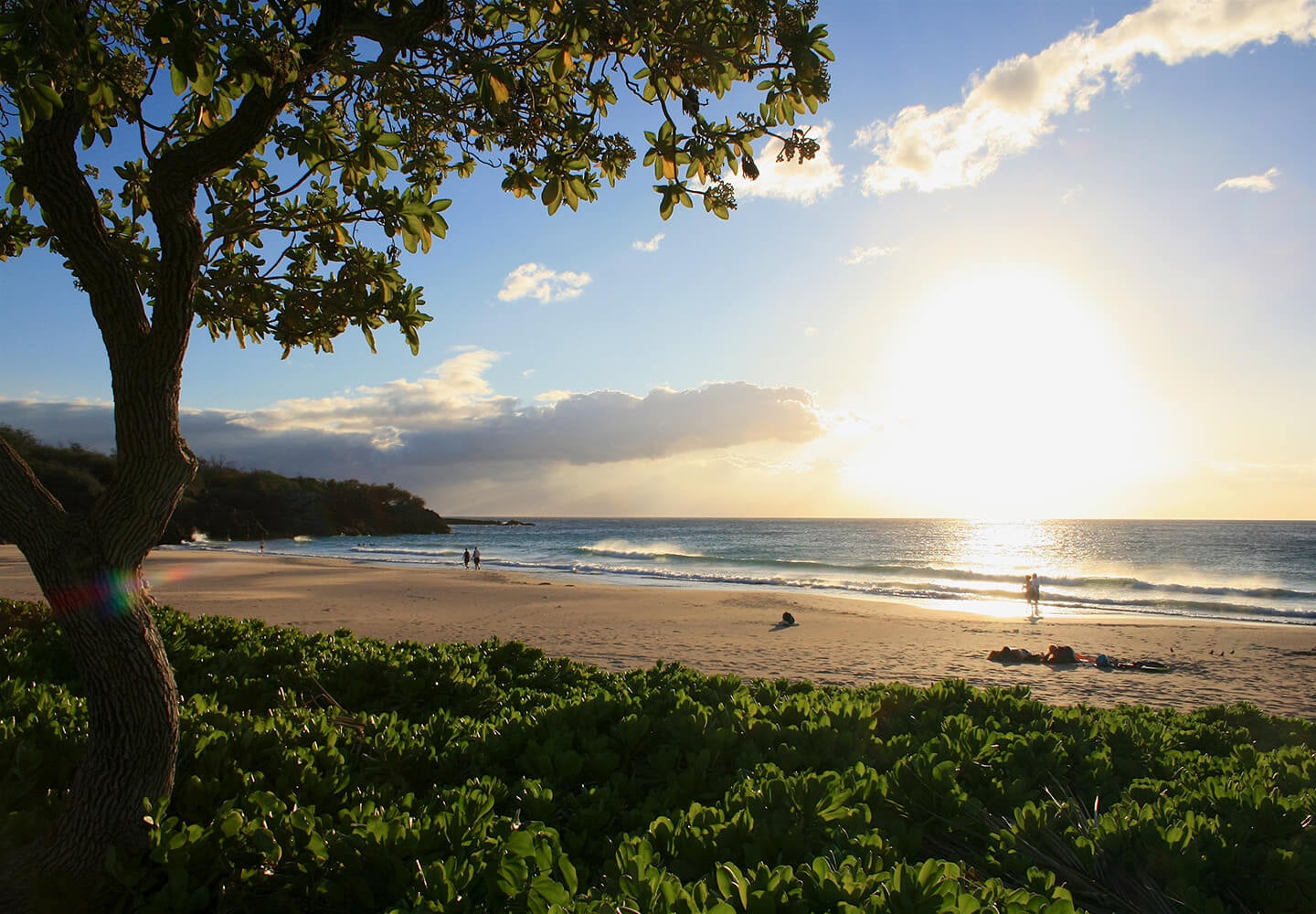
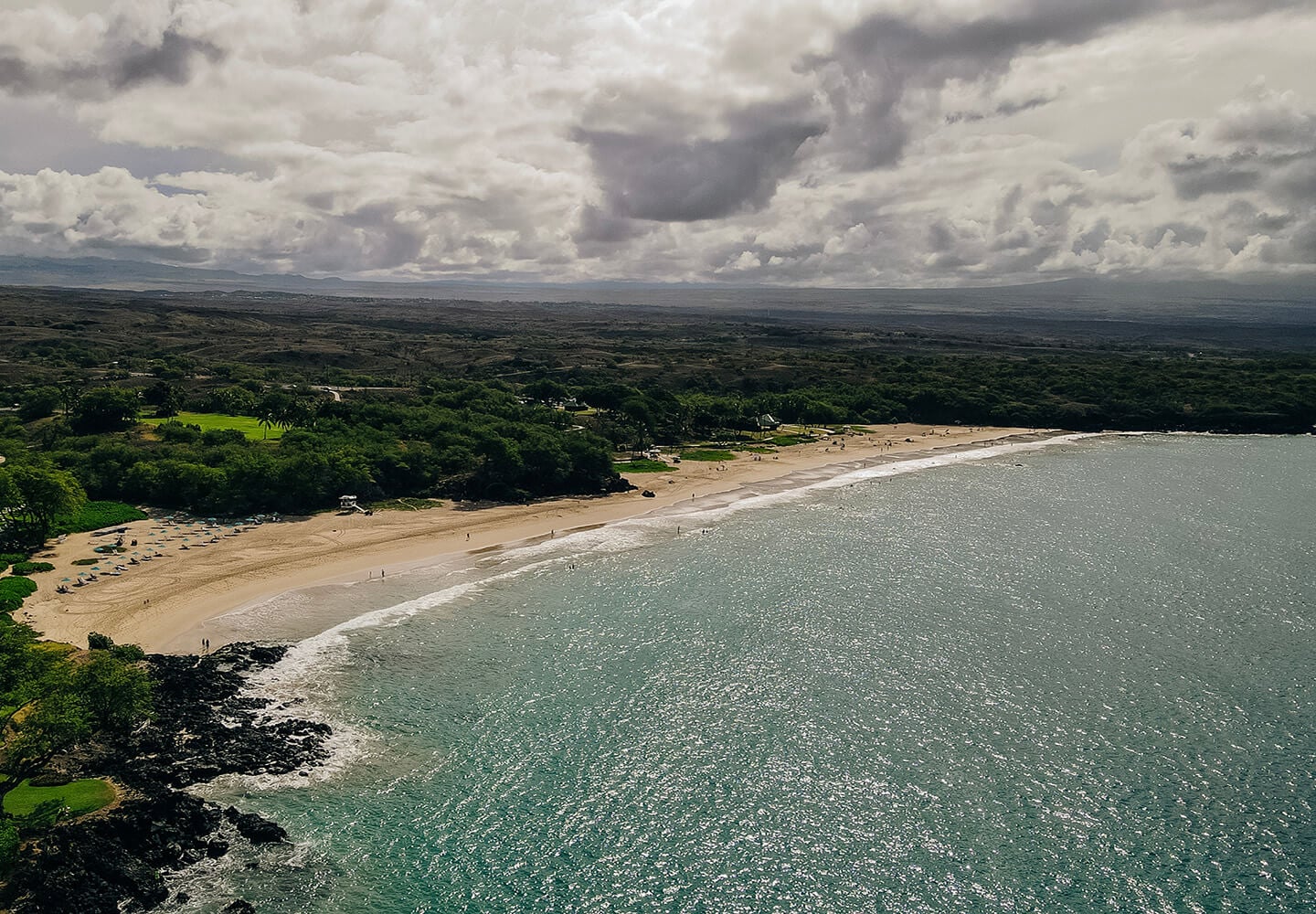
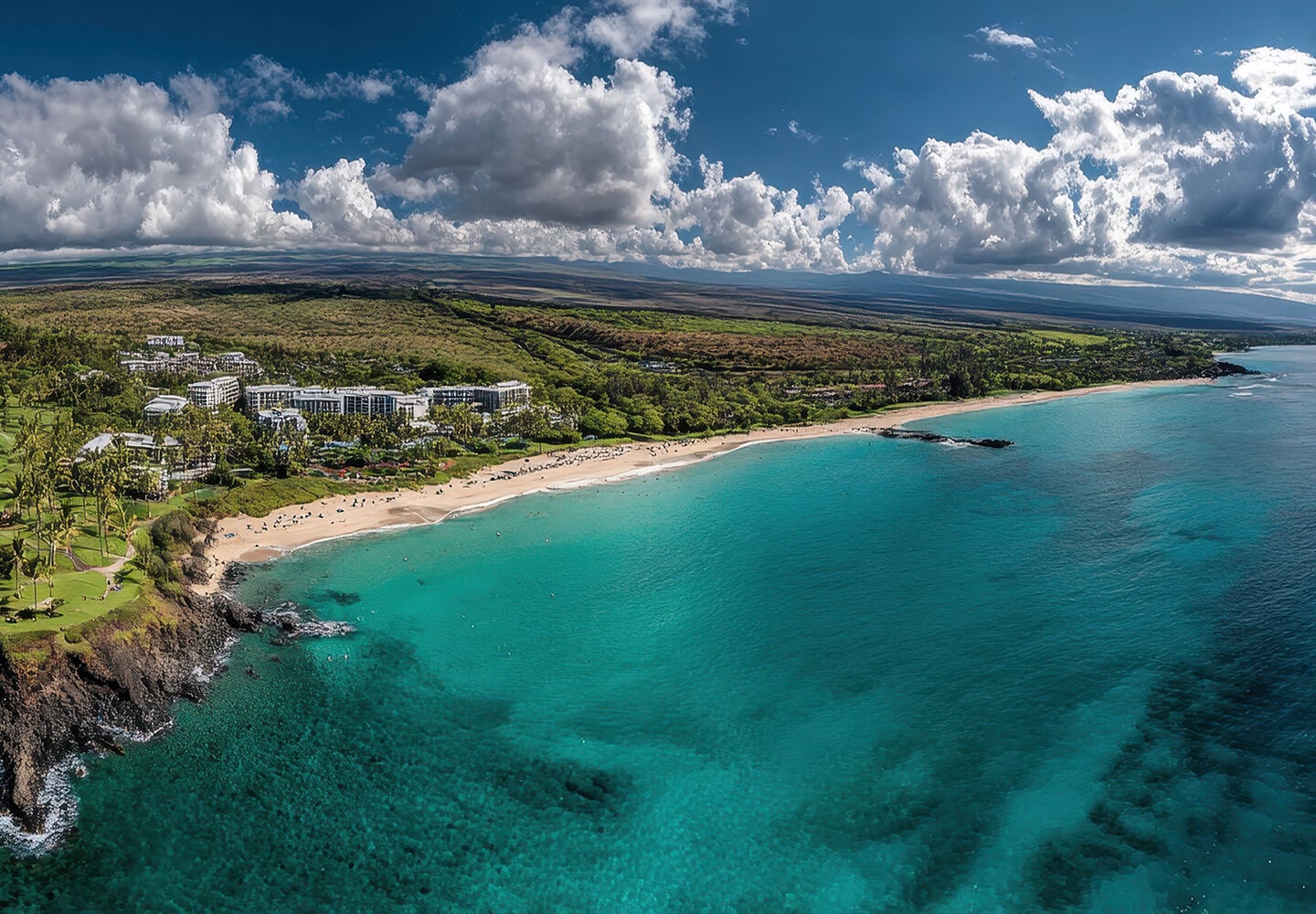
Hapuna Beach, located along the Kohala Coast on Hawaii’s Big Island, offers nearly a half mile of expansive sand beaches and turquoise water. Known for boogie boarding and body surfing, the beach is not protected from the open ocean and can be hazardous during high surf conditions. Hapuna Beach is a prime spot to see migrating whales in the distance from December through April.
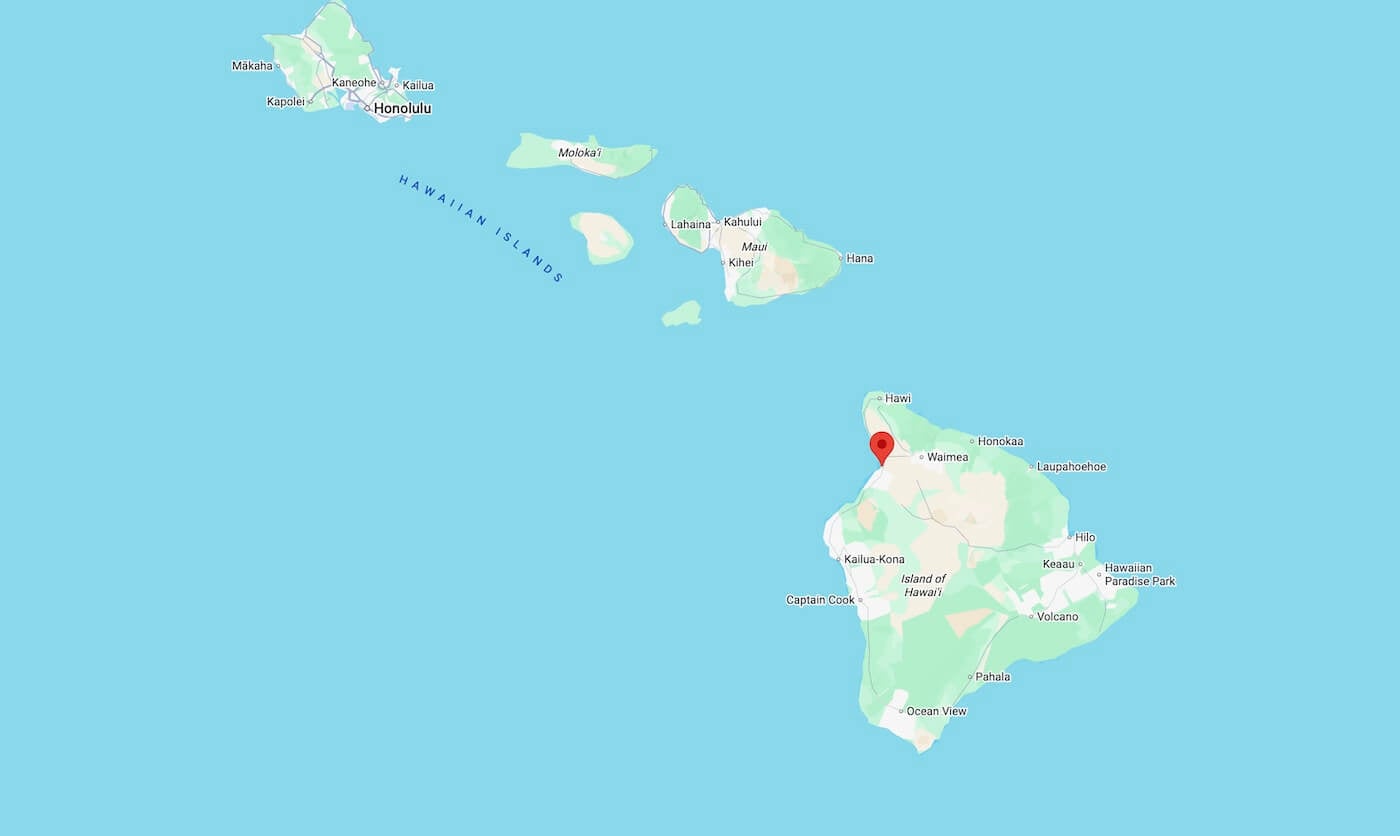
Sand Location
See where this sand sample was collected on Google Maps.

Virtual Sand Tour
Visit Hapuna Beach on Google Earth.
Sand Gallery
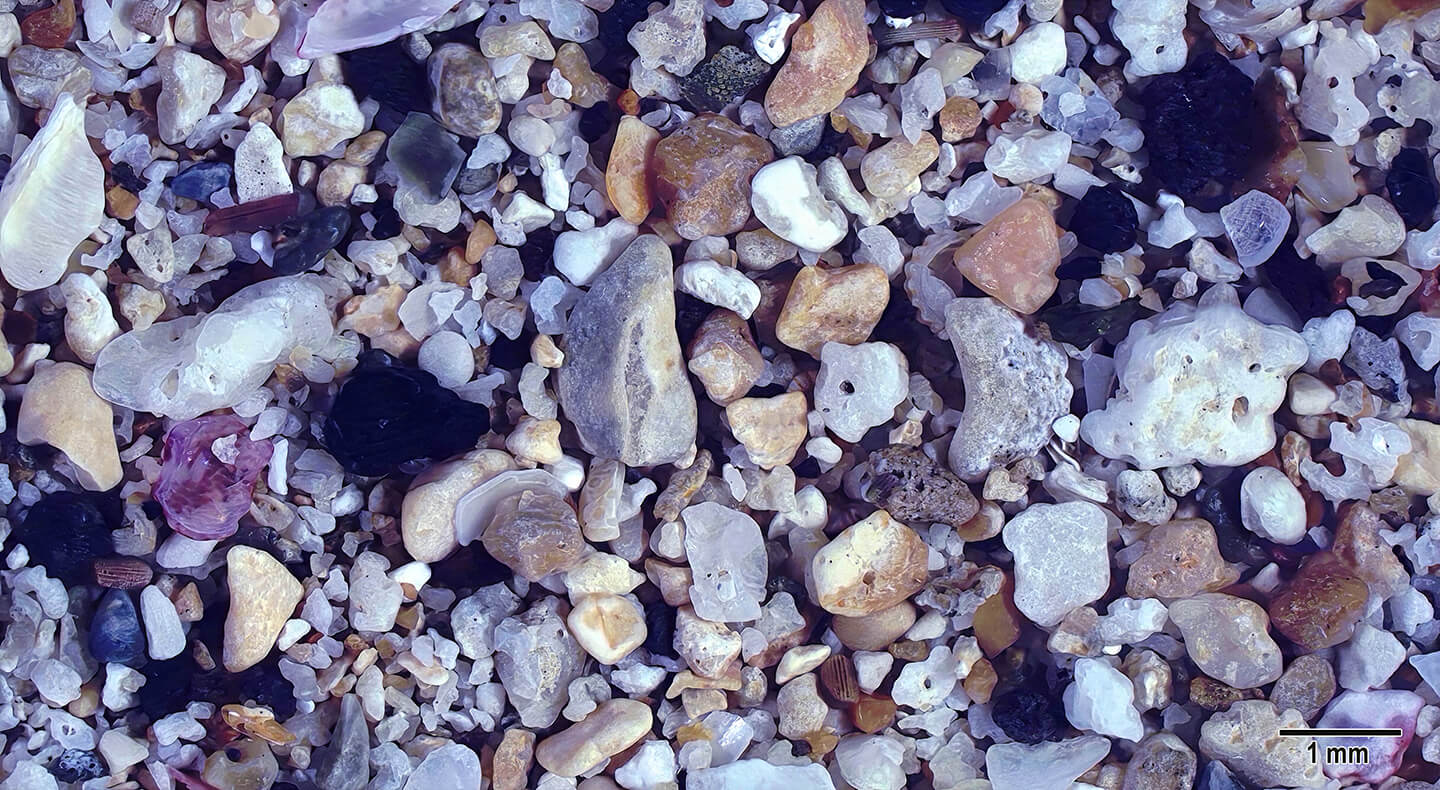
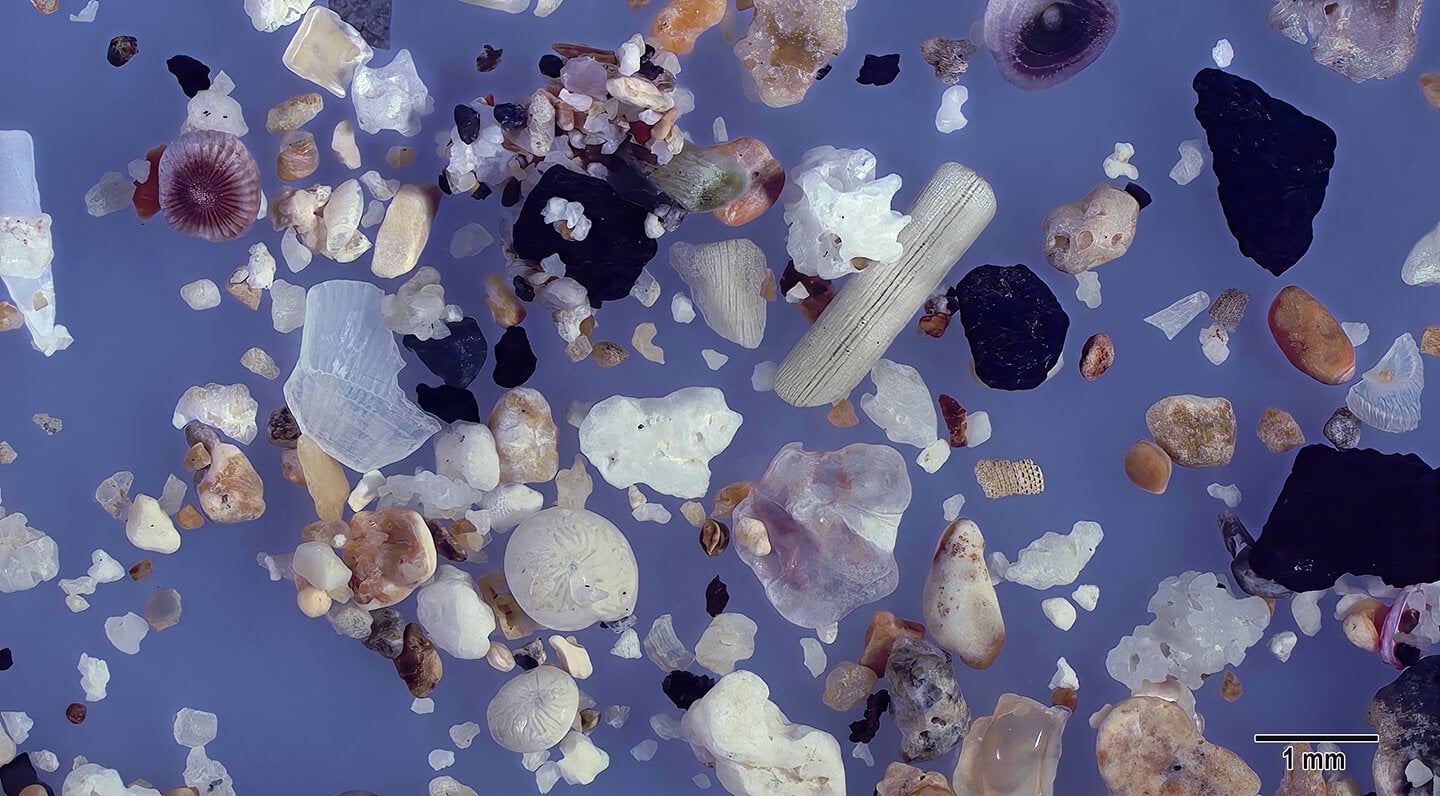
This mixture of smooth edged 1 mm and smaller biogenic sand grains includes translucent, white, tan, brown, red, blue and black marine fragments most that are too small for definitive identification.
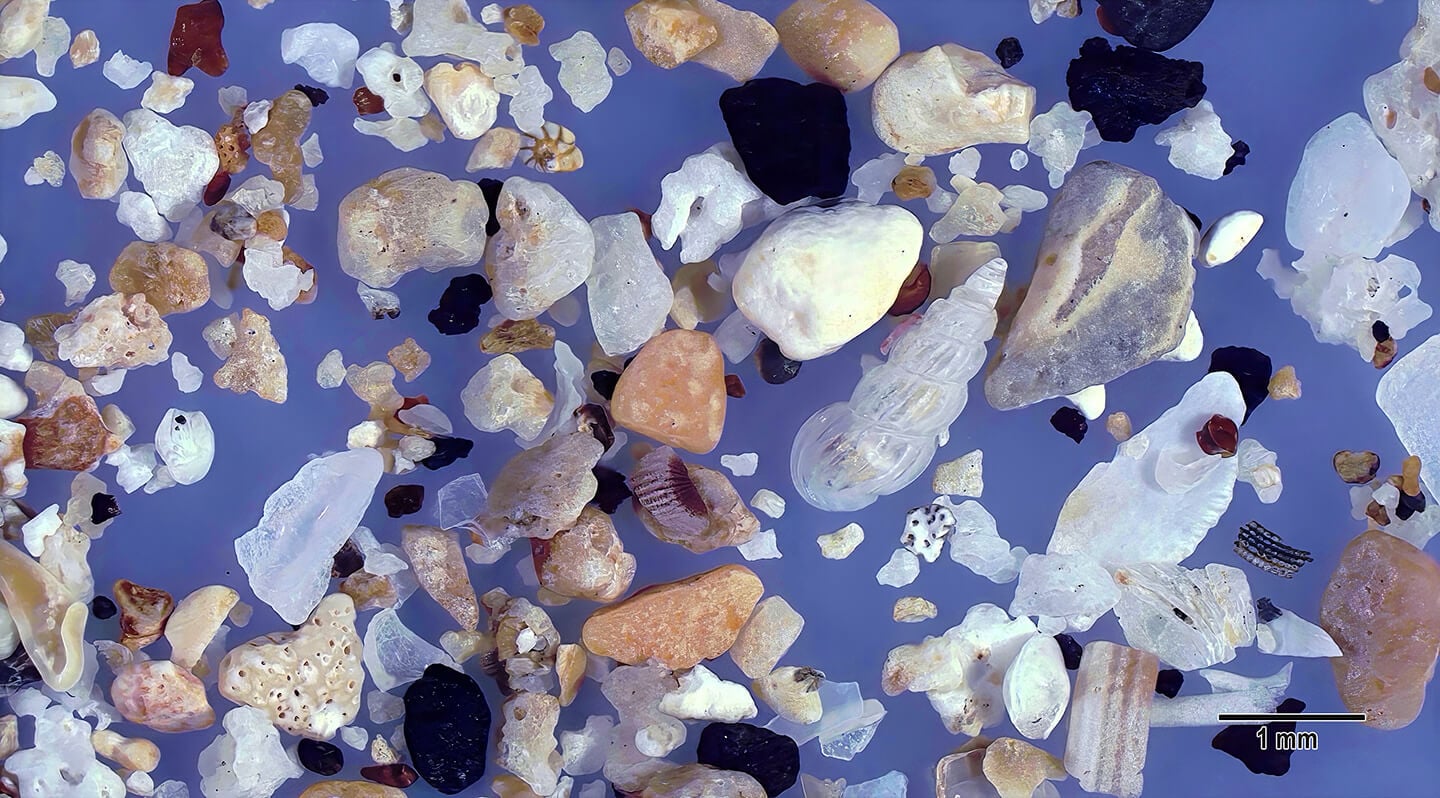
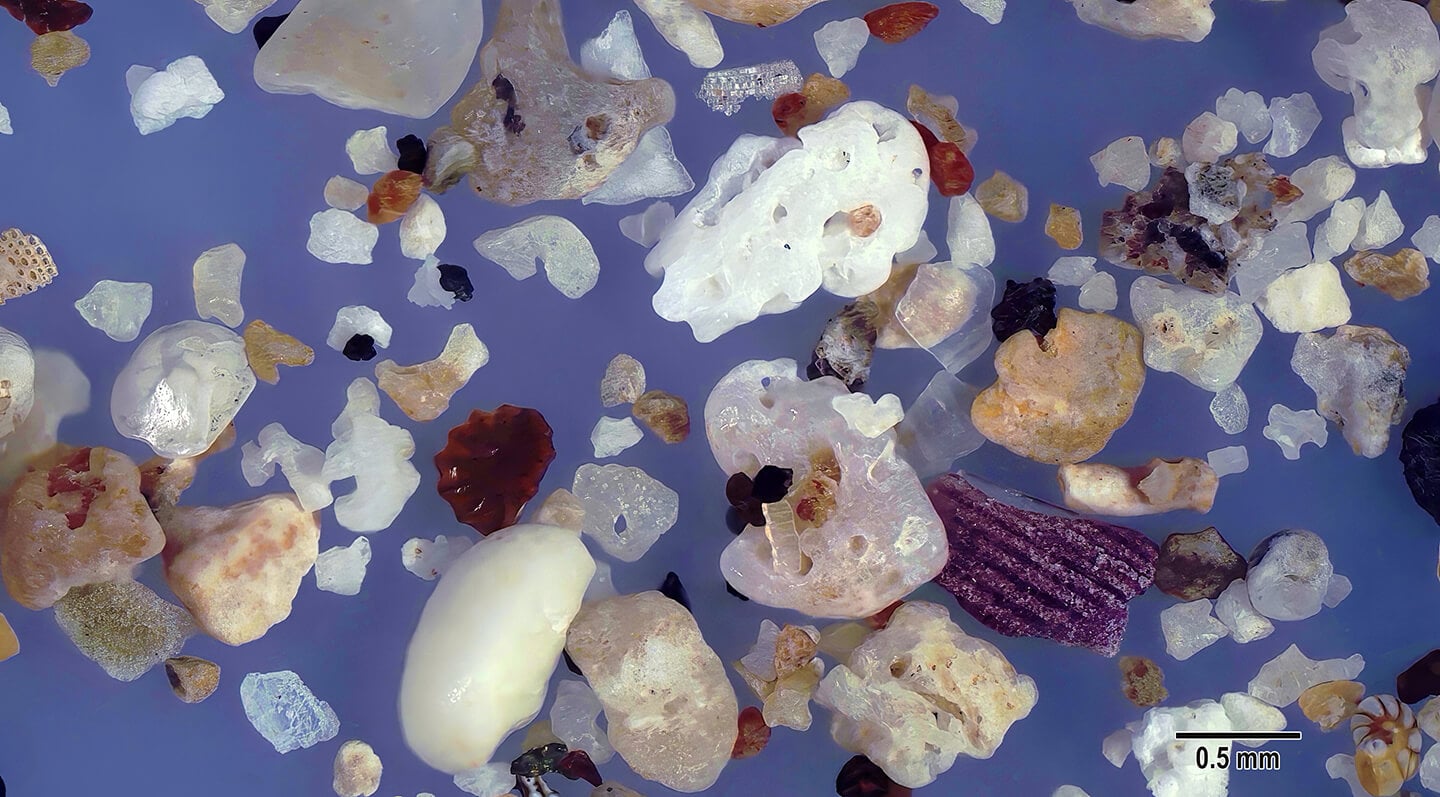
A translucent spiral mollusk shell in the center stands out below a large white grain that may be a piece of bleached coralline algae. Other sand grains include translucent, off-white and tan marine fragments, a dark red fragment of sea urchin spine, and large and small dense black sand grains.
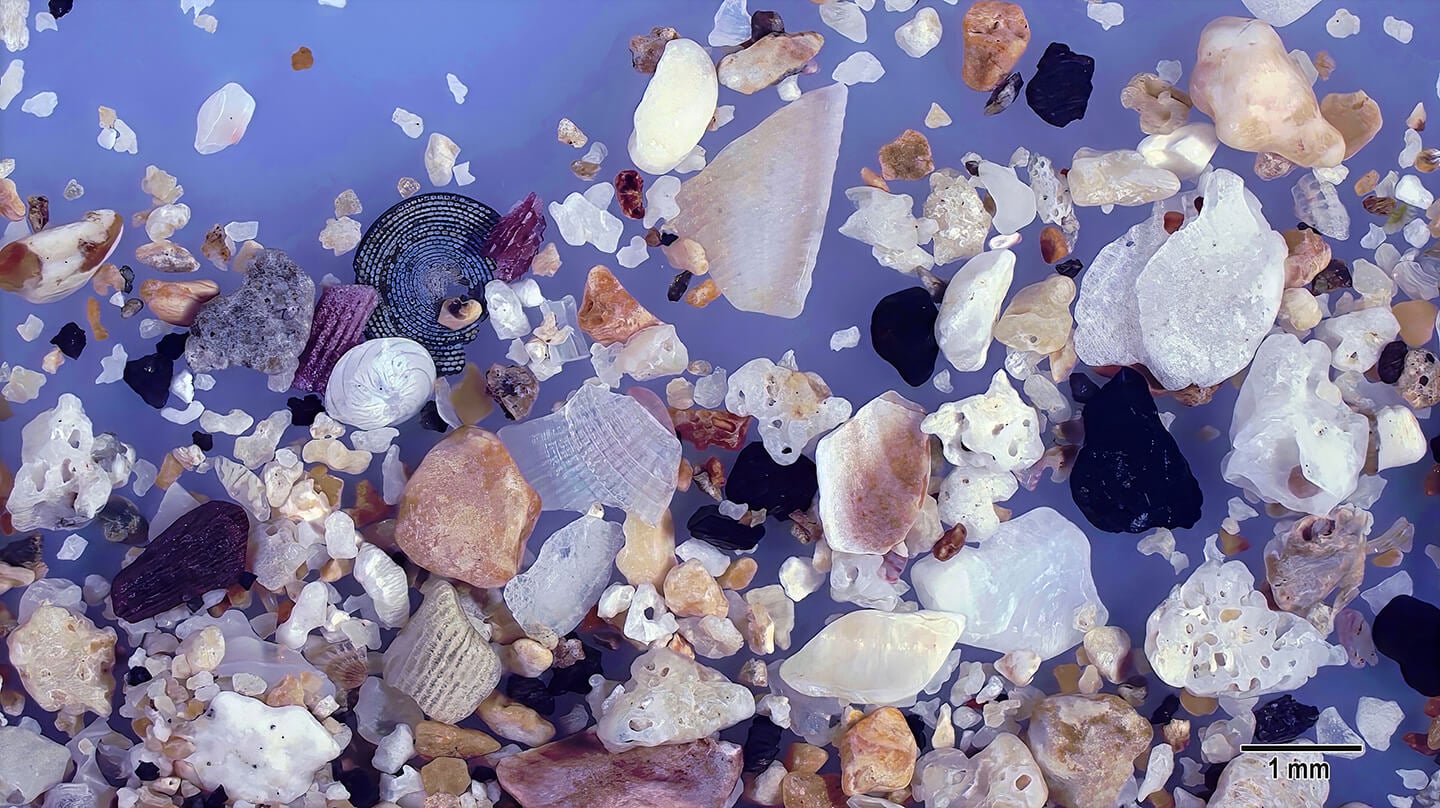
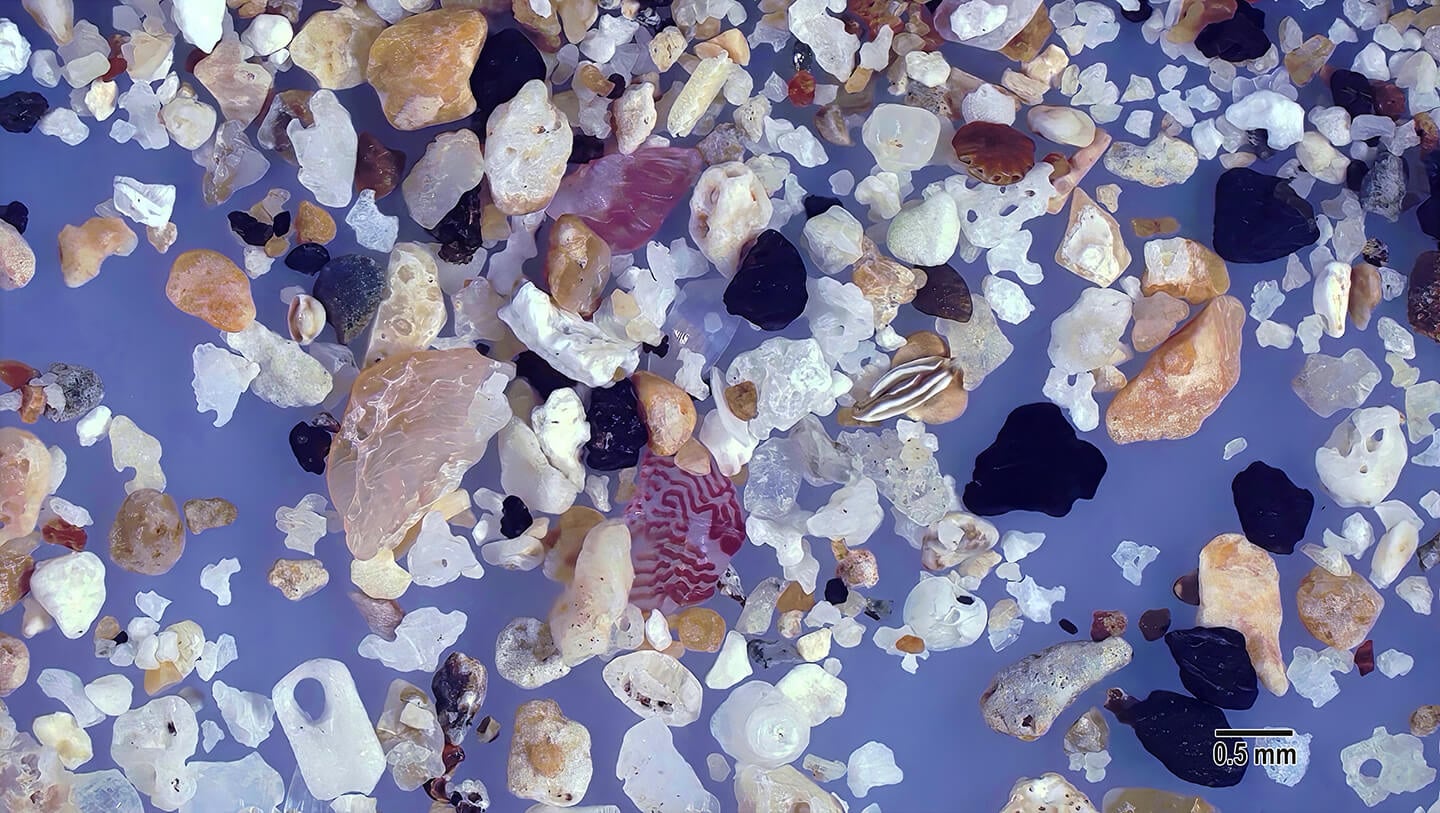
This mixture of variably sized sand grains includes a circular black Microspora sp. fragment near upper left touching a purple sea urchin spine fragment and a round white foram with visible internal structure. Other grains include off white, tan and translucent angular mollusk shards and an irregularly shaped off-white fragments of coral with evidence of bioerosion at the lower right corner.