
Sand Overview
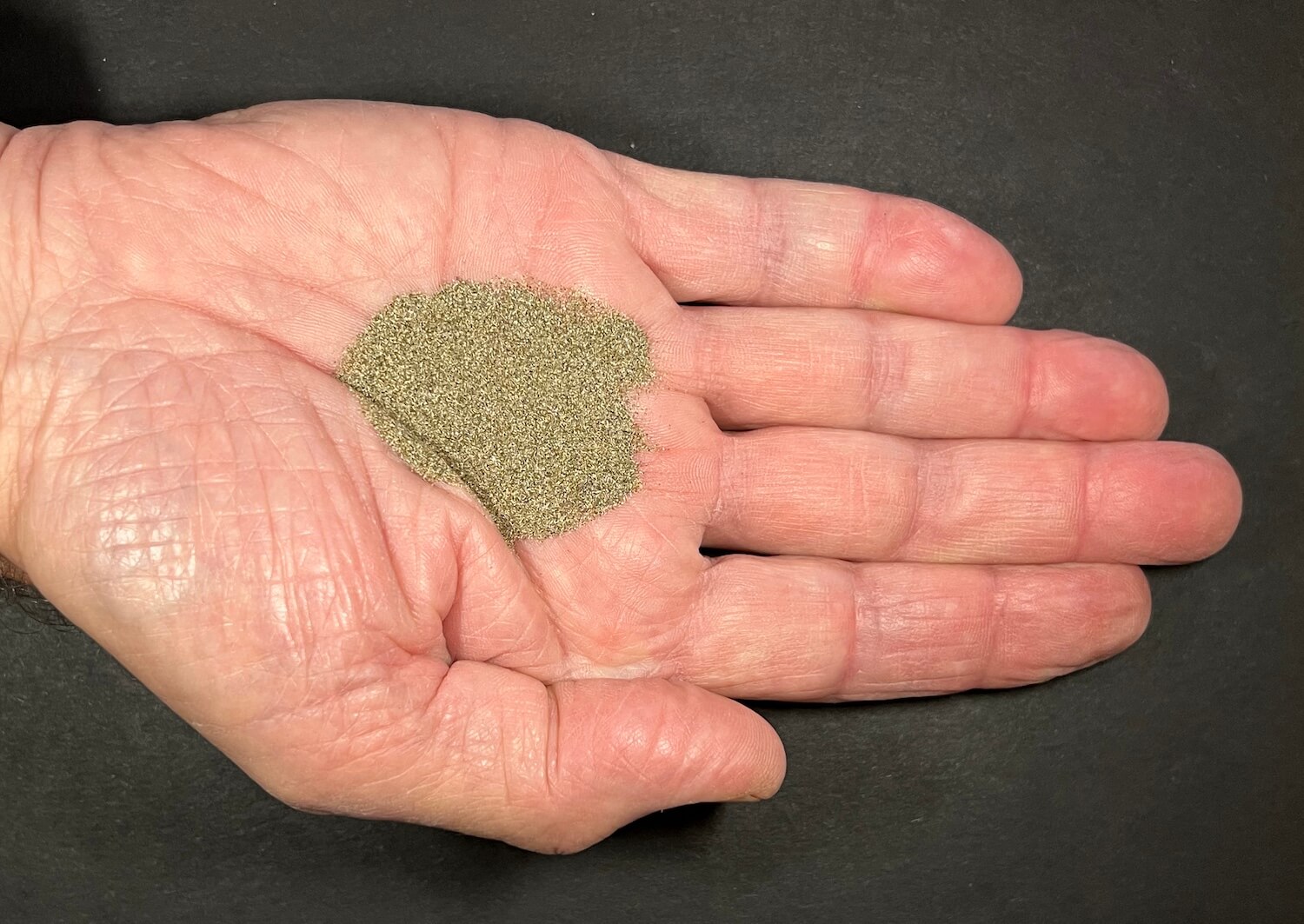
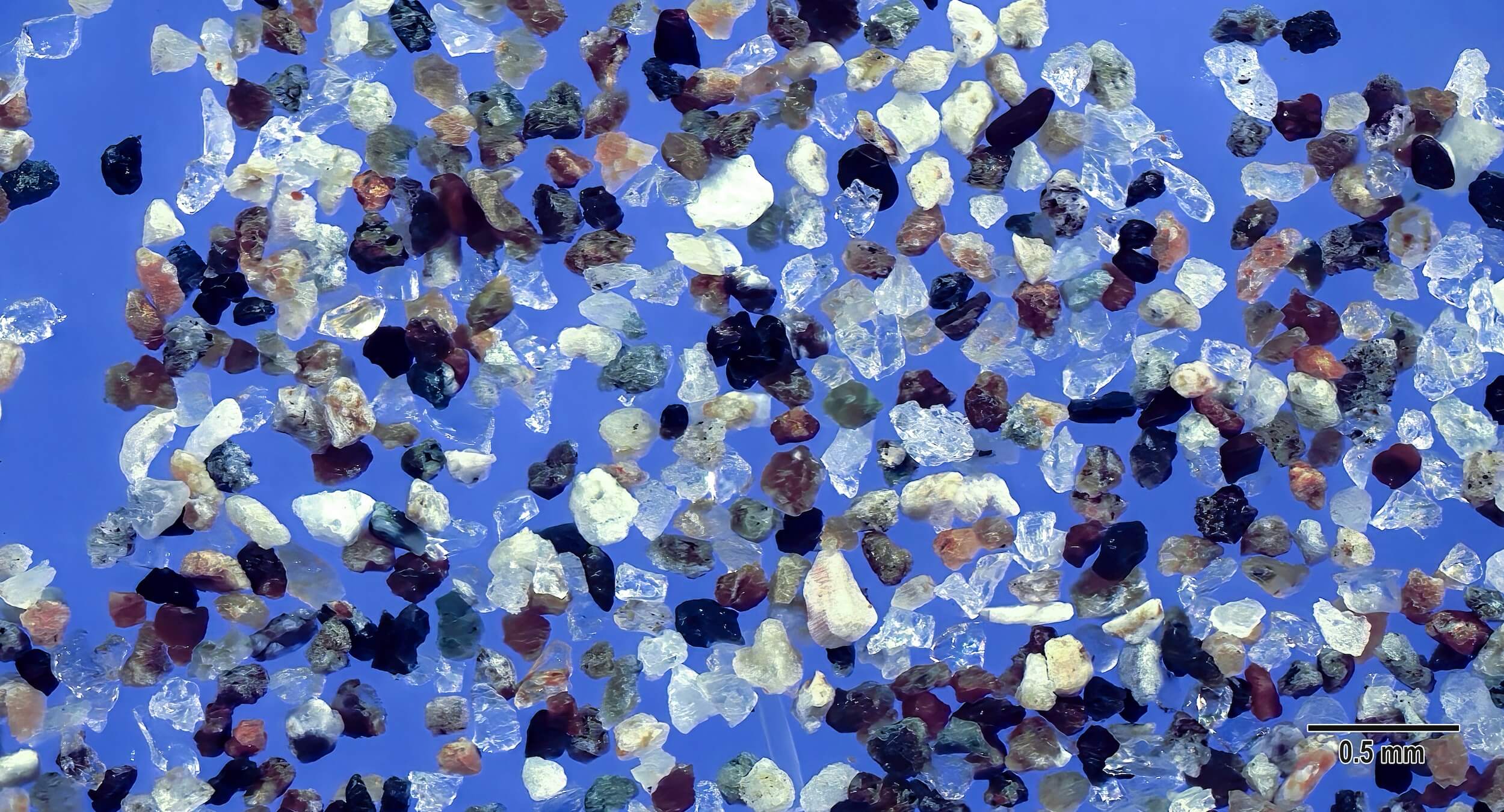
Sawada Beach sand is comprised of a mixture of geologic sand grains including translucent quartz and a mixture of brown, grayish green, dark red, and black very small rough-edged grains. Occasional white and off-white grains with smoother edges are likely marine shell fragments and include a relatively large triangular sand grain with linear grooves at the lower center of this view.
Sawada Beach (also known as Sawata Beach) on Sado Island in Niigata is a popular beach with fine tan sand and is famous for its scenic sunset views and landscape dotted with countless rocky reefs.
Geographic Overview
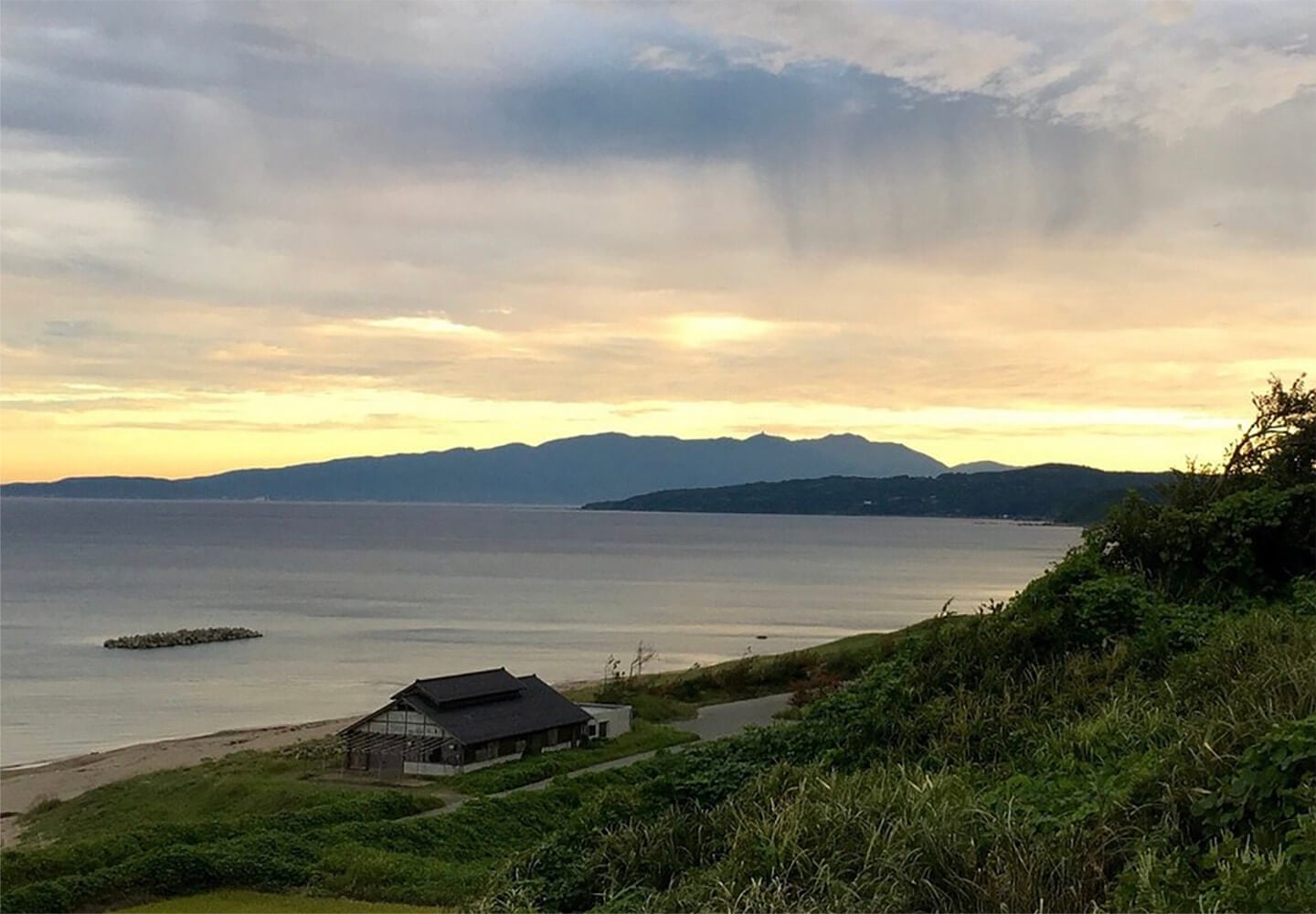
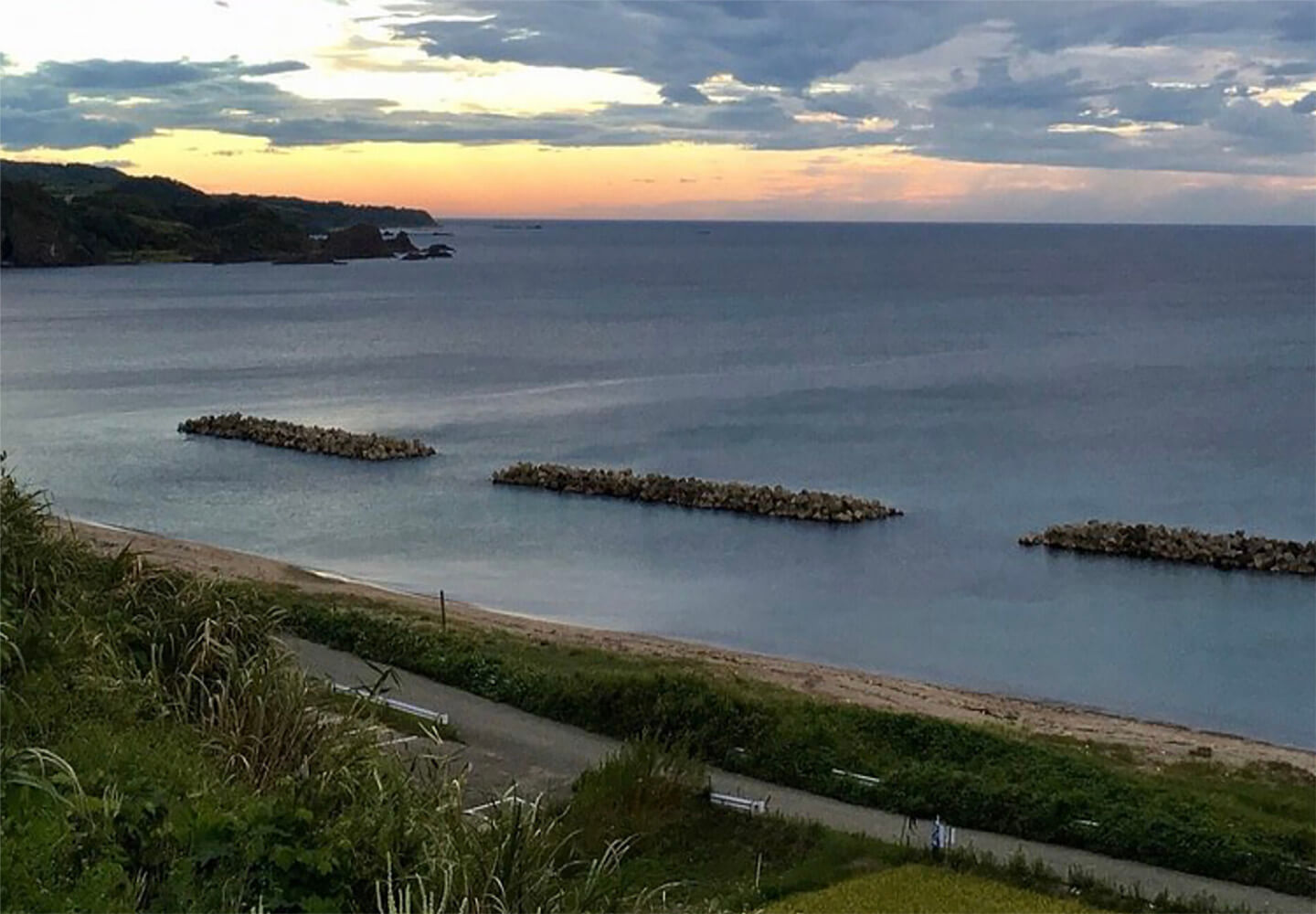
Sawada Beach (also known as Sawata Beach) on Sado Island in Niigata, Japan, is a popular, calm sandy beach located along Mano Bay with sand primarily consisting of quartz, feldspar and volcanic fragments washed down from interior mountains.
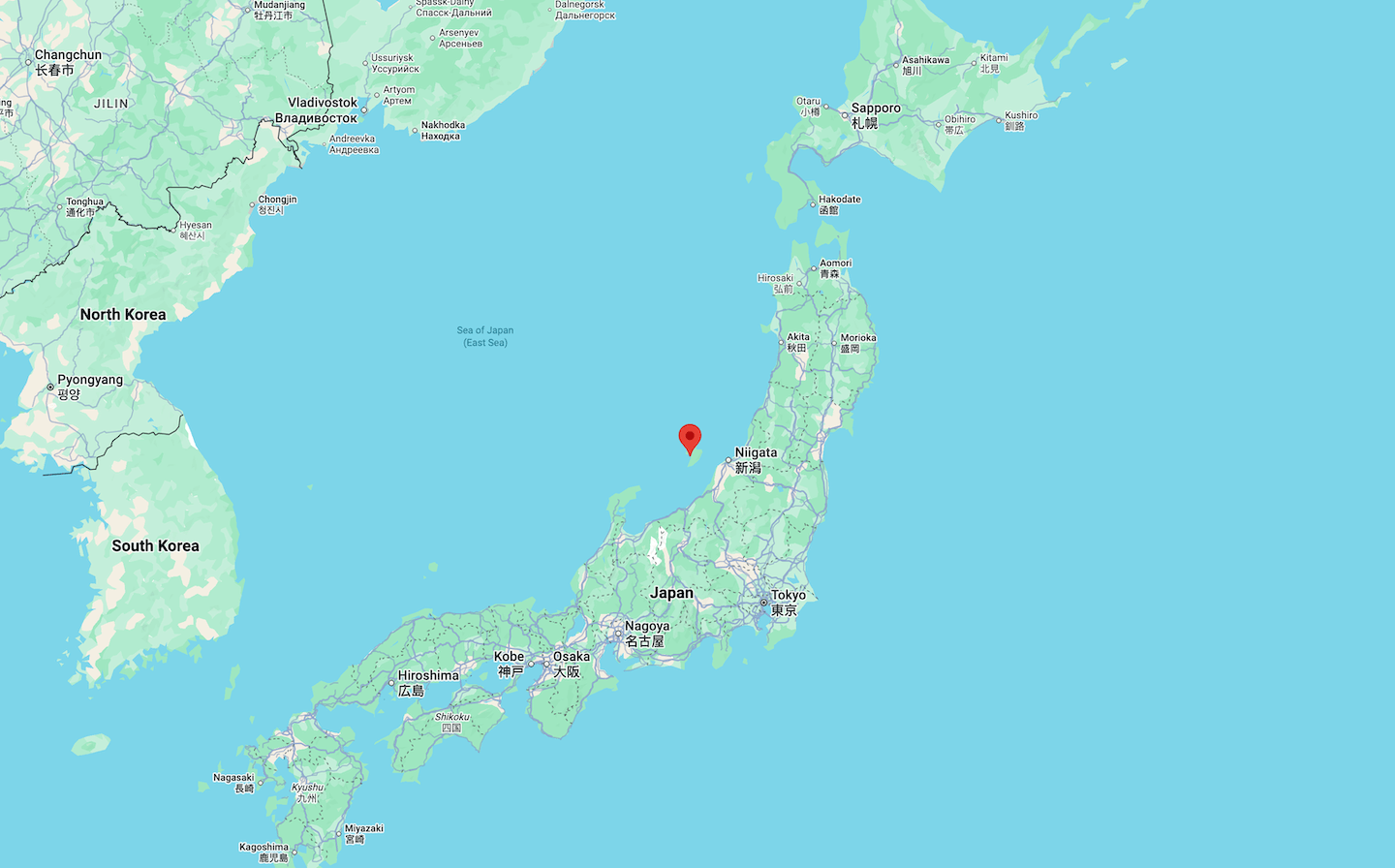
Sand Location
See where this sand was collected.
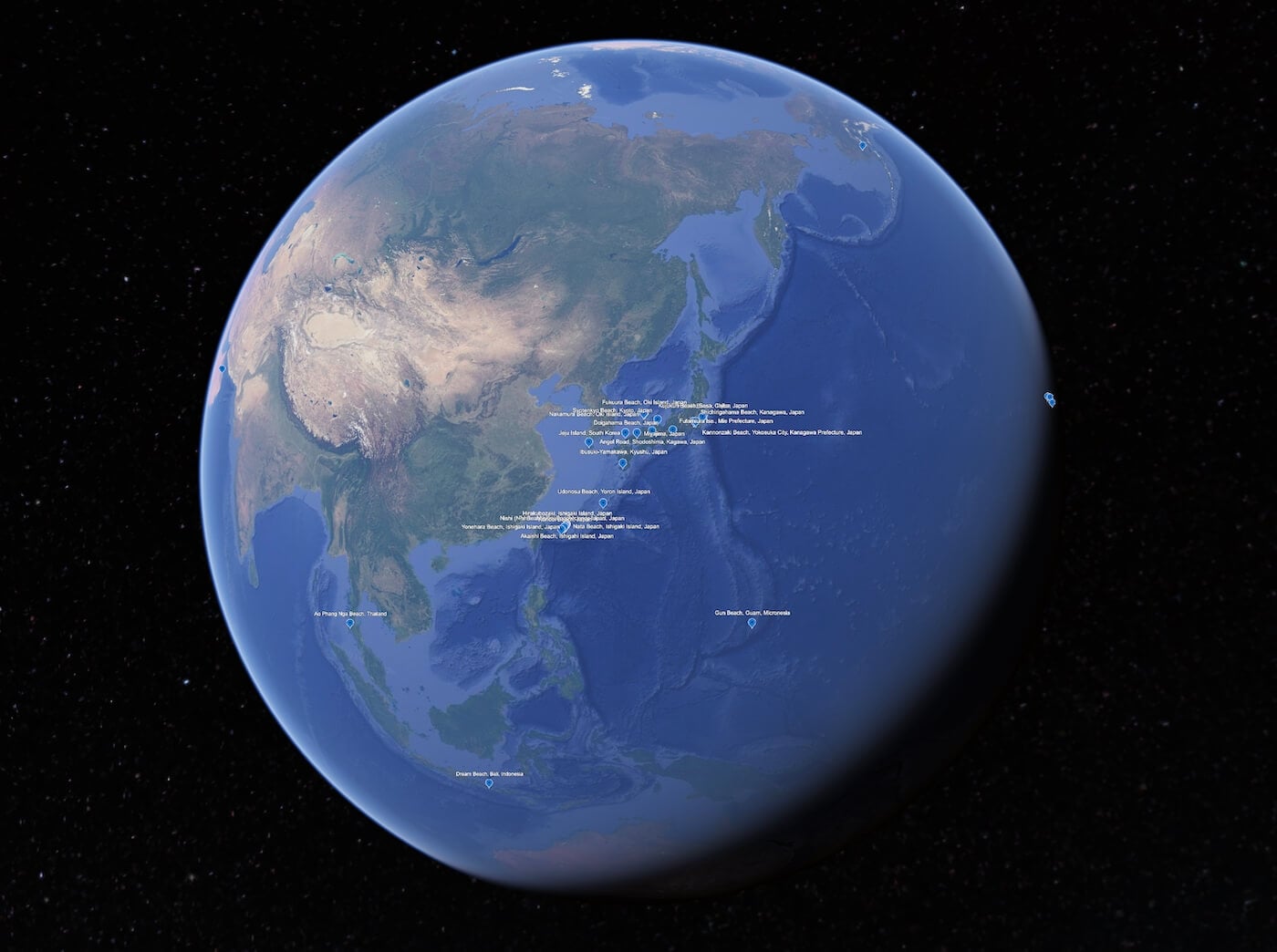
Virtual Sand Tour
Explore Sawada Beach on Google Earth.
Sand Gallery
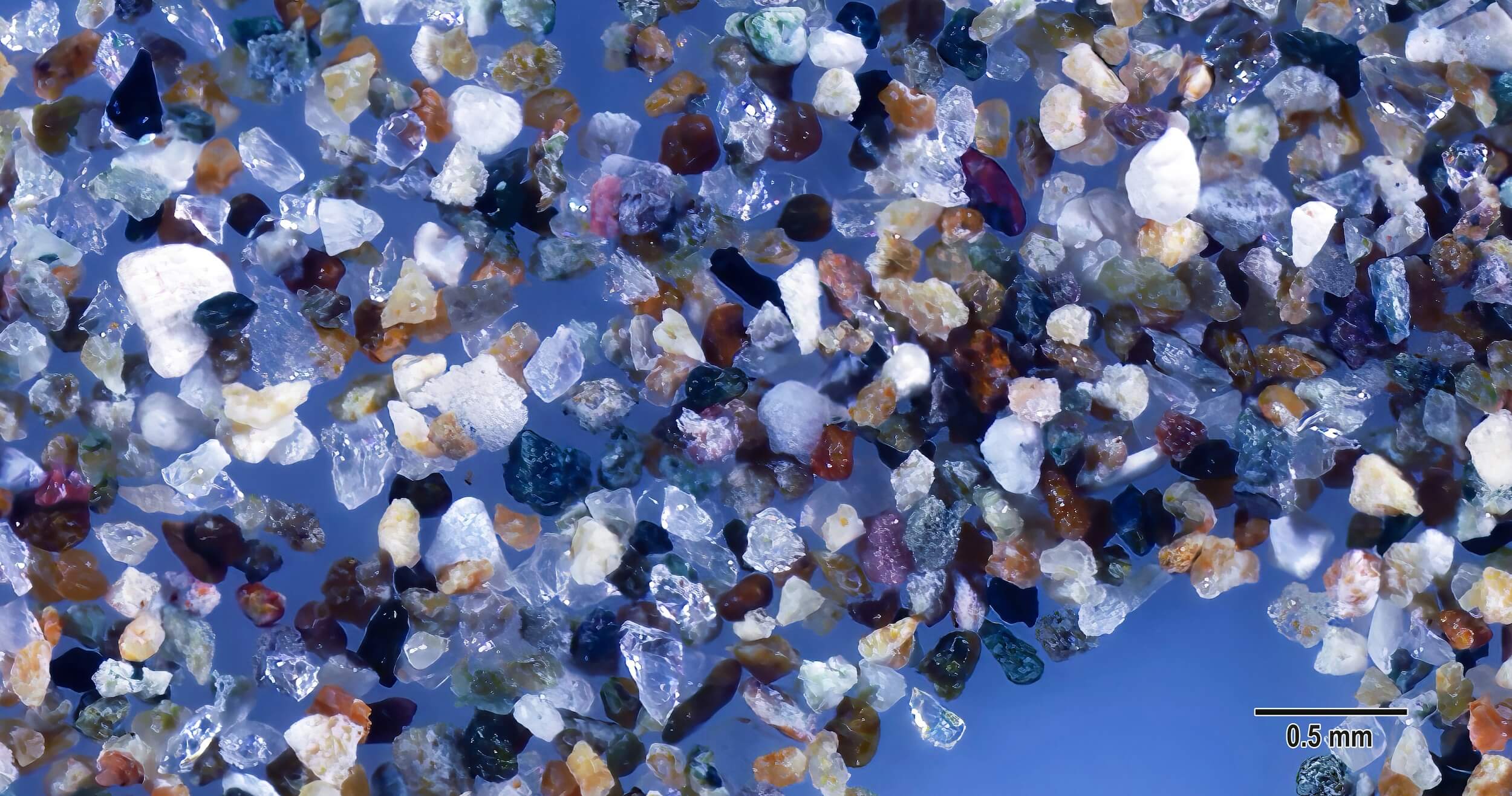
Sawada Beach sand consists of a colorful mixture of primarily geological sand grains including translucent quartz, tan feldspar, and red and black volcanic grains. Individual white grains in the center as well as left and right of center have subtle textural patterns suggesting they are likely marine sand grains. It is noted that most sand grains are smaller than a half millimeter.
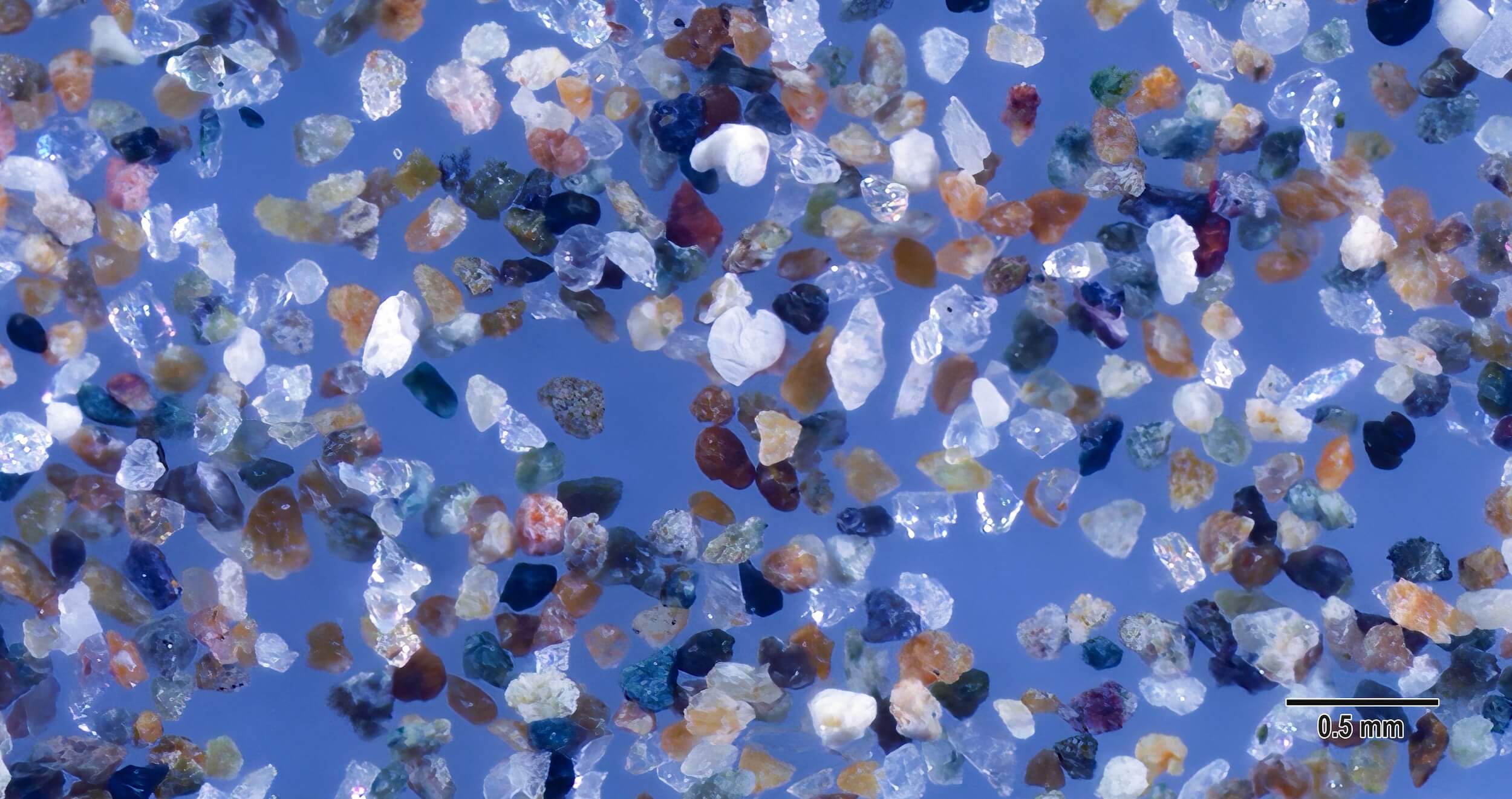
Clear quartz and light tan feldspar grains along with a colorful mixture of other geological sand grains make up most of this view. Smooth edged white grains in the center and upper center are likely marine fragments.
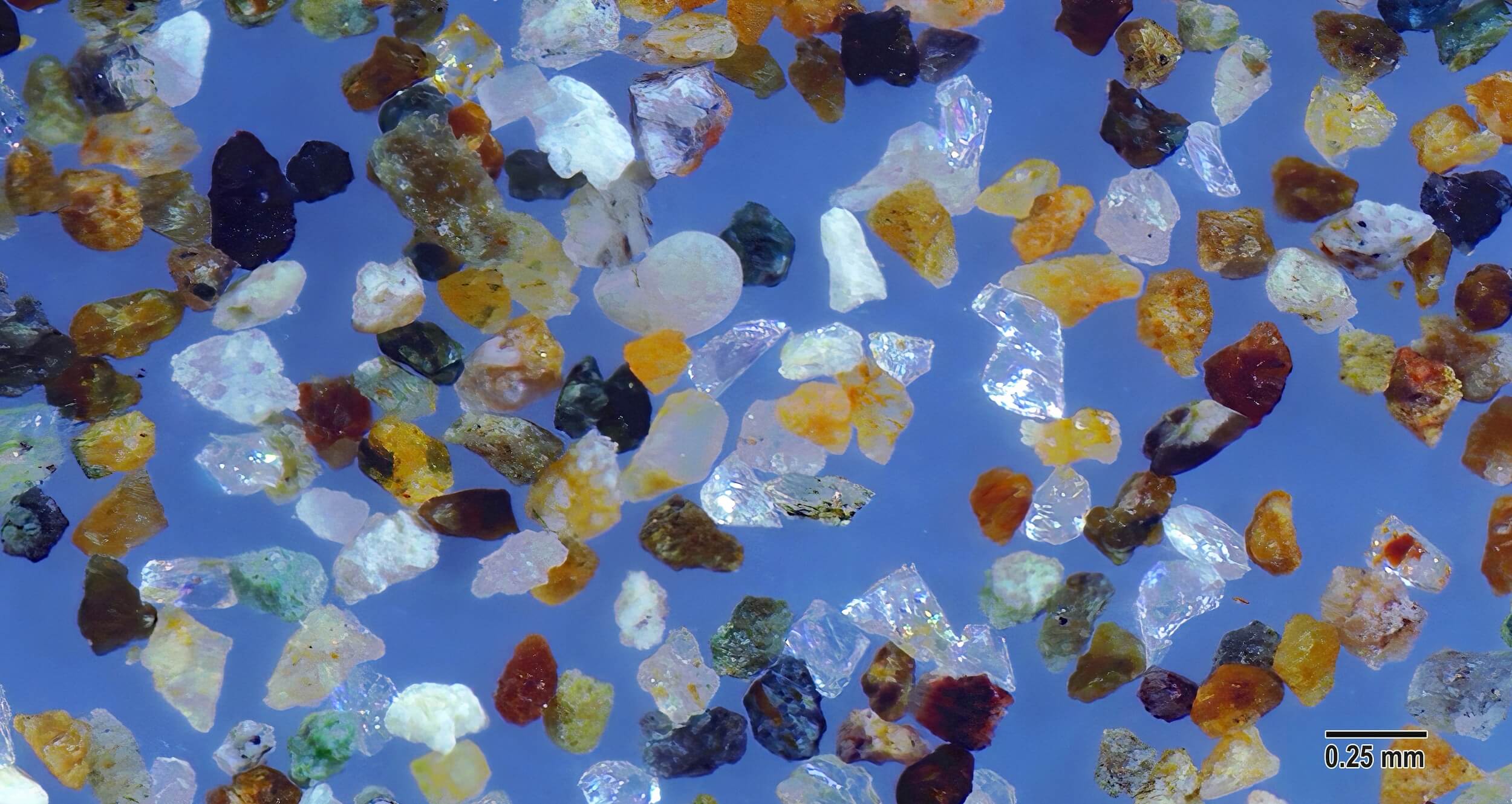
An off-white round relatively large smooth edged marine grain stands out against a mixture of sharp edged and irregular clear, yellowish tan, reddish-black, and black geological grains. Greenish colored grains are possibly pigmented quartz.
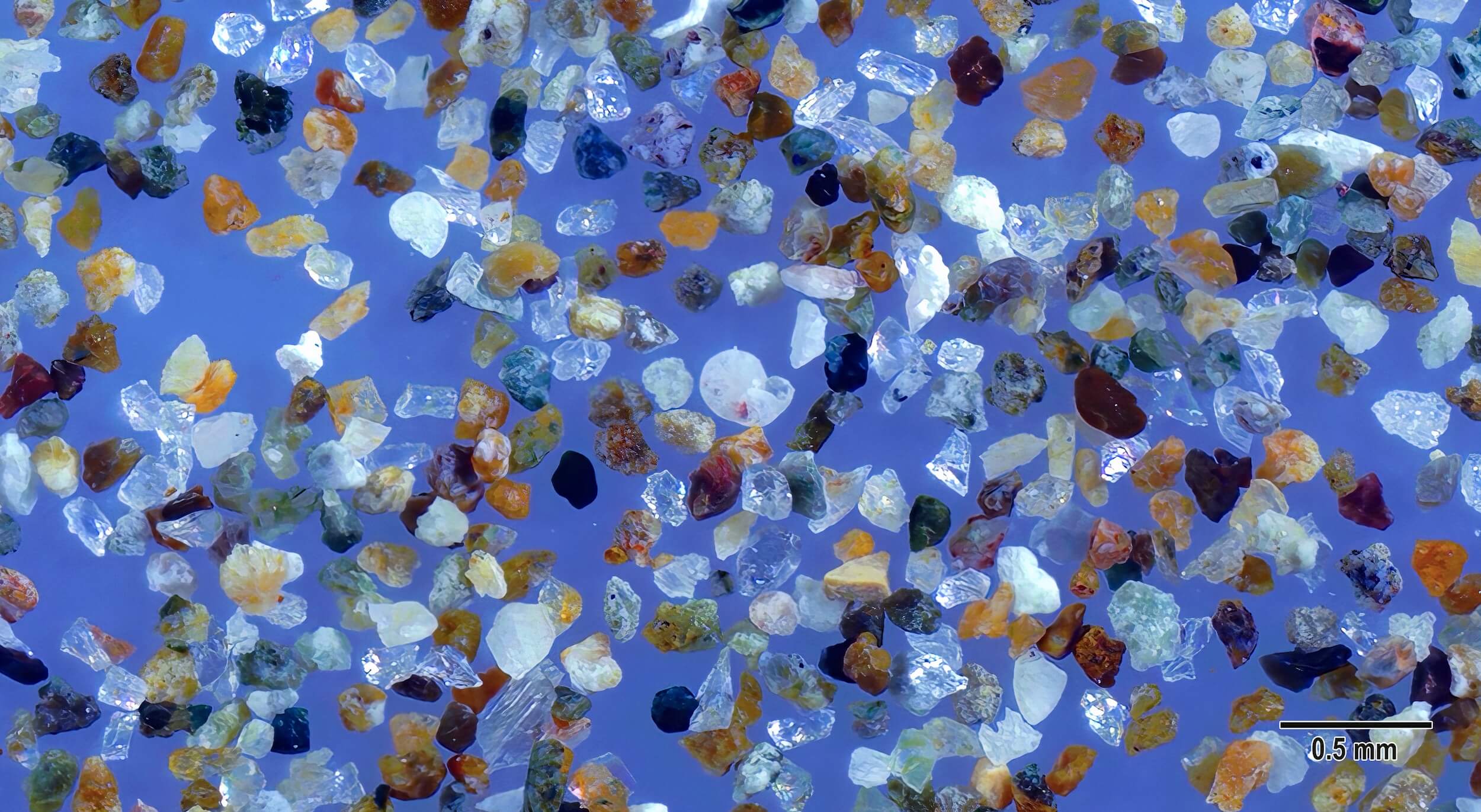
A centrally located smooth edged off white marine sand grain and another at the upper left of center sand out against a backdrop of sharper edged translucent, tan, reddish and black geological sand grains. Many of the colored grains are likely pigmented quartz.
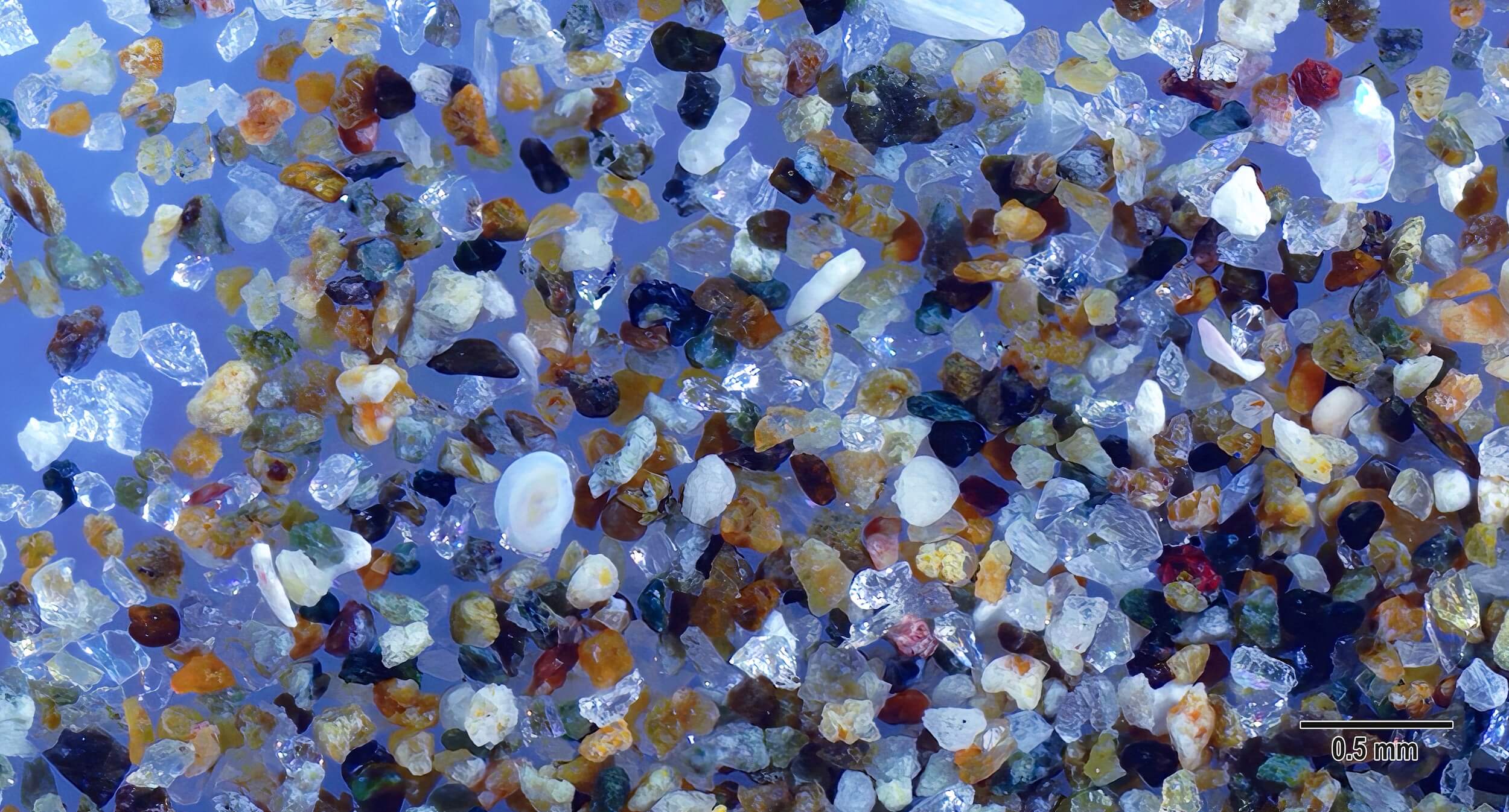
Several smooth-edged round and elongated white marine sand grains stand out against a backdrop of translucent and colorful geological sand grains.
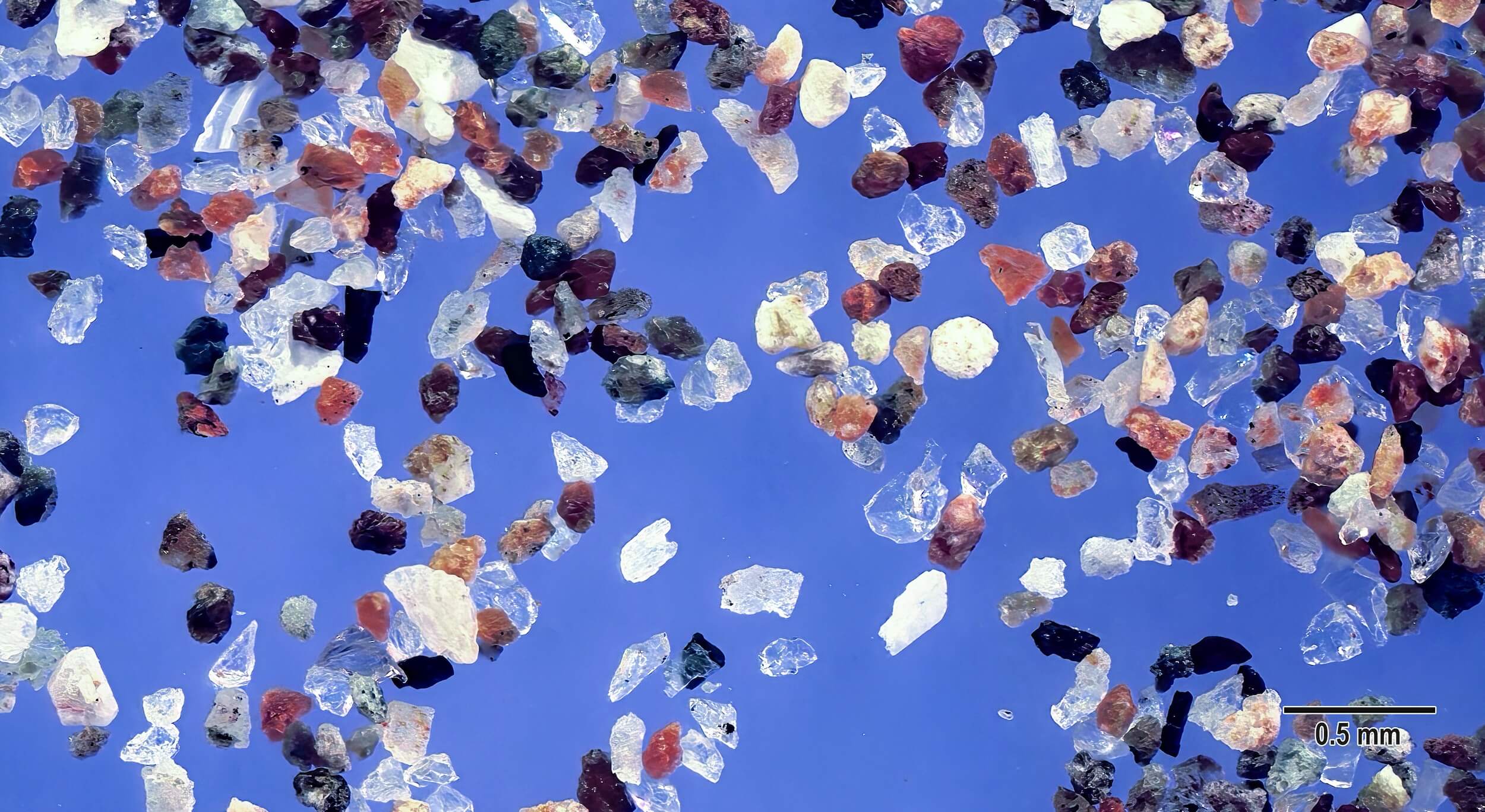
At least two sand grains (a round one in the center and a triangular one lower left of center) represent marine sand grains that stand out against a backdrop of rough-edged semi-translucent and pigmented geological grains.