
Sand Overview
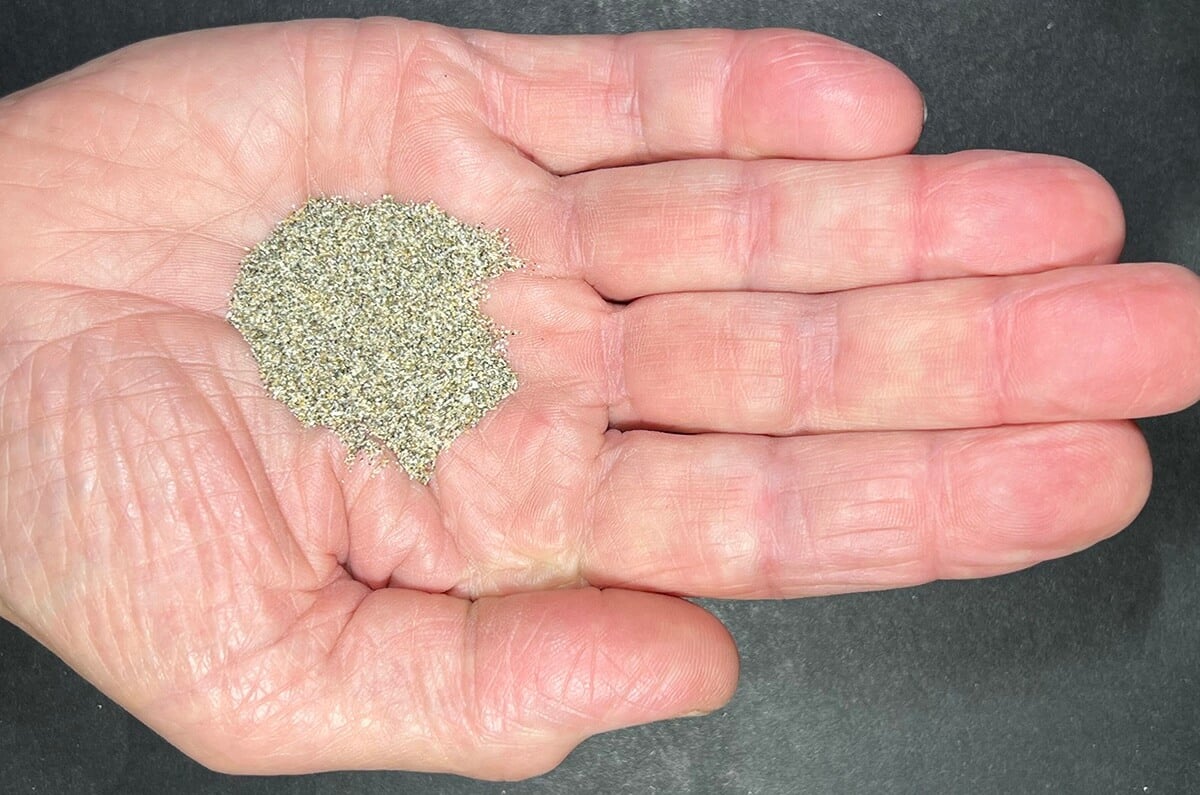
Soft gray-black Takenohama sand stretches 1 km along the Nekozaki Peninsula coast.
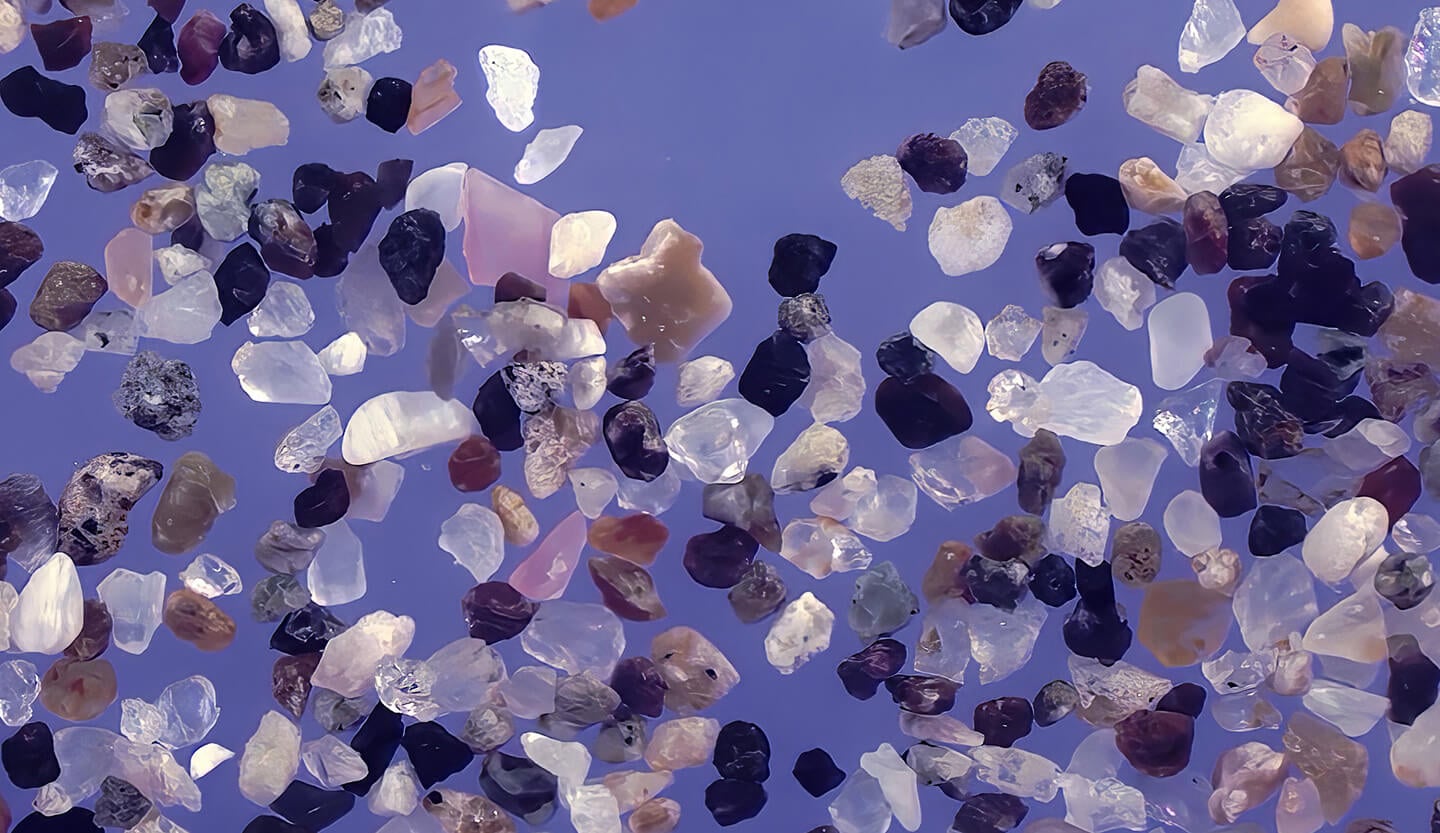
Solid and mottled black geological grains (likely basalt), clear quartz grains, and tan feldspar grains make up this view. Angular pink grains near the center are likely mollusk shell fragments.
Geographic Overview
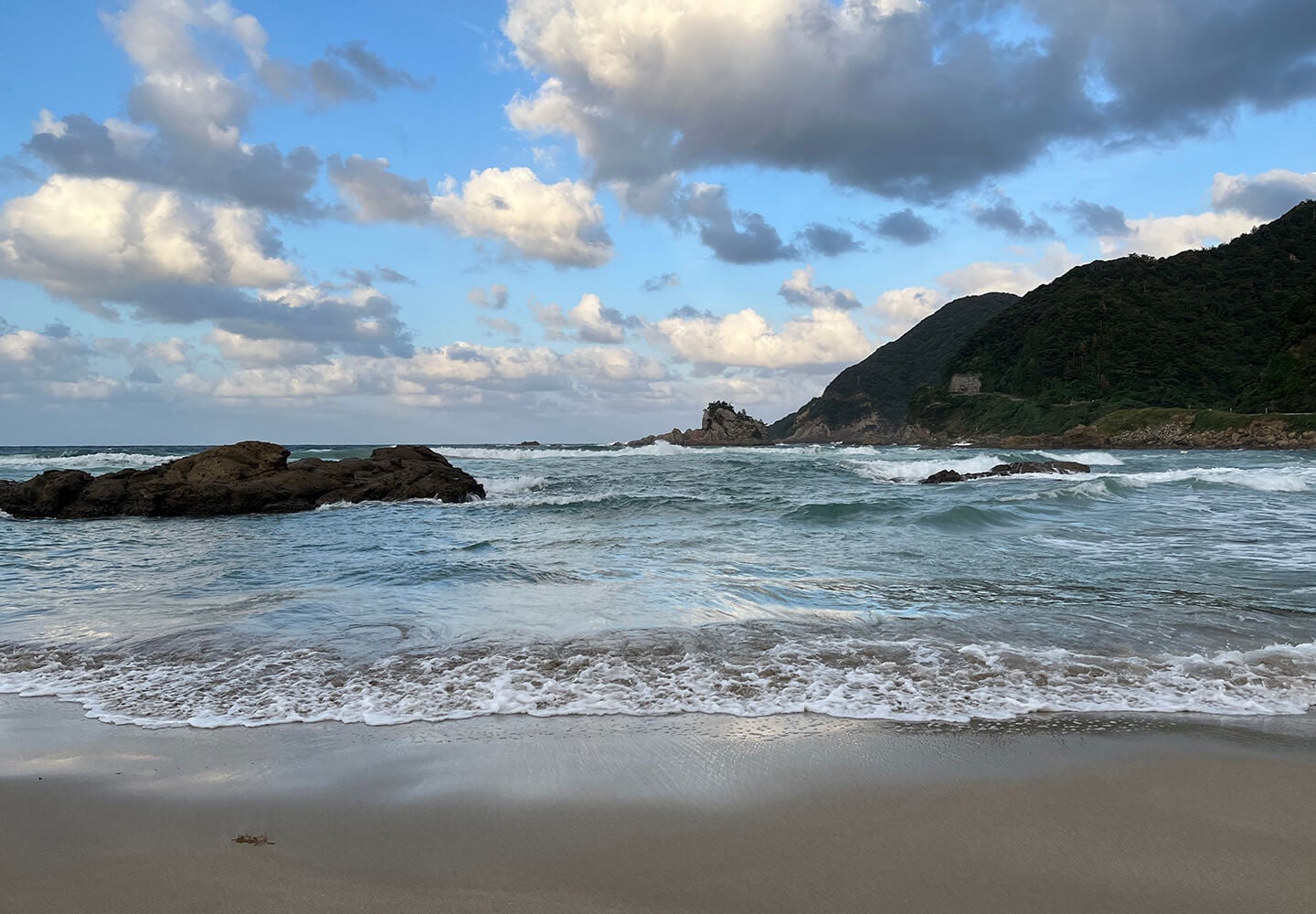
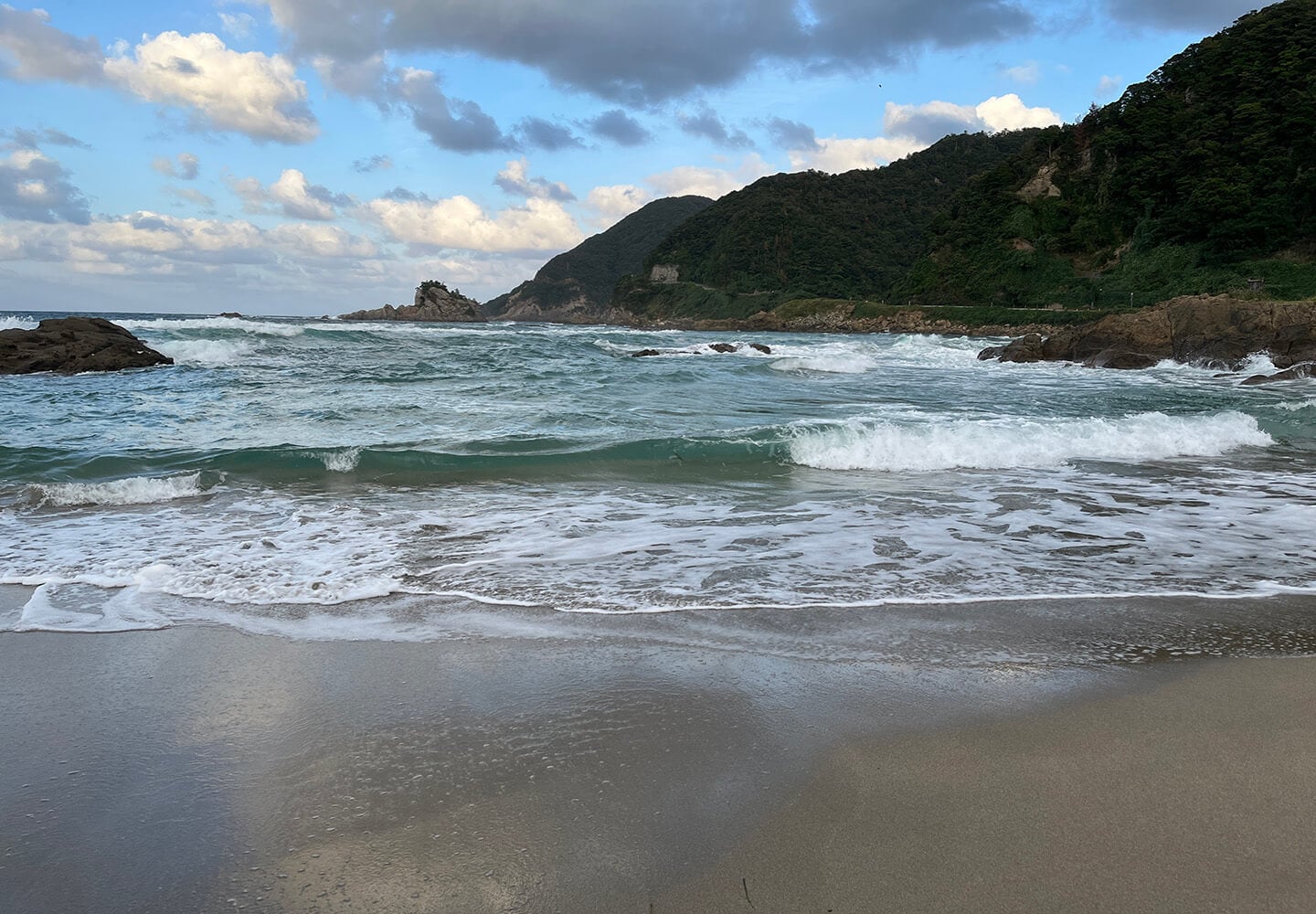
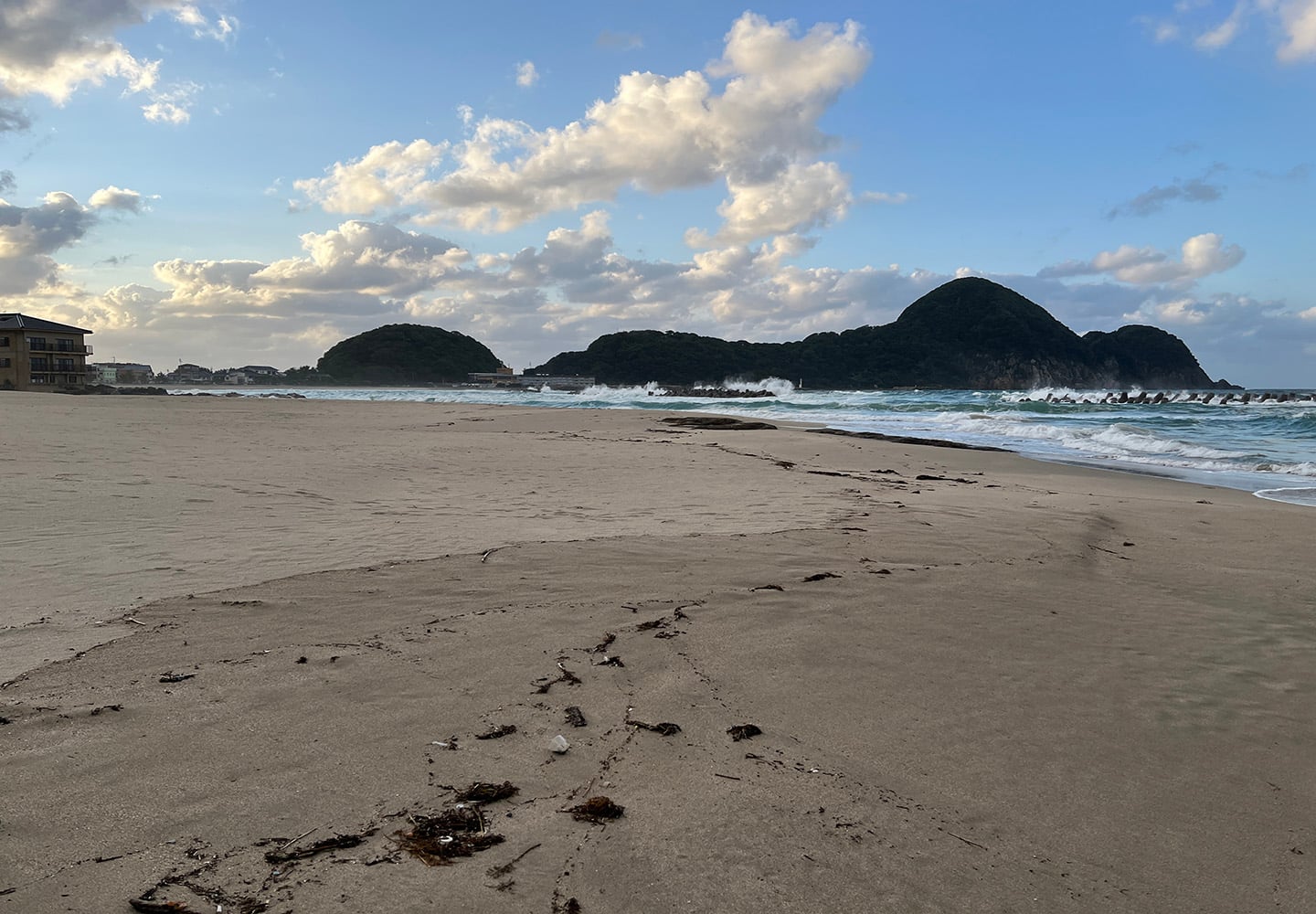
The beach sits at the base of the Nekozaki Peninsula facing the Sea of Japan on a narrow strip of land formation called a tombolo. Soft dark sand stretches 1km along crystal-clear blue waters. During the summer months the surrounding mountains are a lush green, then turn colors of orange and red in the fall. The geological formations and landscapes are just as stunning as the beaches.
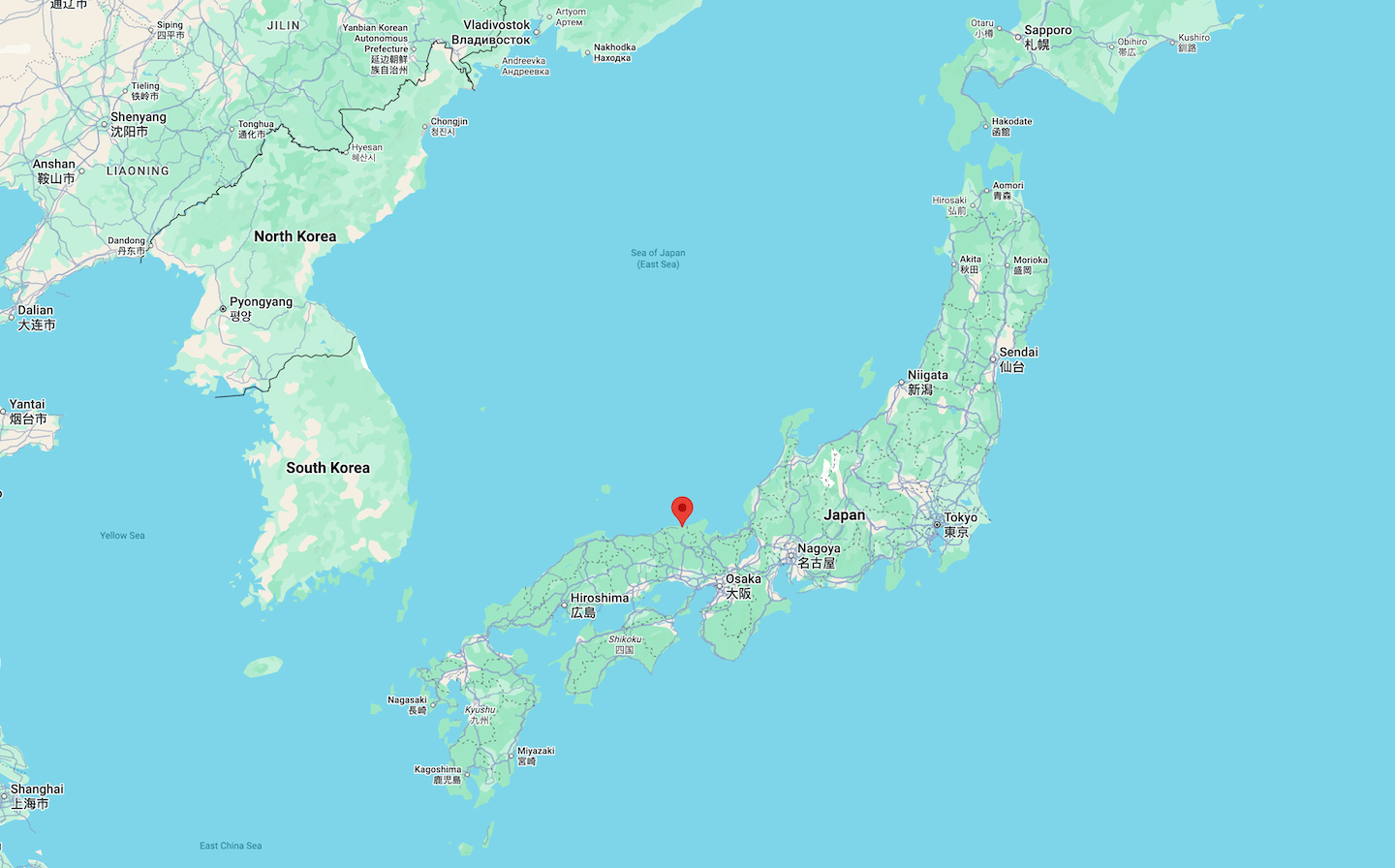
Sand Location
See where this sand was collected.
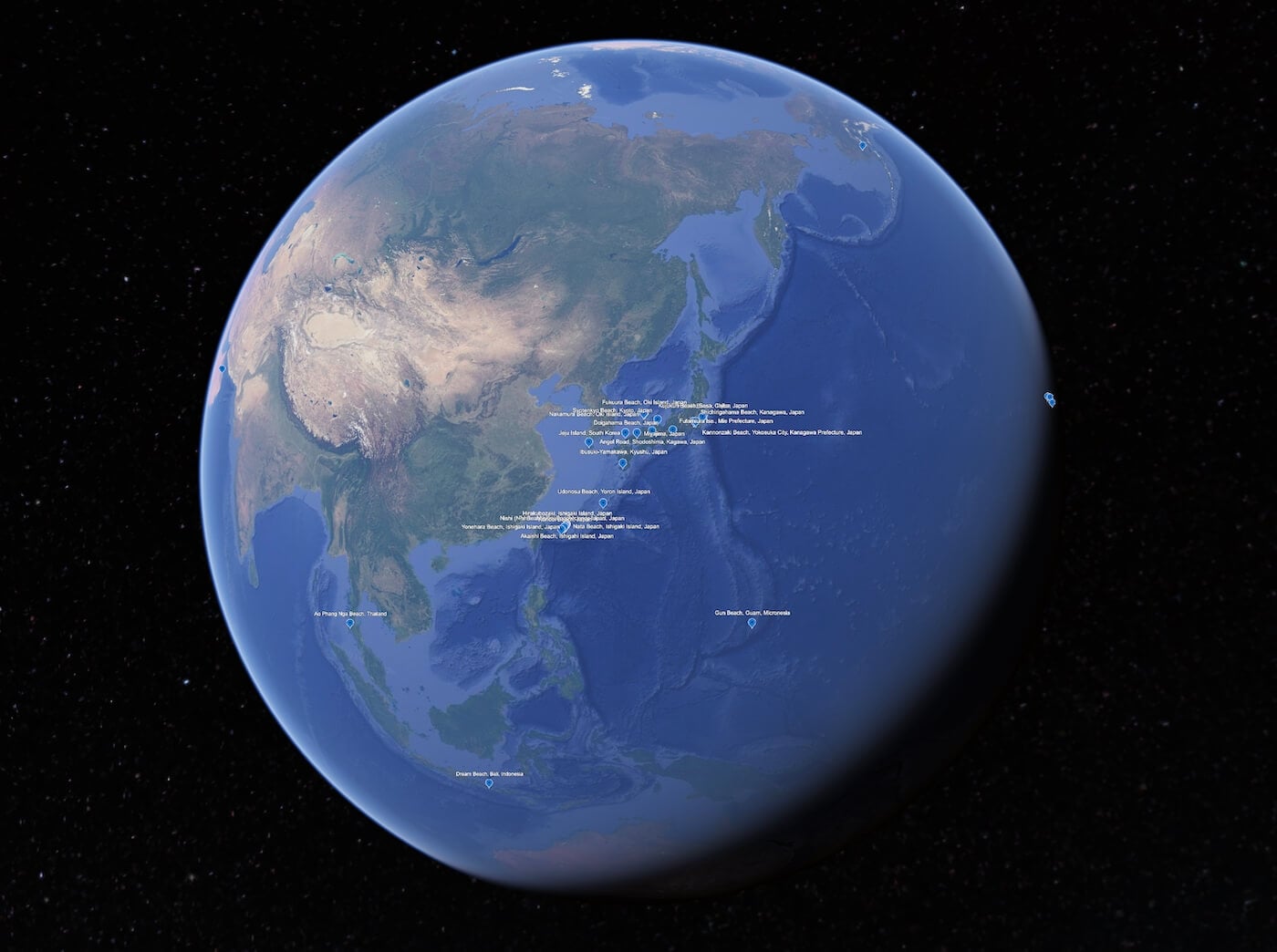
Virtual Sand Tour
Explore an interactive map of Takenohama Beach on Google Earth.
Sand Gallery
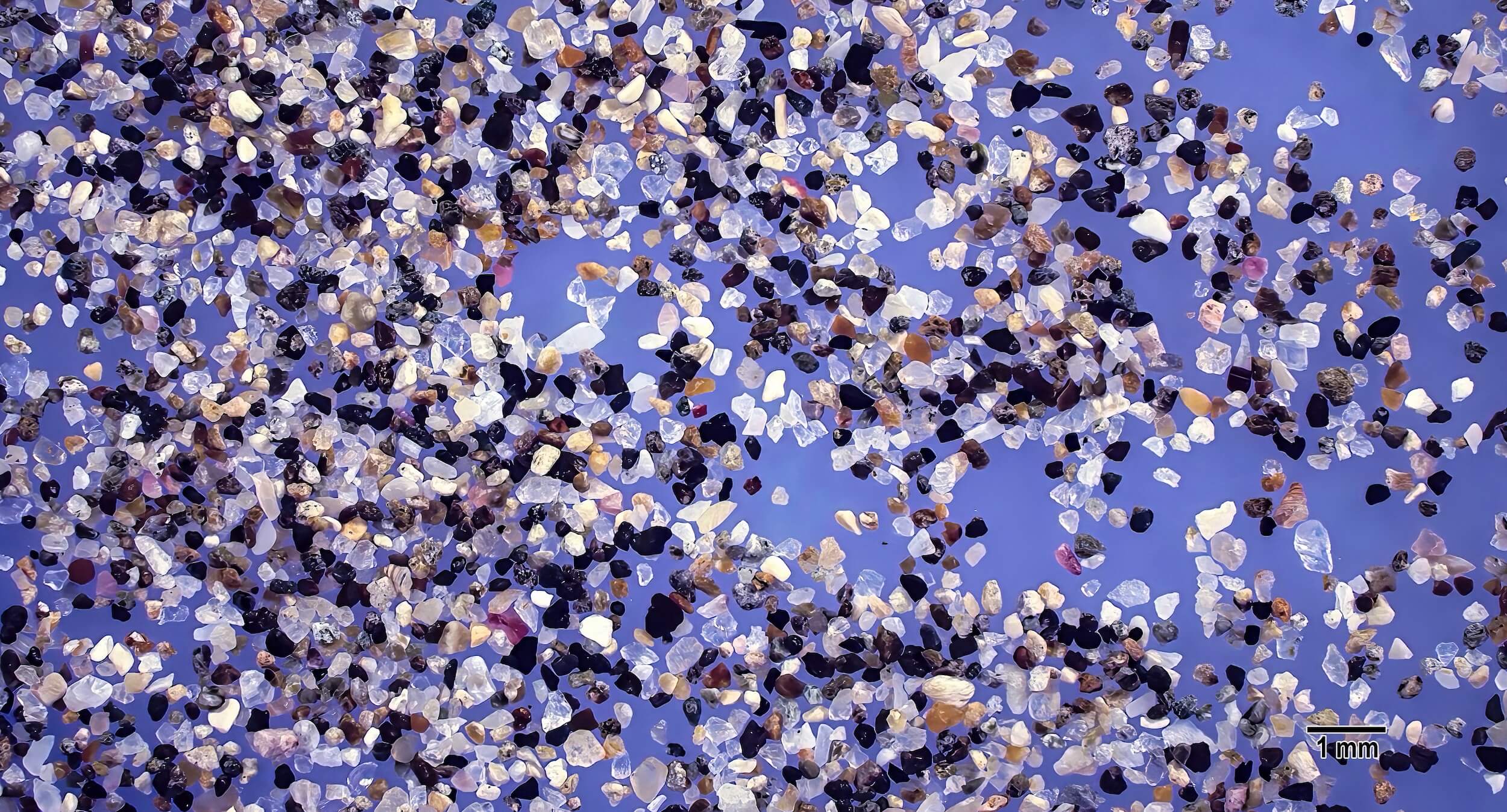
This low magnification features an abundance of black, light tan, and clear sand grains with fewer of brown and pink grains. The majority of the sand grains are geological while some of the brown and pink grains are likely fragments of marine species.
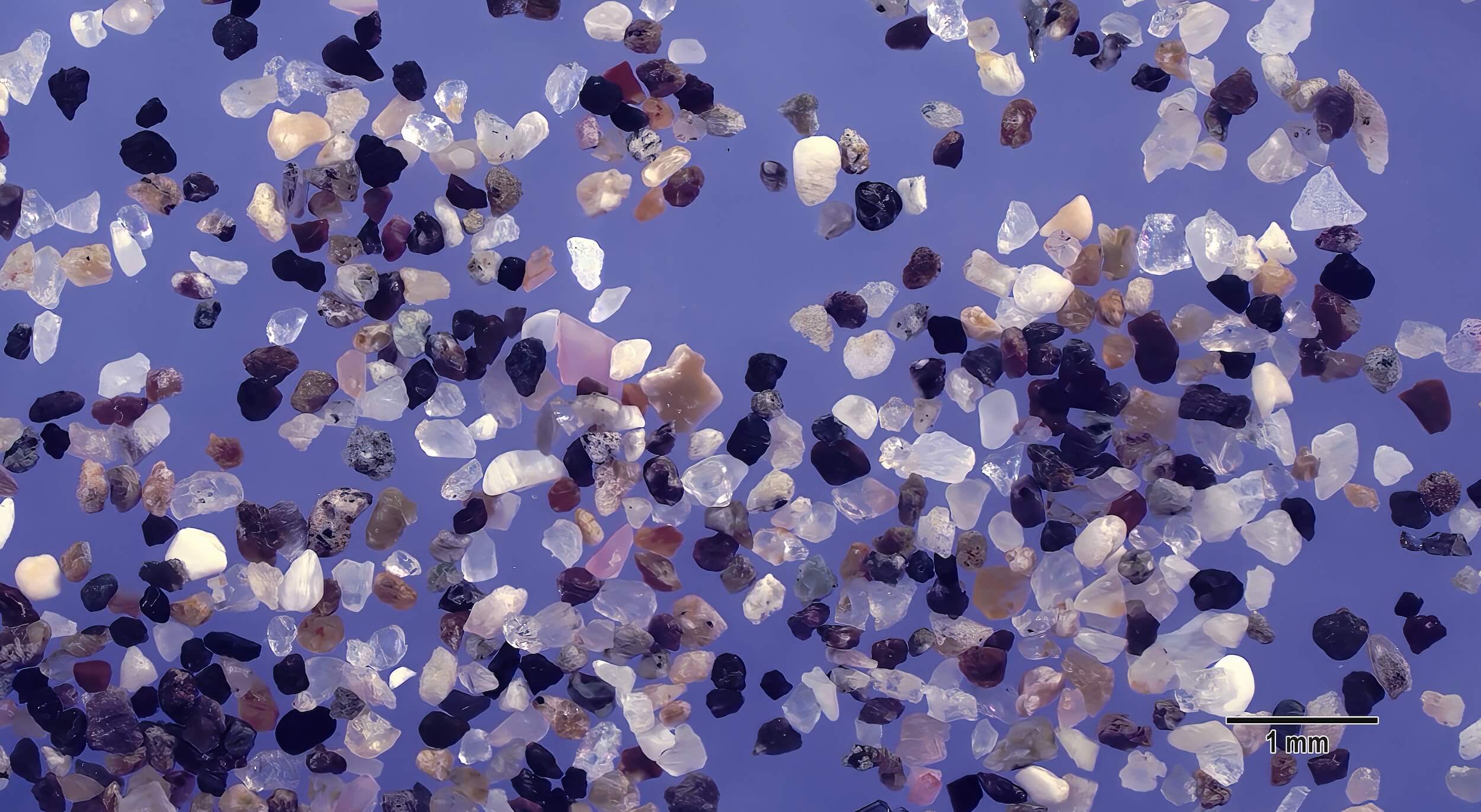
The majority of sand grains in this view are geological and include solid and mottled black grains (likely basalt), clear quartz grains, and tan feldspar grains. A few quartz grains contain dark inclusions. Scattered white grains with smooth edges are marine fragments and two angular pink grains near the center are likely mollusk shell fragments.
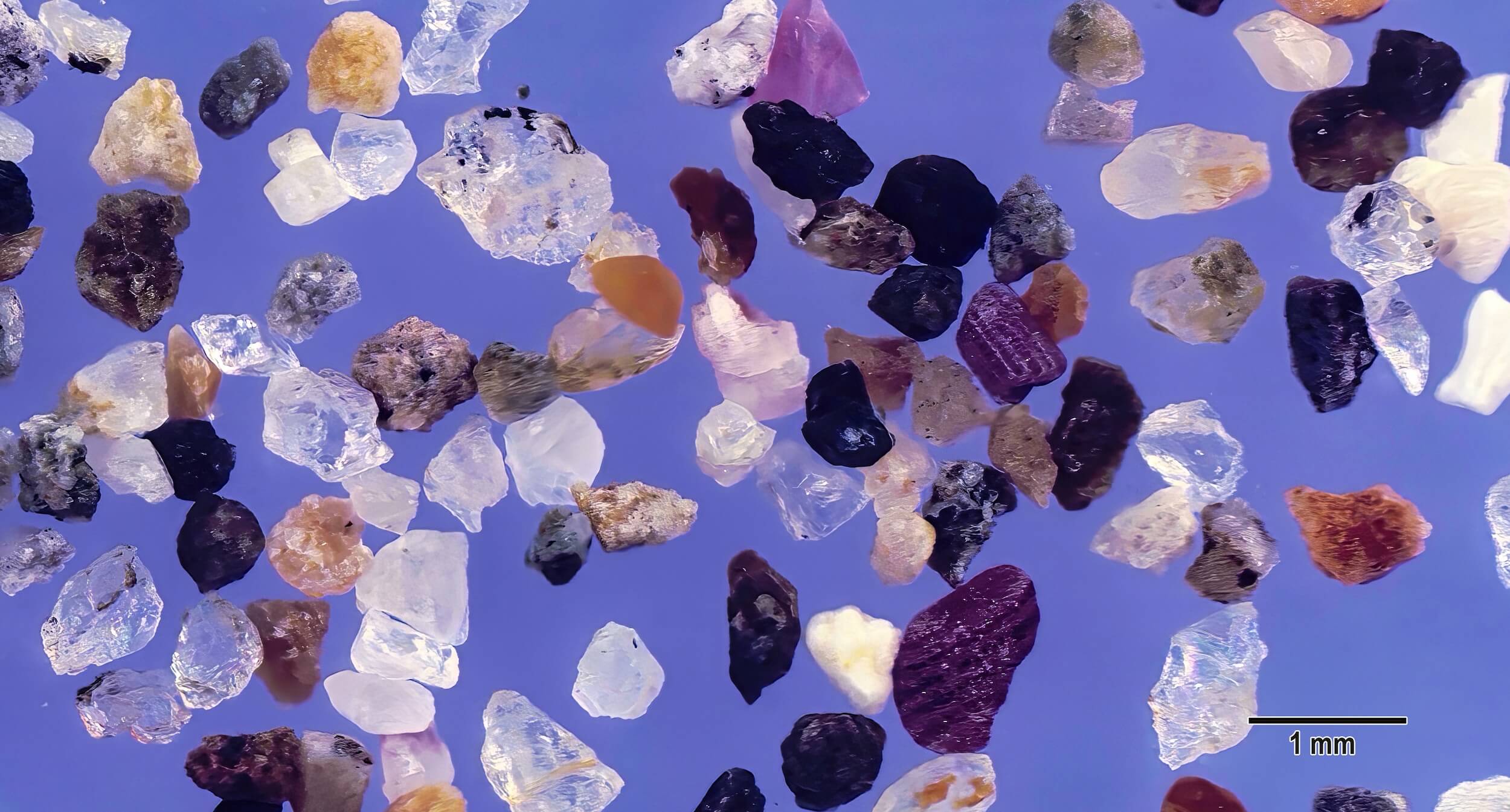
This high magnification view shows clear quartz, quartz grains with dark inclusions, light tan feldspar grains and black grains that are most likely basalt. A pink angular shell fragment is at the top center and two dark purple grains with parallel grooves are sea urchin spine fragments.
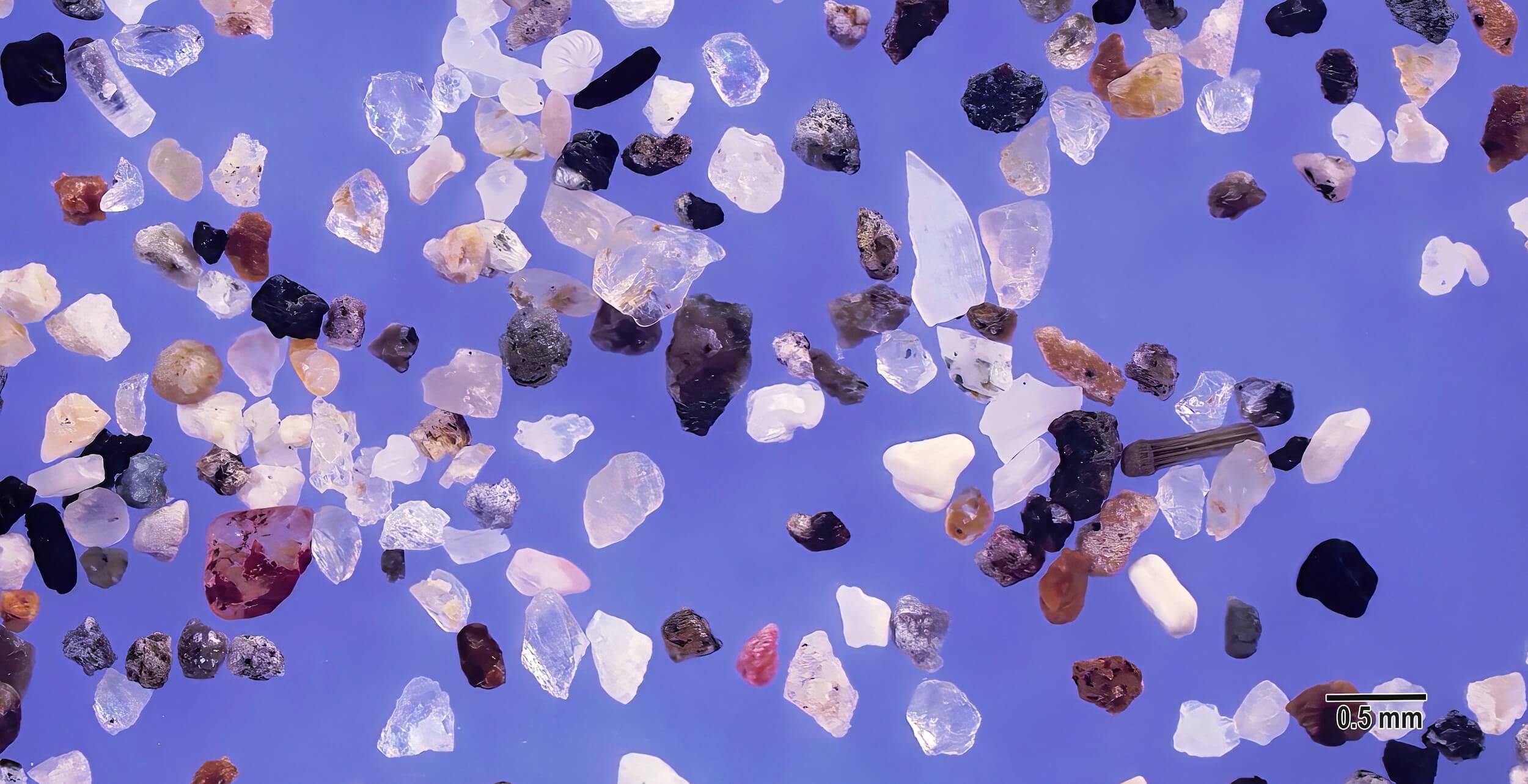
A spectrum of clear quartz grains is accompanied by small and relatively smooth gray, brown and black stippled volcanic grains. Two large quartz grains, one with mottled red inclusions (lower left) and one mostly black with sharp edges (center) stand out. Off white mollusk shell fragments with pointed edges are in the right center to the left of a black volcanic sand grain and a dark tan sea urchin spine. A round white foram with visible internal segments is near the top left center just above an elongated black marine sand grain.
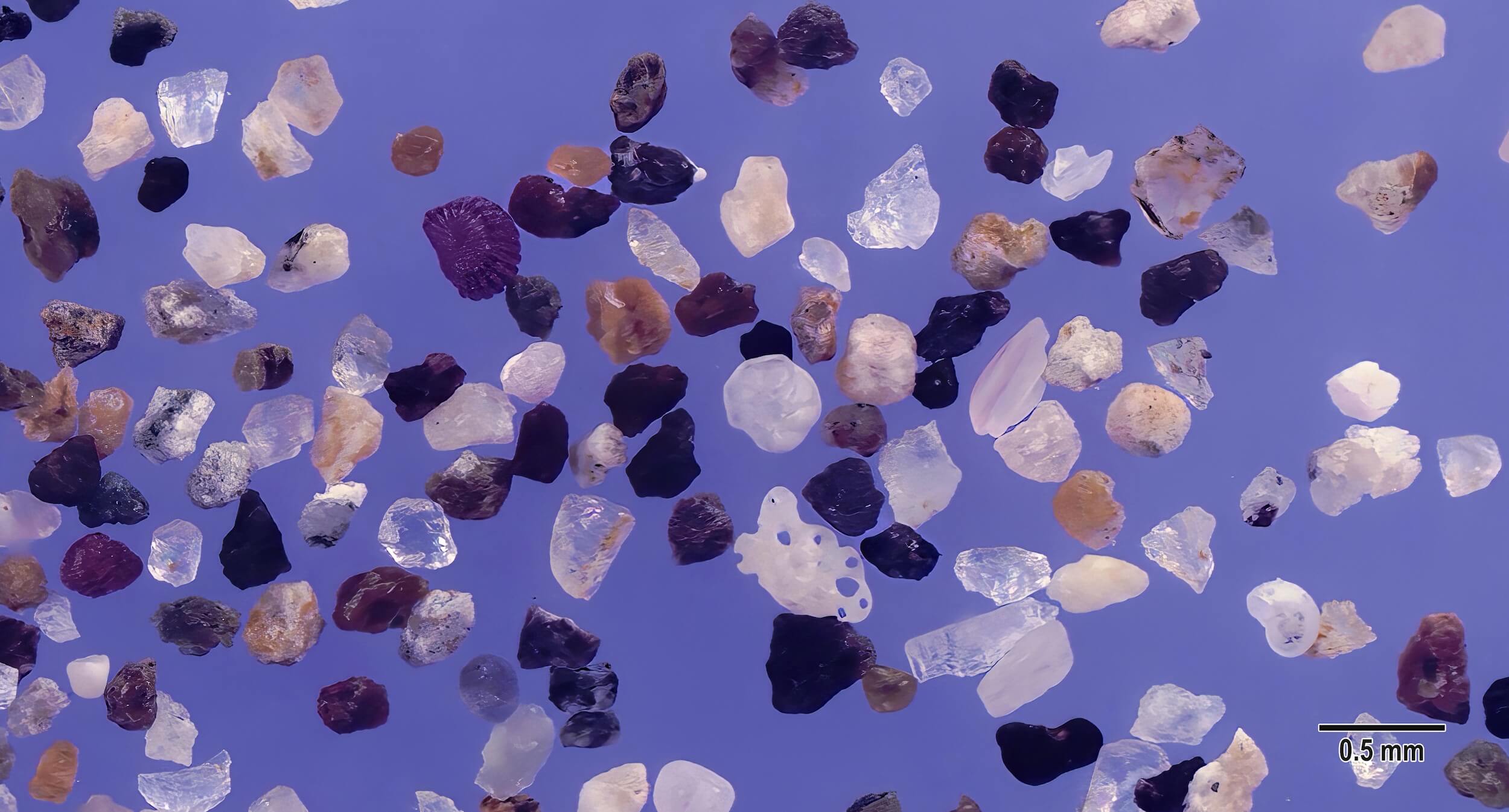
A prominent purple sea urchin spine fragment is at upper left of center. A round white foraminifera grain with subtle internal markings is in the center above an irregularly shaped, partially eroded white marine fragment. Clear, pigmented, and black geological sand grains are also in this view. Most grains are relatively smooth from long exposure to wave action.