
Sand Overview
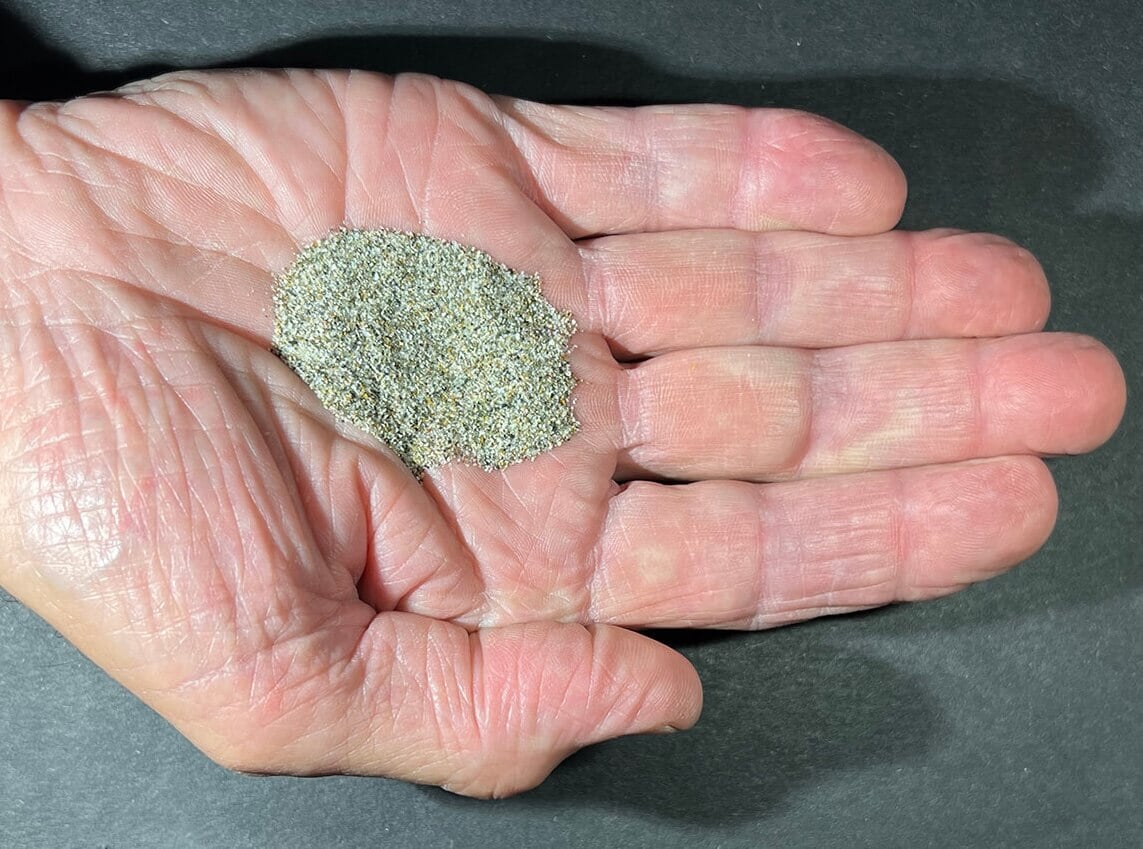
Nishikata beach sand is a mixture of weathered geological minerals (like quartz and feldspar) washed down from local rivers combined with fine marine shell fragments.
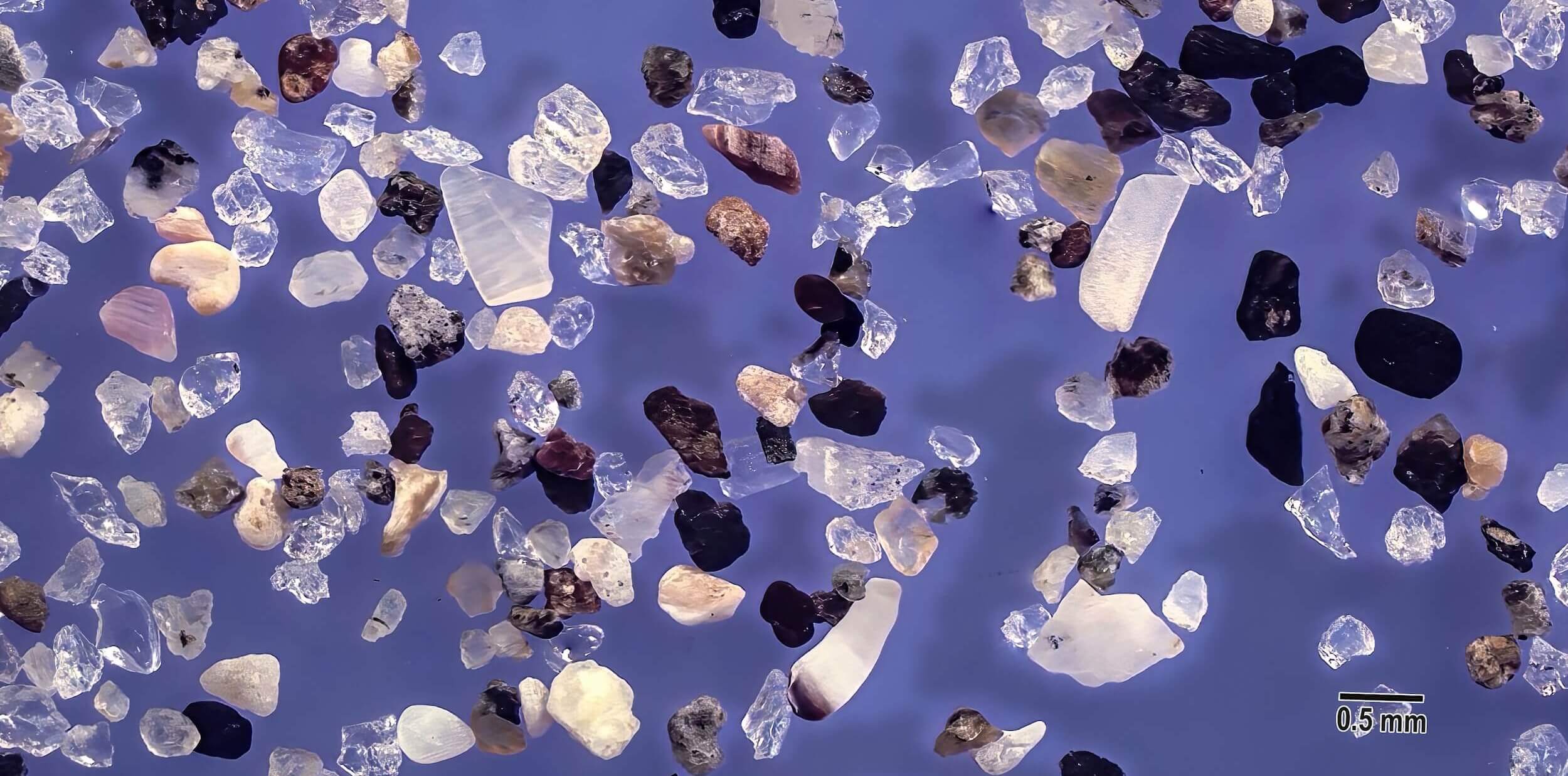
The majority of small sand grains in this sample include translucent quartz as well as gray, tan and black grains reflecting a spectrum of geological sand grains along with some larger pink, tan, and angular translucent grains that are likely fragments of marine shells.
Geographic Overview
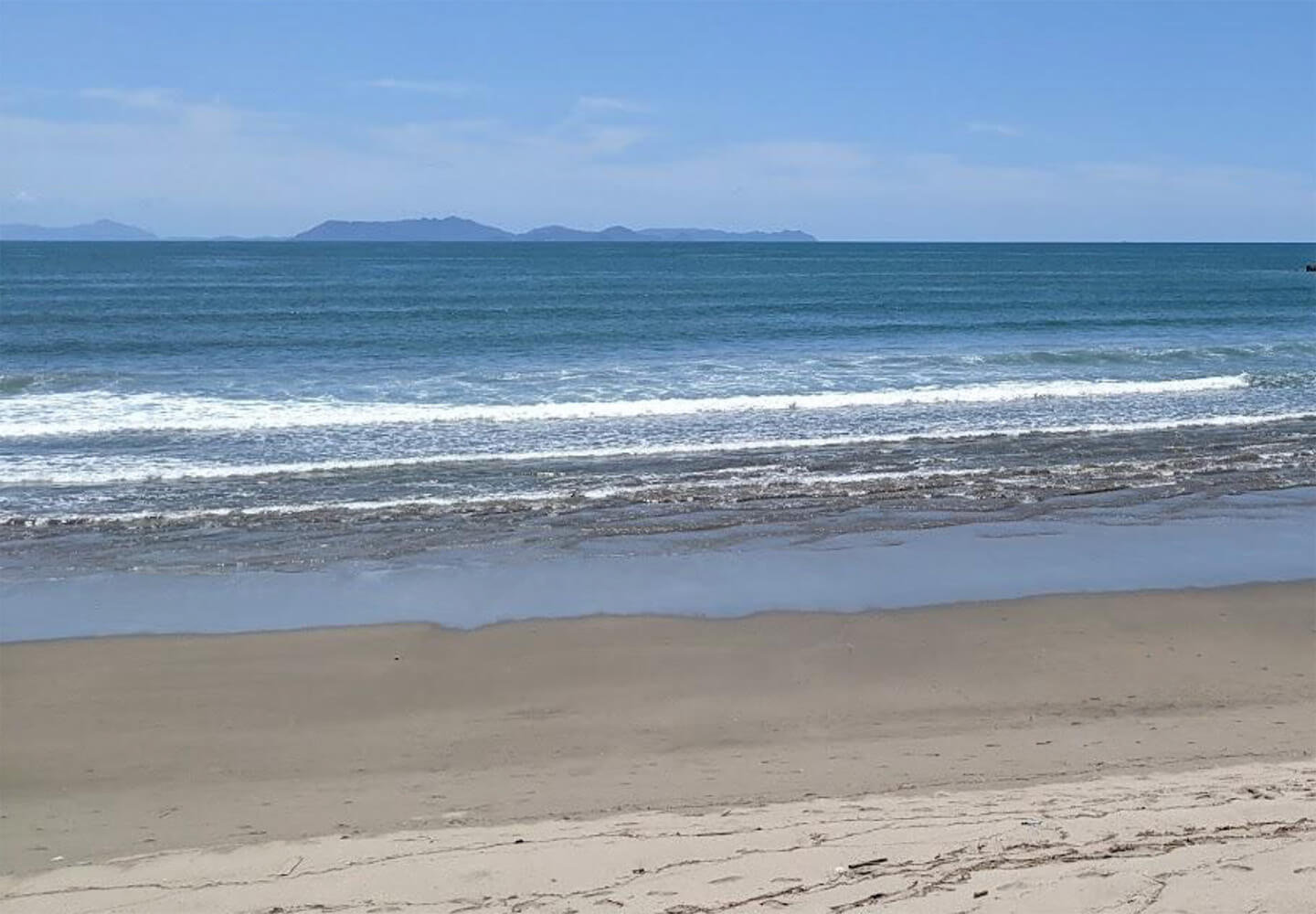
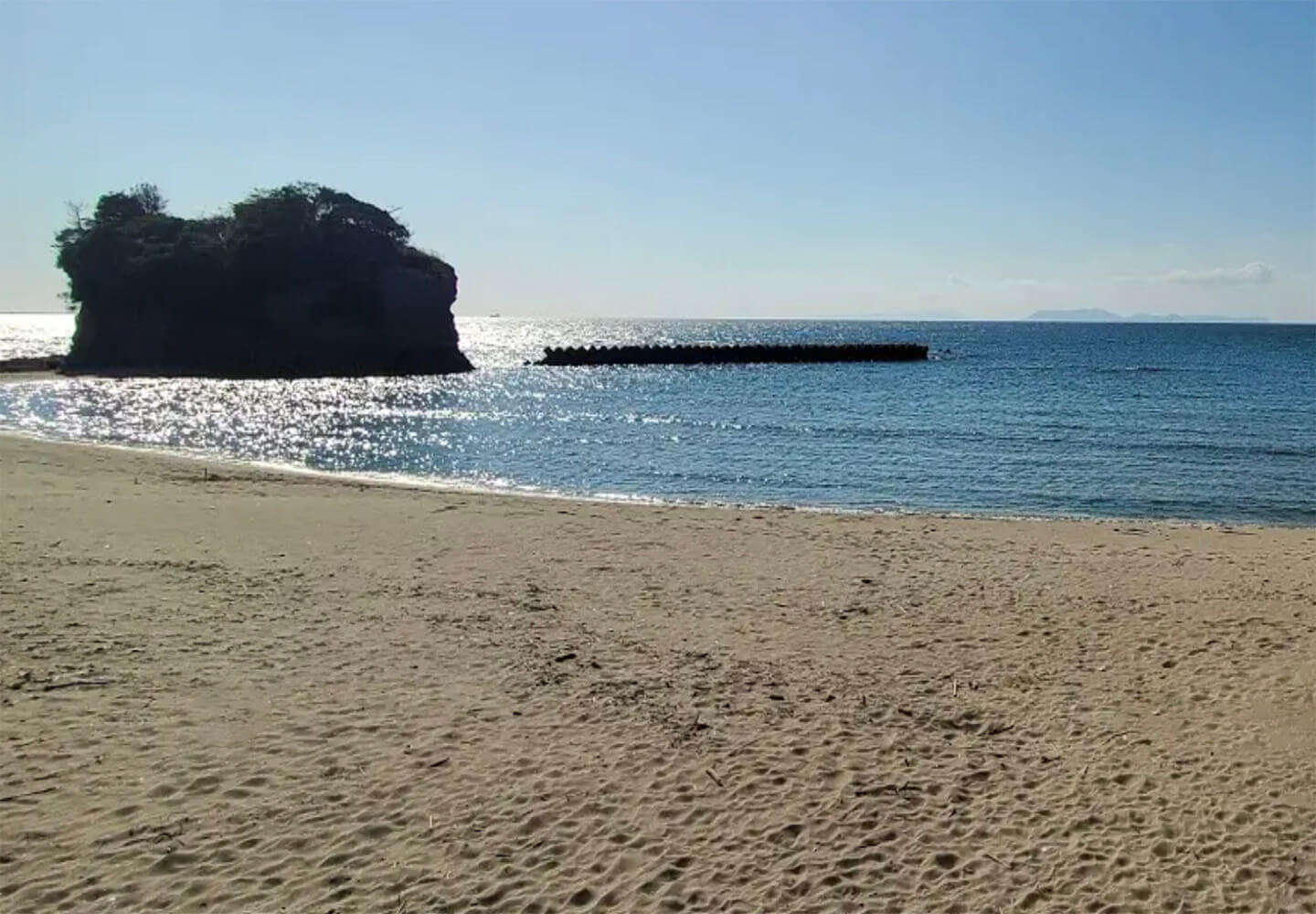
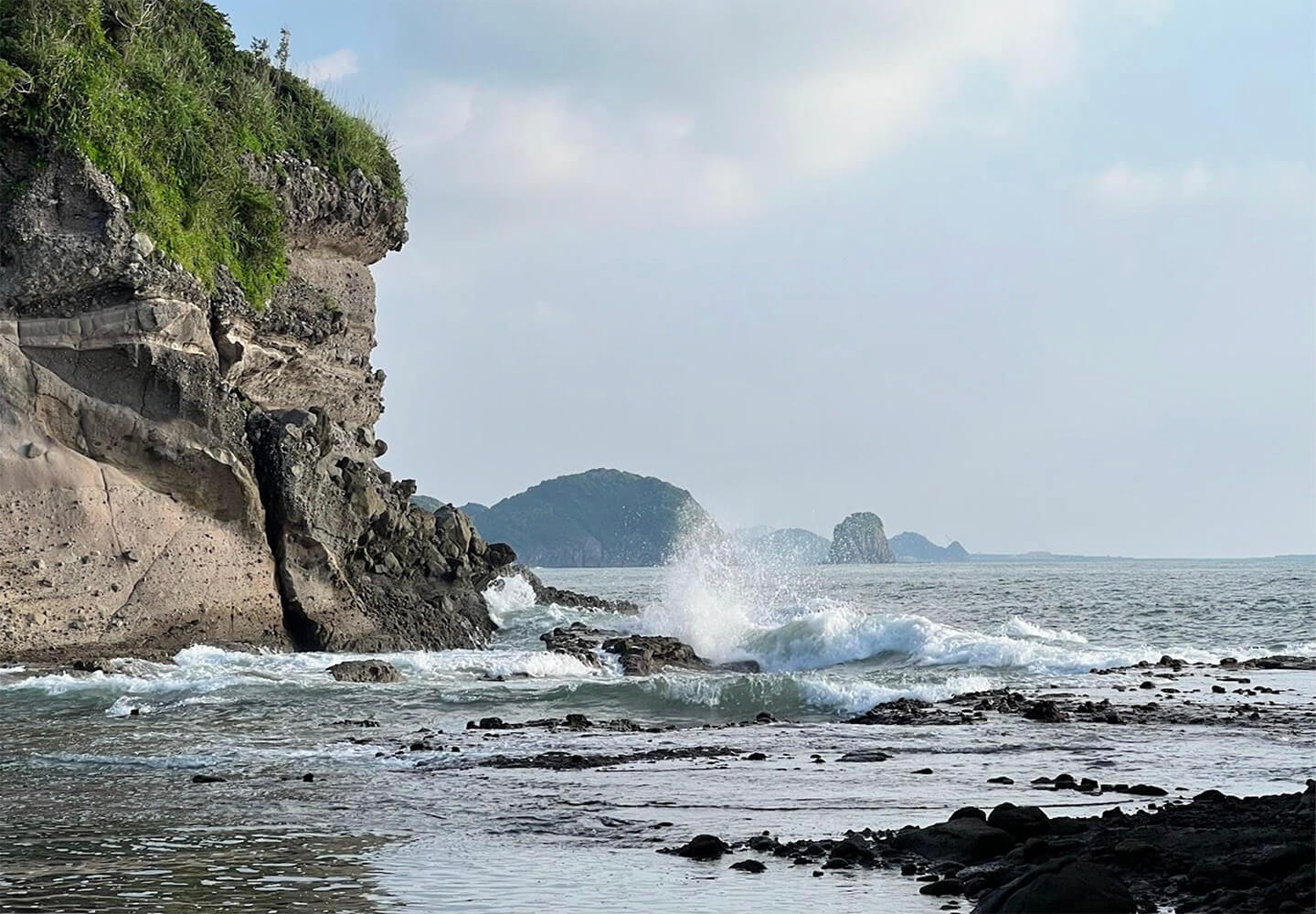
Nishikata beach area, located along the East China Sea, features a rugged coastal landscape shaped predominantly by prehistoric volcanic activity and marine erosion. The beach is known for its striking sunsets and unique rock formations and features a broad stretch of clean, light-colored sand.
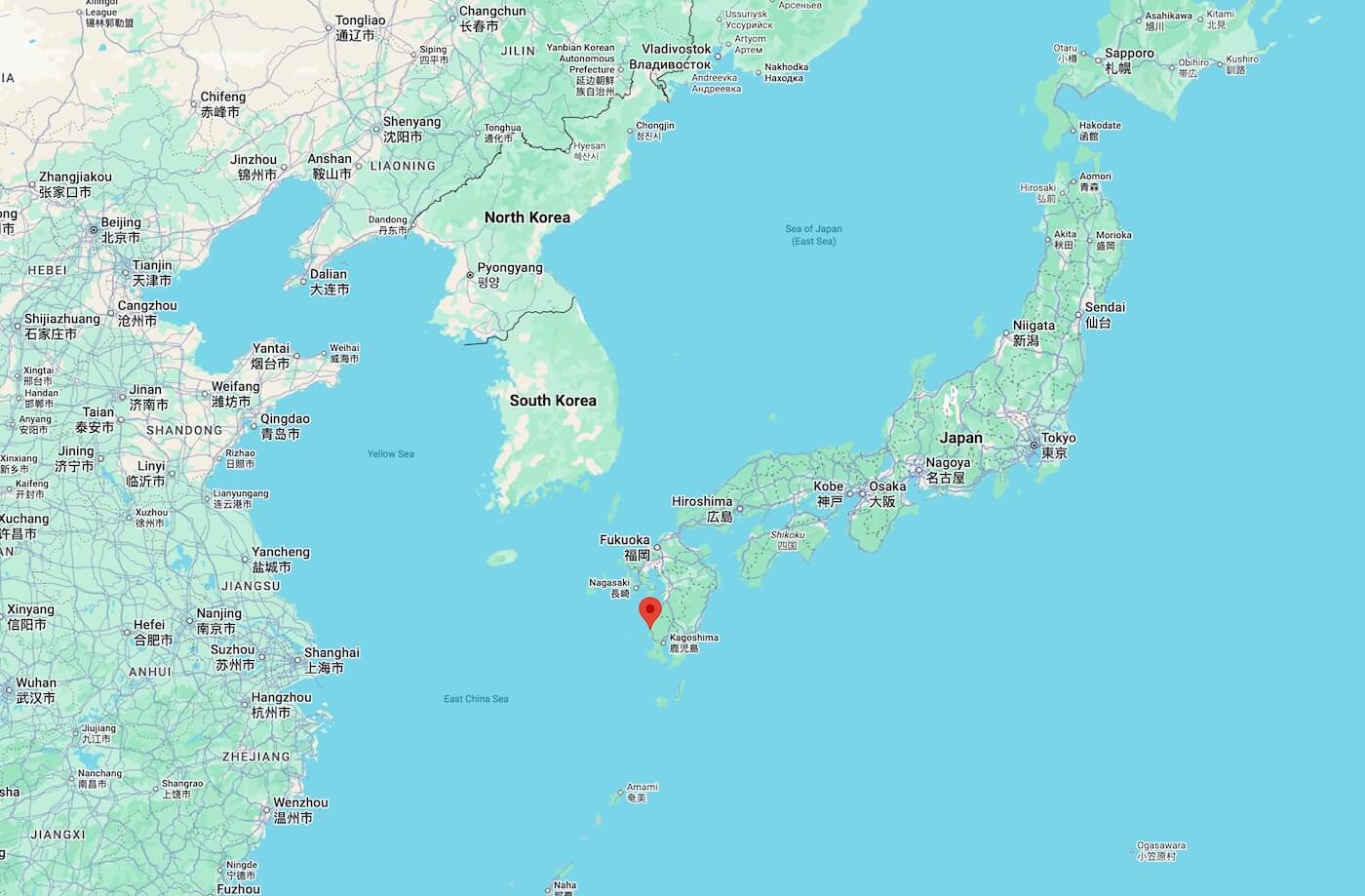
Sand Location
See where this sand sample was collected on Google Maps.
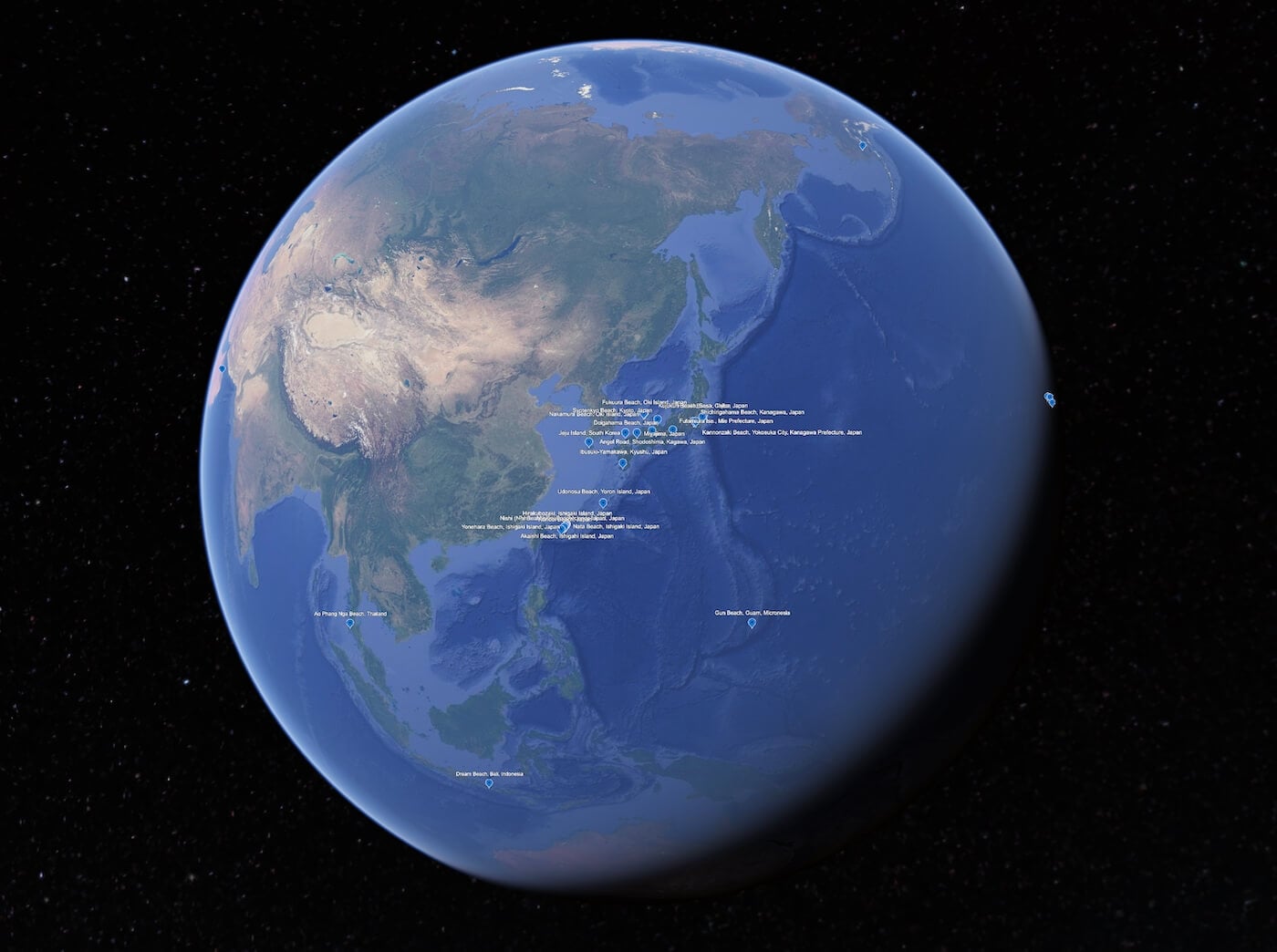
Virtual Sand Tour
Explore Nishikata on Google Earth.
Sand Gallery
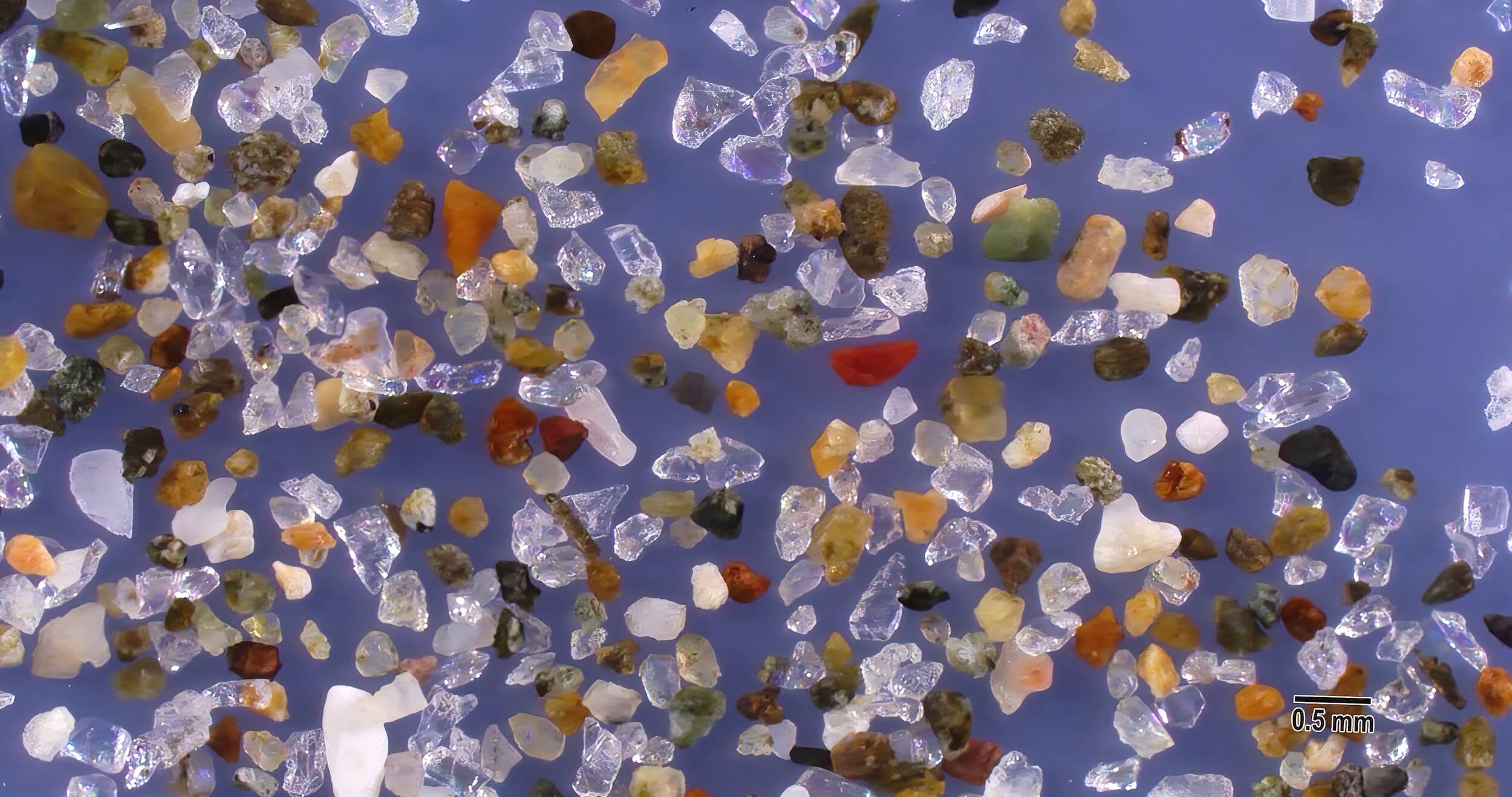
This low magnification features a wide spectrum of diverse and colorful sand grains from the Nishikata Beach shore. In addition to plentiful and highly angular and translucent quartz grains, light tan grains with angular edges are likely feldspar. A few red, greenish, and black grains reflect more geological components of this beach sand. Larger white and tan grains with smooth edges are marine sand fragments.
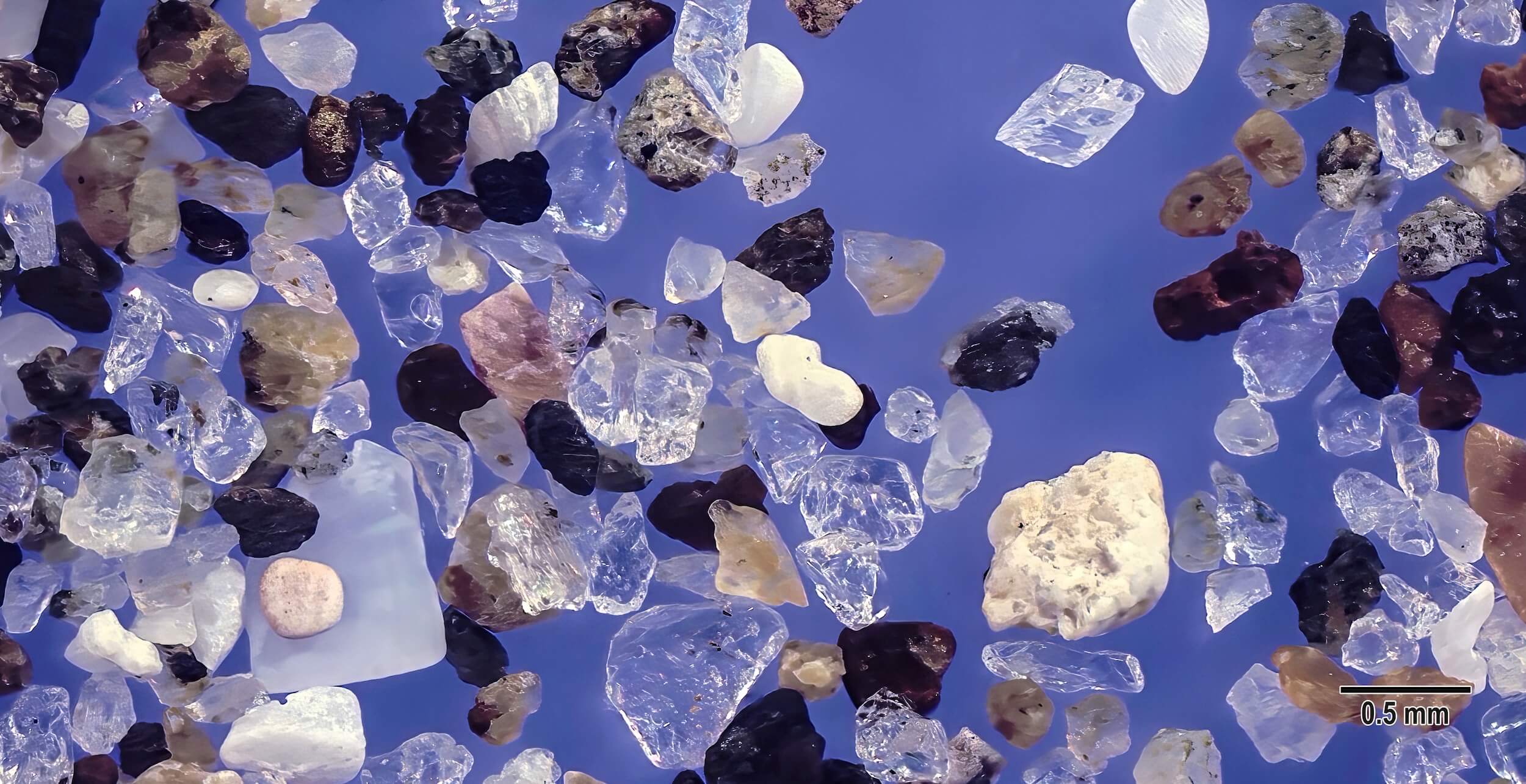
In addition to variably sized highly translucent quartz grains and a mixture dark red and black geological sand grains, a large square off white grain at the lower left (likely a shell fragment) and a distinctive off-white grain at the lower right represent marine sand grains.
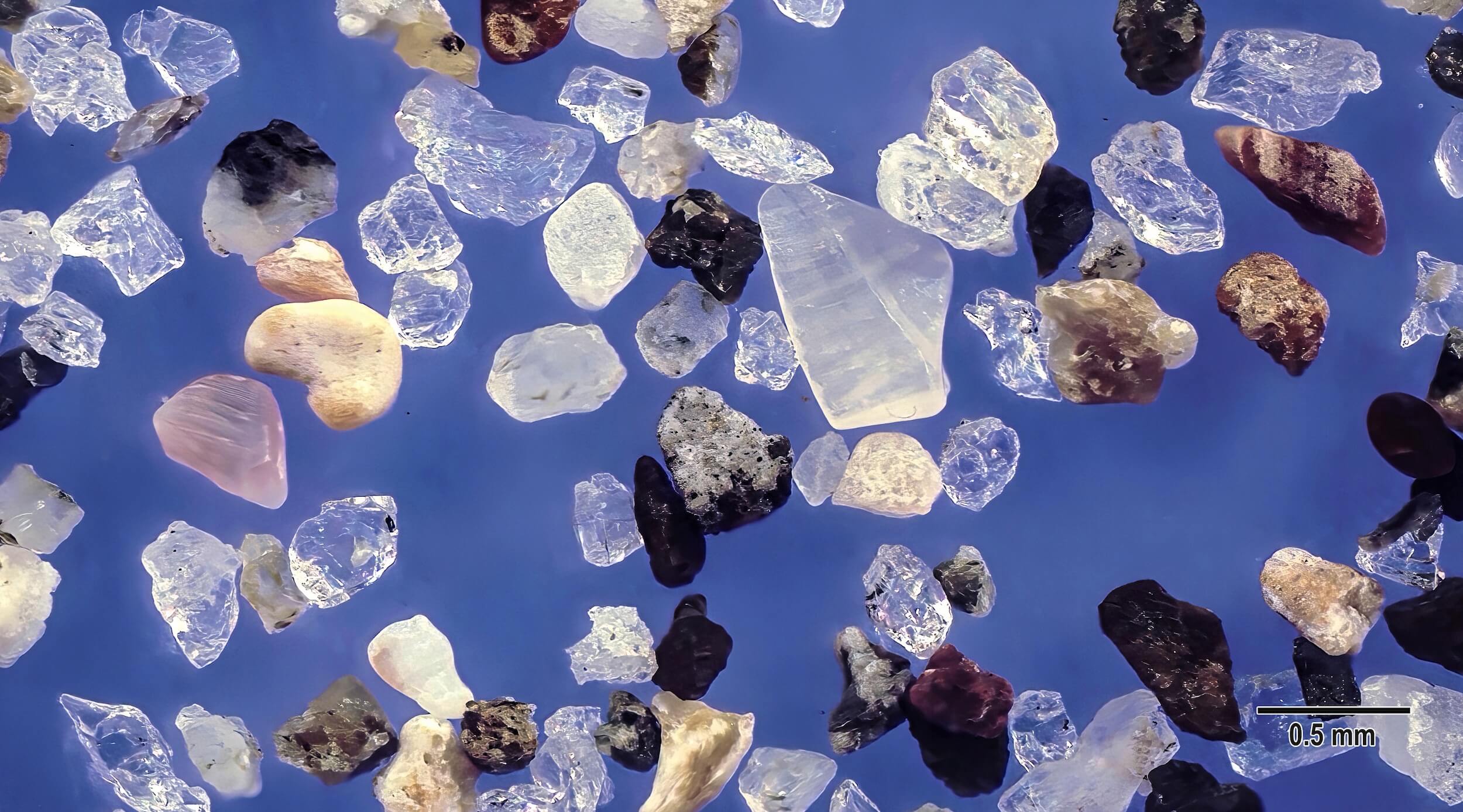
A pink mollusk fragment with linear striations at the middle left is adjacent to a smoothy worn light tan marine sand grain fragment. The relatively large partially translucent triangular mollusk fragment in the center is surrounded by geological sand grains including translucent quartz along with tan grains with red striations and gray and black grains.
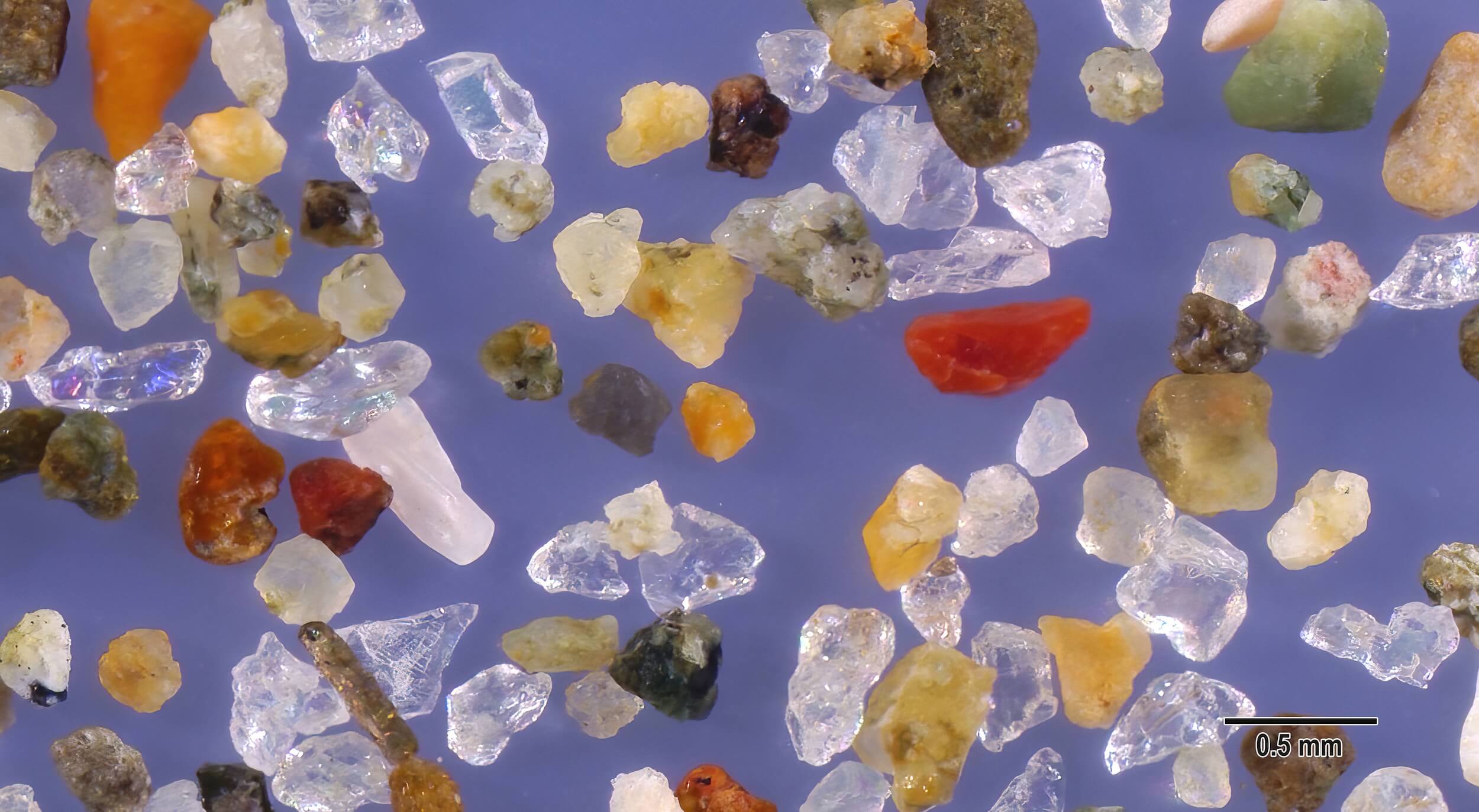
This colorful collection of sand grains includes translucent quartz and tan feldspar as well as red, dark brown and greenish geological sand grains.
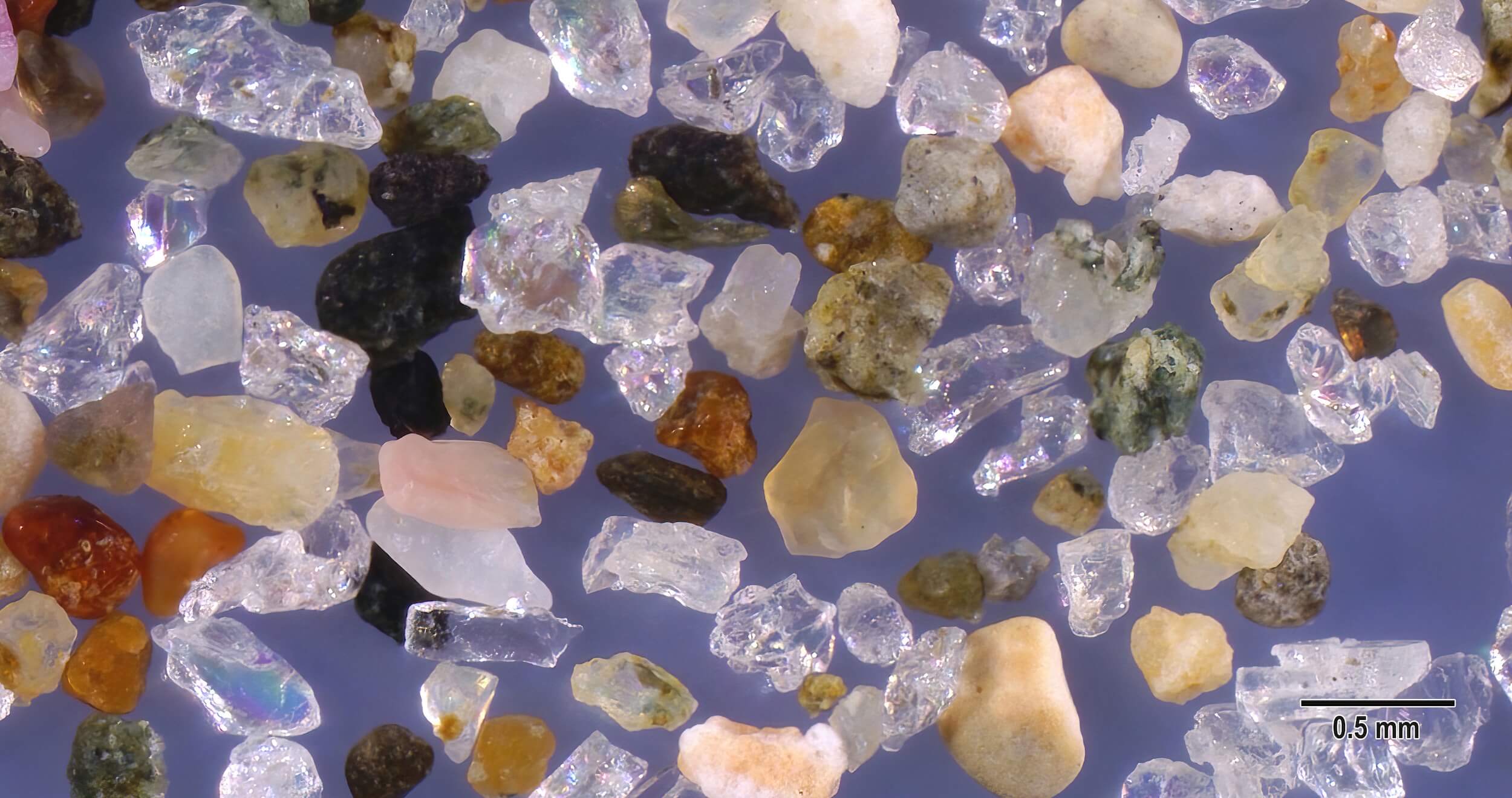
This colorful spectrum of geological sand grains ranges from translucent quartz to black grains that are likely basalt. Red, orange and green stippled grains are also geological while a light tan smooth edged grain touching the lower right edge is likely a marine fragment.
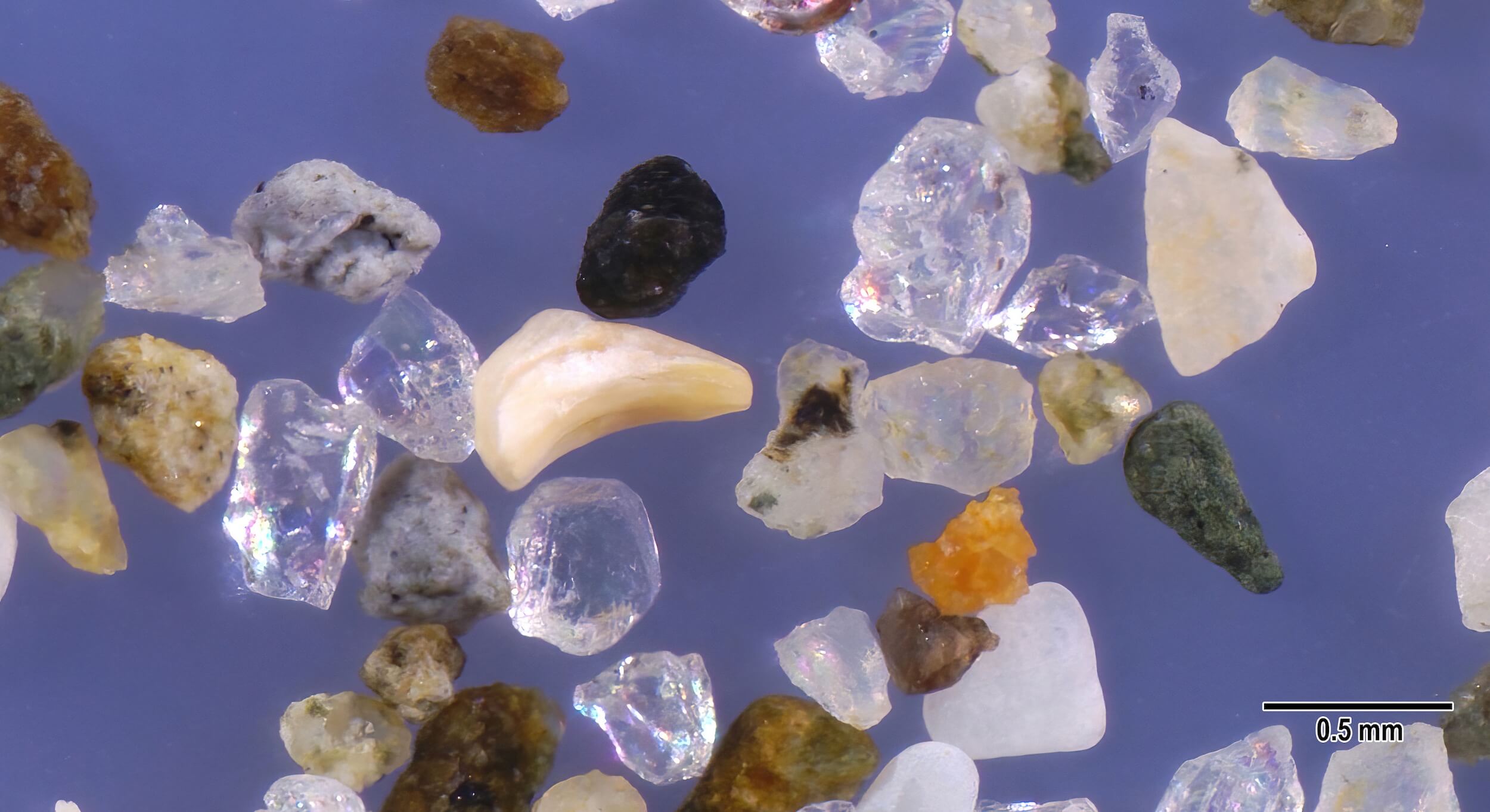
In this very high magnification a pointed tan grain with smooth edges in the center is a marine fragment, possibly remains of a mollusk. Other grains include translucent quartz and fragments of different colored geological grains.